
Description
Who this machine is for and what it settles
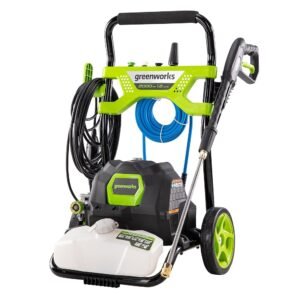
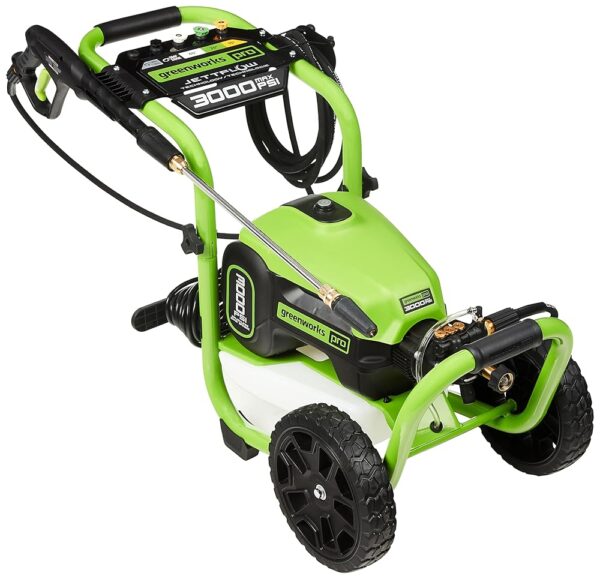
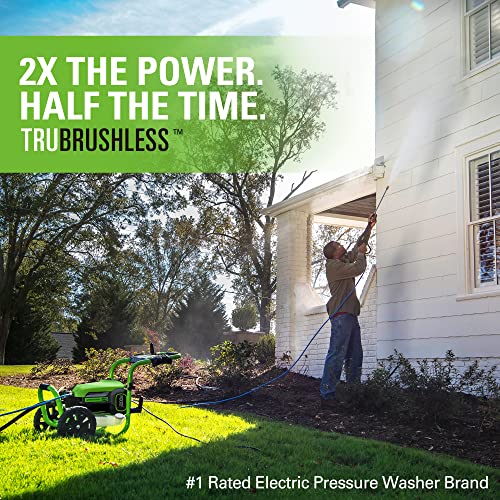
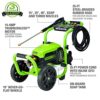
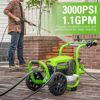
The Greenworks GPW3001 is a full sized electric pressure washer on a steel frame, and it settles the question of whether an electric machine can replace a gas one for household work. At 51.7 pounds and 24.09 by 17.91 by 38.39 inches it is not a unit that lives on a shelf, and Greenworks does not pretend otherwise. What it offers in exchange is a 14 amp brushless motor, a cast aluminum axial cam pump, a 35 foot power cord with GFCI, and a set of published numbers that are unusually complete for this catalog.
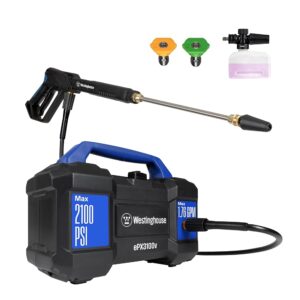
The buyer this suits has real square footage to clean and an outlet that can carry the load. The buyer it does not suit is anyone whose constraint is storage, and for them the compact machines in the electric pressure washer category are the right shelf, starting with the Westinghouse ePX3100 review.
The specifications that matter, and the arithmetic that explains them
Greenworks does something on this listing that most manufacturers do not. The product title states 2.0 GPM Max and 1.1 GPM as two separate figures, side by side. That is the difference between the flow at low pressure and the flow at working pressure, and publishing both is more honest than quoting a single number.
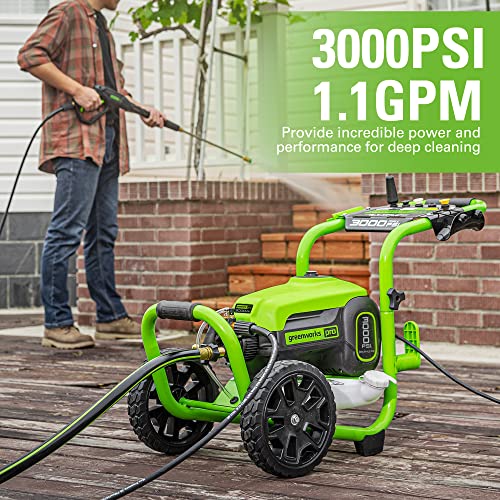
The feature bullets confirm which is which through their own arithmetic. Greenworks states 3000 PSI, 2.0 GPM and 3300 cleaning units. Cleaning units are pressure multiplied by flow, and 3000 multiplied by 2.0 is 6000, not 3300. What does give 3300 is 3000 multiplied by 1.1. So the 3300 figure Greenworks publishes is consistent with the 1.1 GPM rated flow rather than the 2.0 GPM maximum. Read the machine as roughly 3000 PSI at 1.1 GPM in normal use, with 2.0 GPM available at lower pressure. That is a genuinely useful pair of numbers and it explains why the same machine can be described both ways.
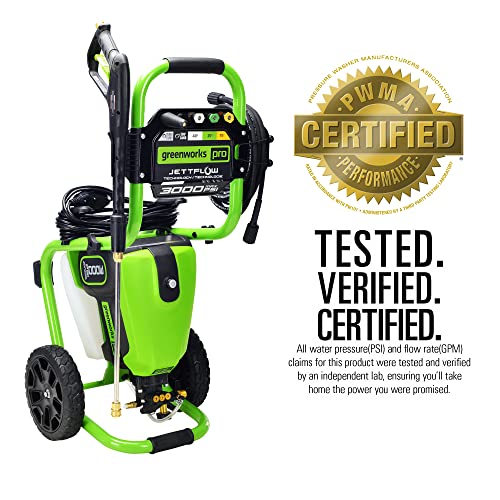
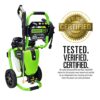
Greenworks also states that the PSI and GPM claims were tested and verified by an independent laboratory under PWMA certification, which is the Pressure Washer Manufacturers Association program. That is the manufacturer’s statement about a third party program rather than something we can confirm, and a reader who wants to check the certification can look it up independently.
The electrical figures are actually published
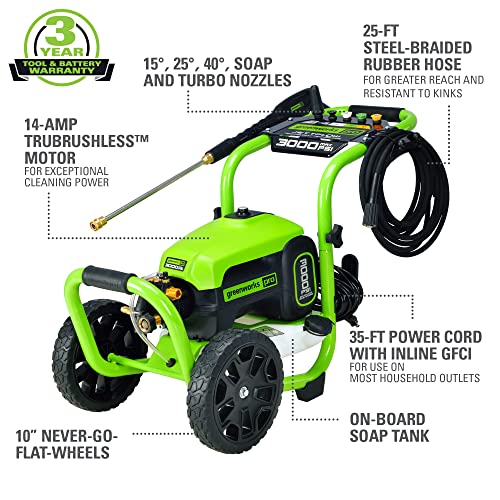
The 14 amp draw, the 60 hertz frequency, the 35 foot power cord with integrated GFCI and the maximum inlet water temperature of 104 degrees Fahrenheit are all published on this listing. That is more electrical detail than almost any other machine in this catalog provides, and it matters: a 14 amp continuous draw leaves very little margin on a 15 amp household circuit, so the outlet should be checked and nothing else should share the circuit while the machine runs. Extension cord restrictions are still not addressed anywhere in the listing, so the manual remains the authority there.
What comes with it and how to use it correctly
The kit includes a metal gun, a 25 foot kink resistant hose Greenworks calls Uberflex, standard M22 hose connections, and five nozzles covering 15, 25 and 40 degrees plus soap and turbo. There is no zero degree tip in the set, which is a sensible omission on a 3000 PSI machine, since a zero degree jet at that pressure gouges wood, strips paint and etches concrete with very little dwell time.
Use the 40 degree tip for siding, vehicle paint and softwood decking, the 25 degree tip as the general purpose choice, and 15 degrees only for bonded dirt on hard material. The turbo tip rotates a narrow jet in a cone for concrete and masonry. A pressure washer jet can force water and surface contaminants through skin, and an injection injury needs immediate medical attention even when the entry wound looks small. Never aim the wand at a person or an animal, never test the spray against your hand, and wear eye protection because grit blasted off a surface returns toward the operator.
On exterior walls, angle the spray downward and keep working distance, because water driven upward under siding does not drain. At 3000 PSI the margin for error on a painted or wooden surface is narrower than on a 1700 PSI machine, so test on an inconspicuous corner first and start further back than seems necessary.
Limits and gaps in the published data
Two of the manufacturer’s claims are not measurable as written. Greenworks describes the pump as delivering better than gas performance without naming a gas machine to compare against, and describes JettFlow technology as delivering up to 50 percent more flow without stating more than what. Both are marketing statements rather than specifications, and we report them as the manufacturer’s phrasing.
One specification field is almost certainly wrong. Tank volume is listed as 2 gallons, while no detergent tank appears anywhere in the description or the feature bullets, and the figure matches the 2.0 GPM maximum flow exactly. That pattern of a flow number landing in a capacity field recurs across this catalog. A soap nozzle is included, which normally implies a siphon tube into a separate detergent container rather than an onboard tank.
The listing also does not publish the required supply pressure or inlet flow, the pump service interval, or the noise level. Greenworks states a three year limited warranty. Country of origin is Vietnam, the model is GPW3001 and the UPC is 841821090029. Amazon showed a rating of 4.3 out of 5 across 2,143 ratings at capture, ranked 4,449th in Patio, Lawn and Garden, 24th in pressure washers and 55th in pressure washer accessories.
Alternatives worth comparing
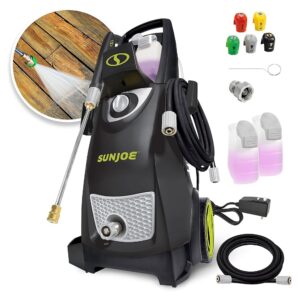
Within the brand, the Greenworks GPW2300 review covers the smaller machine in the same family for anyone who does not need 3000 PSI. Outside it, the Sun Joe SPX3000 review is the volume selling alternative at a lower pressure with a wider accessory set.
For large flat concrete, adding a surface cleaner does more for the result than adding pressure, and the Greenworks 11 inch surface cleaner review covers the brand matched attachment, though its own rating ceiling should be checked against this machine’s output. And since Greenworks markets this as better than gas, it is worth reading the gas pressure washer category to see what the comparison actually involves. Gas machines produce carbon monoxide and must never be run indoors or in a garage, including with the door open, which is a restriction no electric unit carries.
Who should buy it and who should not
Buy it if you have driveways, siding or fencing to clean regularly, an outlet that can carry 14 amps without sharing the circuit, and somewhere to store a 51.7 pound machine. Do not buy it expecting 3000 PSI and 2.0 GPM at the same moment, since the manufacturer’s own cleaning unit figure points to 1.1 GPM at working pressure. Do not read the 2 gallon tank field as a detergent reservoir, and confirm extension cord rules in the manual before the first use.