Description
Who this machine is for and what it settles
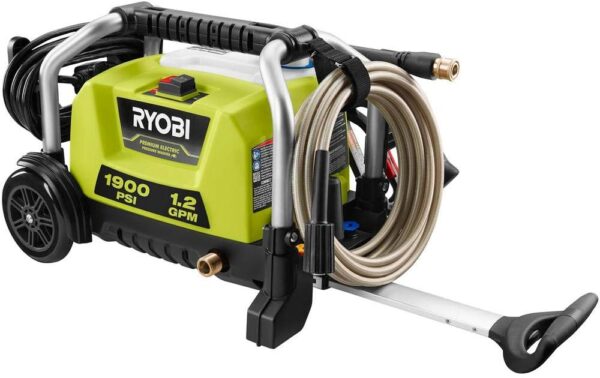
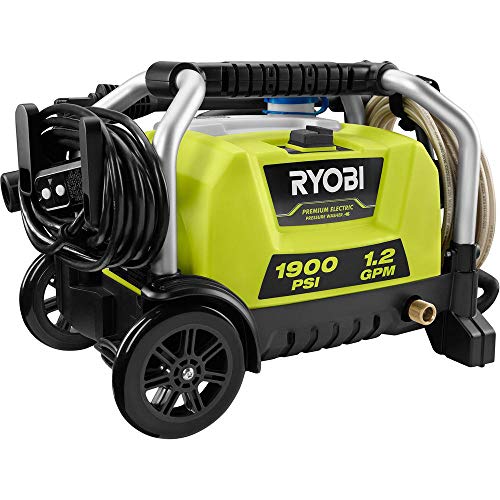
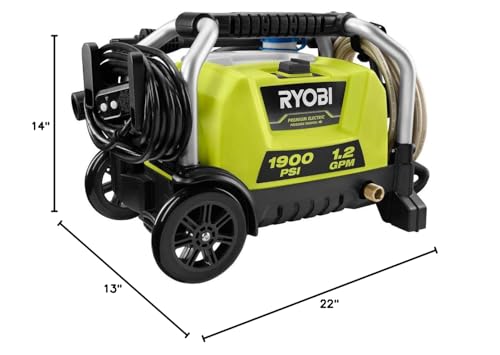
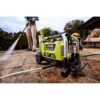
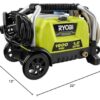
The RYOBI RY1419MTVNM is a wheeled cold water electric pressure washer rated at 1900 PSI and 1.2 GPM, and its design decisions are all about storage and transport rather than output. It has wheels and a telescoping handle so it can be pulled like a suitcase, and RYOBI states it can stand vertically when the job is finished, which turns a 22 by 13 by 14 inch machine into something that occupies a corner rather than a floor space.
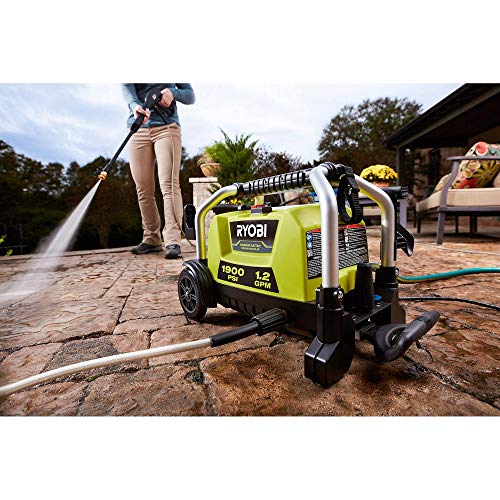
RYOBI aims it at patios, decks, boats, campers and recreational vehicles, and that list is a fair description of what 1.2 GPM handles comfortably. The buyer it suits has moderate jobs and limited storage. The buyer it does not suit has a long driveway, because at this flow rate a large flat surface takes a long time regardless of the pressure figure. Those buyers should look further up the electric pressure washer category.
The specifications that matter
Cleaning power is pressure and flow together. RYOBI publishes 1900 PSI and 1.2 GPM consistently across the title and the specification block, which is more internal agreement than several listings in this catalog manage. Neither figure carries a stated qualifier, though maximum pressure is what the specification field is labeled, so treat 1900 as a ceiling rather than a sustained working figure.
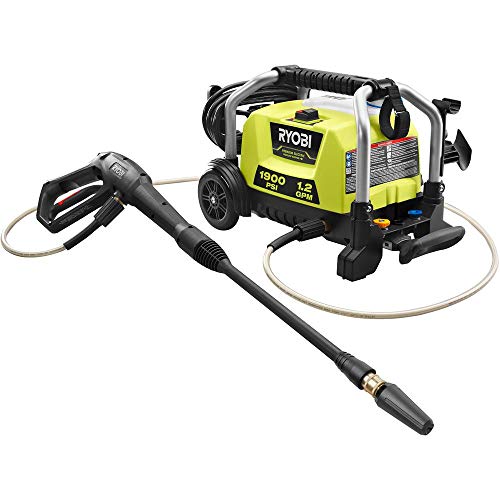
At 22.2 pounds this sits between the carry handle machines and the heavier wheeled units. The hose is described in the product description as a 25 foot non marring hose, which matters more than it sounds: a non marring outer layer is the difference between dragging a hose across a painted deck and leaving black streaks on it. The specification block gives the hose length as 8 metres, which is about 26.2 feet, so the two figures differ by roughly a foot. That is small but it is another instance of the same listing not agreeing with itself.
Three nozzles are named in the description: a turbo nozzle, a 15 degree nozzle and a soap nozzle, all stored on the unit. Three is a narrow selection, and the notable absence is a wide angle rinse tip in the 40 degree range. On siding, painted trim, vehicle paint and softwood decking, 15 degrees is narrower than ideal, and the only remaining control is standing further back.
Detergent tank or detergent hose
The description states an onboard detergent tank for easy soap application. The feature bullet list separately names a detergent hose as an included item. A tank and a siphon hose are different arrangements with different handling, and the listing does not say whether the machine has one, the other or both. The tank volume field reads 1.2 gallons, which matches the flow rate figure exactly and is the same import fault that recurs across this catalog, so it cannot be used to settle the question either.
Using it correctly
The turbo nozzle rotates a narrow jet in a cone. It clears concrete and masonry quickly and it is the tip most likely to leave spiral marks on softer material, strip paint or raise wood grain. With only three tips available, treat the soap nozzle as your low pressure option, the 15 degree tip as the working tip on hard surfaces, and increase your distance from the surface whenever the material is soft. Test on an inconspicuous corner before working across a full area.
A pressure washer jet can force water and surface contaminants through skin, and an injection injury needs immediate medical attention even when the entry wound looks small. Never aim the wand at a person or an animal, never test the spray against your hand, and wear eye protection because grit blasted off a surface returns toward the operator.
On exterior walls, angle the spray downward and keep working distance so water is not driven up behind the siding, where it will not drain. After shutting down, squeeze the trigger to release the pressure still held in the hose before disconnecting a fitting or changing a nozzle. If the machine is stored anywhere that freezes, drain the pump beforehand, since water left inside can crack a housing.
Two habits help on a machine at this flow rate. Work in smaller sections than you would with a higher flow unit, because at 1.2 GPM a wide sweep outruns the water available to carry the loosened dirt away and leaves a film that dries back onto the surface. And put the detergent to work: lay soap down with the low pressure nozzle, let it dwell for a few minutes, then rinse. On a modest flow machine the chemistry does more of the job than the pressure does, and skipping the dwell time is the most common reason a wash takes twice as long as it should.
Limits and gaps in the published data
The feature bullet list on this listing is not a feature list at all. It reads: 1900 PSI Electric Pressure Washer, Trigger Handle, Spray Wand, 25 foot High-Pressure Hose, Detergent Hose, Nozzles, Wheels, Operator’s Manual, with manual misspelled in the original. That is a packing list, and it tells a buyer nothing about how the machine performs. Everything useful on this page comes from the description paragraph and the specification block.
The electrical information is missing entirely. No amperage draw, no motor wattage, no required circuit rating, no statement on whether a GFCI protected outlet is required, and no power cord length appears anywhere. Cord length is a particular omission on a machine sold on portability, because it determines how far from an outlet the unit can actually work. Also unpublished: the maximum inlet water temperature, the required supply pressure and flow, the pump type, the warranty term and the country of origin.
The customer response is soft. Amazon showed a rating of 3.8 out of 5 across 240 ratings at capture, ranked 79,179th in Patio, Lawn and Garden and 365th in pressure washers. Both a sub 4.0 average and a rank in the hundreds are low for an established brand in this category. The model is RY1419MTVNM and the UPC is 046396033383.
Alternatives worth comparing
Within the brand, the RYOBI RY141820VNM review covers the compact machine in the same family, and the RYOBI ONE+ 18V power cleaner review covers the cordless option for jobs with no outlet.
Outside it, the CRAFTSMAN CMEPW1700 review covers a lighter machine with a published 35 foot cord, the Sun Joe SPX3000 review offers a five tip set and dual detergent tanks, and the DEWALT DWPW2400 review covers a heavier wheeled machine at the same 1.1 to 1.2 GPM flow level.
Who should buy it and who should not
Buy it if storage space is the constraint, you want a telescoping handle and vertical storage, and your work is boats, campers, patio furniture and decks. Do not buy it for a large driveway at 1.2 GPM. Do not expect a wide angle rinse tip in the box, and confirm the cord length, amperage and GFCI requirements from the manual before the first use, because the listing publishes none of them.