


Description
What this is, and the two things the title tells you
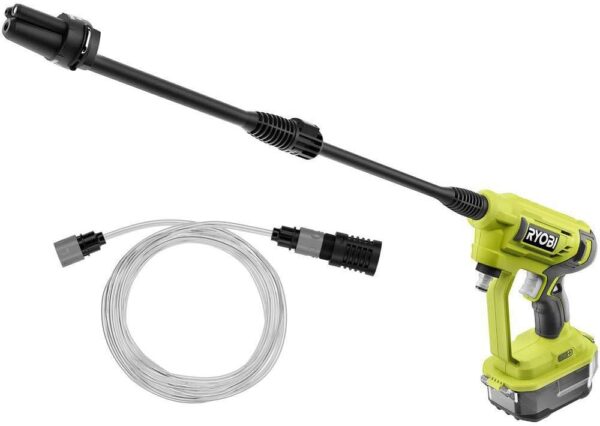
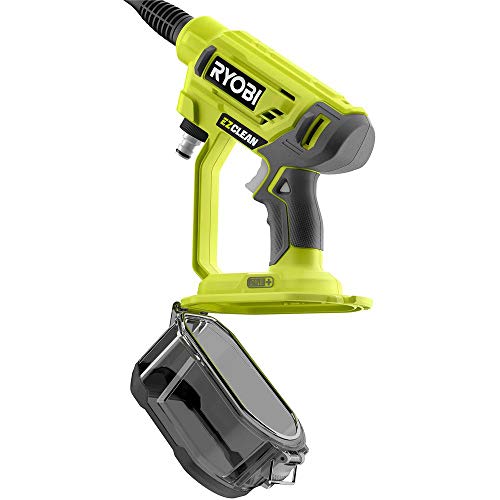
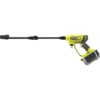
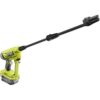
The RYOBI RY120350 is an 18 volt ONE+ cordless power cleaner rated at 320 maximum PSI and 0.8 GPM, and two phrases in the product title do most of the work. It is a Tool Only purchase, so the battery and charger are sold separately, and RYOBI calls it a power cleaner rather than a pressure washer.
Both are honest. At 320 PSI this is the lowest rated corded or cordless machine in this catalog apart from a tank sprayer, and RYOBI describes it as 5 times the power of a garden hose rather than as a substitute for a pressure washer. Entry level corded machines start around 1,700 PSI, more than five times this figure. The buyer this suits already owns ONE+ batteries, of which RYOBI states there are over 125 compatible tools, and wants water where there is no tap.
What it settles: water without plumbing
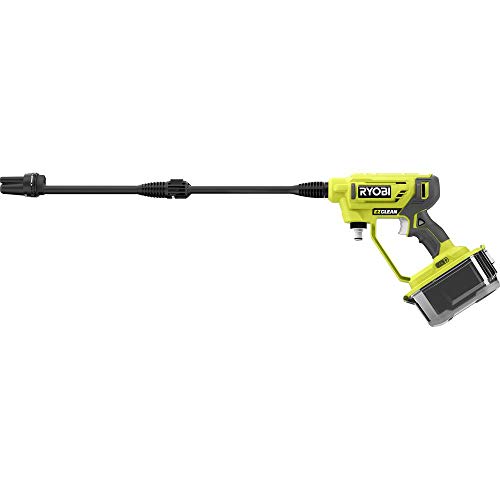
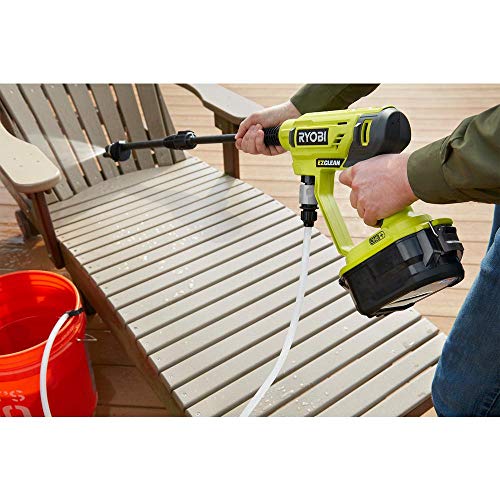
The feature that justifies the format is the 20 foot siphon hose, which is included. It draws from any fresh water source, so a bucket, a rain barrel, a lake or a trough all work, and the tool goes to the job rather than the job coming to a hose bib. RYOBI also states it can connect to a standard garden hose, and notes that the garden hose is not included, which is worth catching before ordering.
RYOBI is specific about what 320 PSI is for: windows, outdoor furniture, boats, campers and other recreational vehicles. That is a well chosen list. It rinses, and it will not strip a driveway, remove algae from decking or take paint off anything. On a boat gelcoat or a camper decal, that limitation is a feature rather than a shortcoming, because higher pressure is exactly what damages those surfaces.
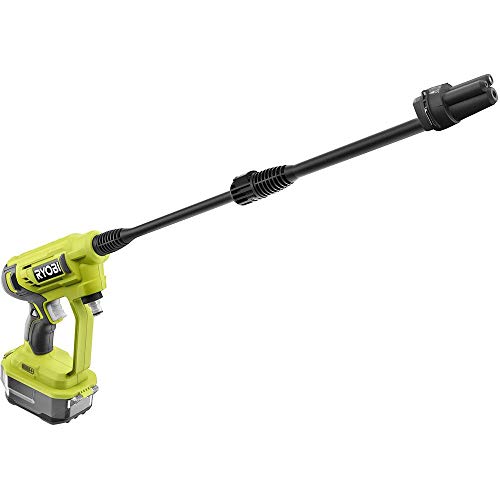
The nozzle is a single 3-in-1 head, so there is nothing to swap and nothing to lose, though three patterns is a narrow selection compared with the six pattern heads on competing cordless tools. The tool weighs 7.4 pounds before a battery is fitted and measures 15.25 by 8.13 by 10.88 inches.
The battery specifications are absent, because there is no battery
Because this ships as a bare tool, the listing publishes no runtime, no recommended amp hour rating, no charge time and no guidance on which pack size suits which job. That gap matters more on a water pump than on a drill, because a pump runs continuously rather than in bursts, and the difference between a compact pack and a high capacity one is the difference between rinsing one vehicle and rinsing three. Confirm the recommended battery capacity with RYOBI before assuming a pack you already own is adequate.
Using it correctly
Even at 320 PSI this is not a garden hose. A water jet can force water and surface contaminants through skin, and while the risk here is low compared with a 3000 PSI machine, the rule does not change: never aim the nozzle at a person or an animal, never test the spray against your hand, and wear eye protection because grit blasted off a surface returns toward the operator.
On a siphon fed tool the water source is the maintenance variable. Drawing from a barrel, a pond or a trough pulls silt and organic debris through the pump on its way to the nozzle, so keep the intake off the bottom, rinse the tool through with clean water afterward, and never let the pump run dry when the source empties. Store the battery at moderate temperature rather than leaving it in a cold vehicle over winter.
Because output is modest, let detergent do more of the work. Applying a cleaner, letting it dwell and then rinsing achieves far more at 320 PSI than trying to blast a surface clean, and it costs no battery at all.
Two more habits are worth building on a bare tool bought into an existing platform. Keep the battery contacts dry, because a water tool exposes them to spray in a way a drill never does, and dry the terminals before putting a pack on the charger. And if the tool will live in a vehicle or a shed, take the pack out between uses rather than leaving it attached, since a pack left on a tool in the cold loses capacity and a pack left in the heat ages faster.
On the 3-in-1 nozzle, work out which of the three patterns suits which job early rather than switching mid panel. With only three settings there is no fine adjustment available, so the choice is between covering ground and concentrating what little pressure there is.
Limits and gaps in the published data
The tank volume field reads 0.8 gallons, which matches the flow rate figure exactly and describes a tank this tool does not have. That pattern of a flow figure landing in a capacity field recurs throughout this catalog.
Not published anywhere: the runtime at any pack size, the recommended battery capacity, the charge time, the maximum inlet water temperature, whether detergent can be run through the nozzle, the warranty term or the country of origin. The feature bullet list is short, at five entries, and one of those is a statement that the battery and charger are not included.
The customer response is soft. Amazon showed a rating of 3.9 out of 5 at capture, with no rating count present in the record, ranked 42,987th in Patio, Lawn and Garden and 239th in pressure washers. A sub 4.0 average on a cordless cleaner usually reflects buyers expecting pressure washer performance from a tool that does not claim it, which is worth bearing in mind when reading reviews of any product in this class. The UPC is 046396028839 and the model is RY120350.
Alternatives worth comparing
Within the brand, the RYOBI RY1419MTVNM review covers the corded machine at 1900 PSI for work this tool cannot do, and the RYOBI RY141820VNM review covers the compact corded option.
Within the cordless format, the DEWALT DCPW550B review covers a 550 PSI bare tool sold the same way inside its own battery platform, the DCPW550P1 review covers the kit version with a battery, and the WORX Hydroshot WG644 review covers a 450 PSI tool that publishes both of its speed settings. Corded machines are in the electric pressure washer category.
Who should buy it and who should not
Buy it if you already own RYOBI ONE+ batteries and want water at places with no tap, for windows, furniture, boats and campers. Do not buy the bare tool if you would have to buy into the battery platform, because the total cost changes the comparison entirely. Do not buy it to clean a driveway or a deck, and confirm the recommended battery capacity, since no runtime figure is published.