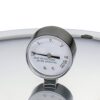

Description
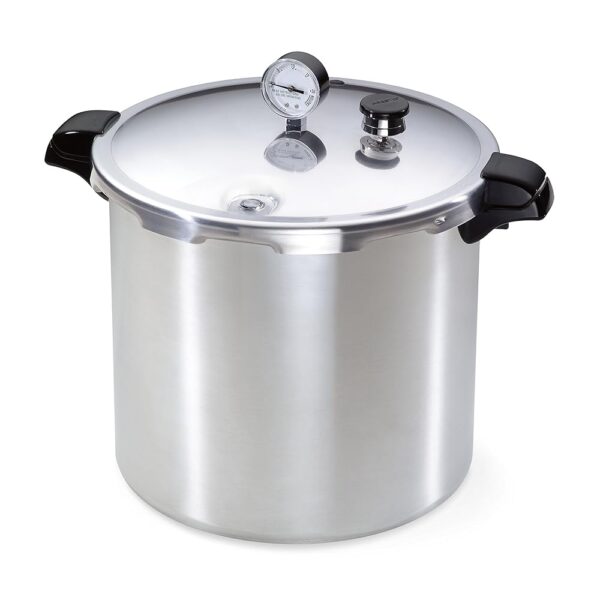
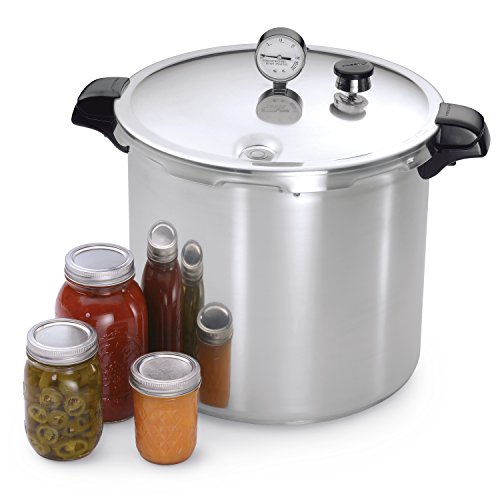
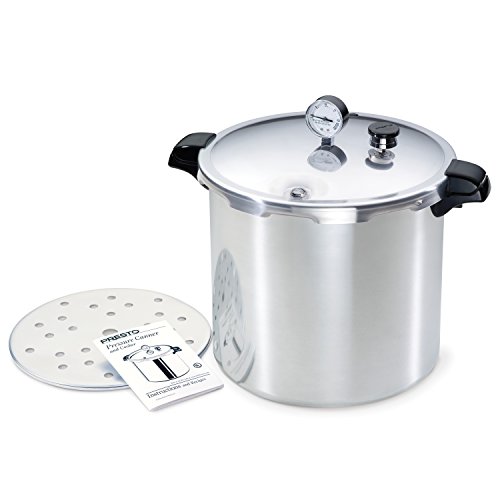
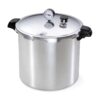
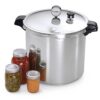
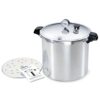
The Presto 01781 is a 23 quart stovetop pressure canner and cooker in heavy gauge aluminum, with a dial gauge, a canning rack and a 76 page instruction and recipe book. It is a canner first and a cooker second, and that distinction decides whether it is the right purchase. This review is written from the published listing data. We do not own or operate the appliance, and this listing’s specification block contains several fields that describe a different kind of product entirely.
Canning and pressure cooking are not the same job
This is the most important thing on the page. A pressure cooker heats food quickly. A pressure canner processes sealed jars at a controlled pressure for a controlled time so that the contents are safe to store at room temperature. The equipment looks similar and the purposes are not.
Presto’s first feature bullet states the position plainly: pressure canning is the only method recommended as safe by the United States Department of Agriculture for canning vegetables, meats, poultry and seafood. That is the manufacturer citing a federal food safety position, and it is the reason a canner exists as a separate category from a cooker.
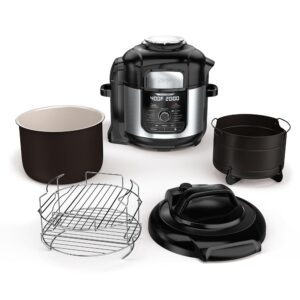
What follows from it is that an electric multi cooker is not a substitute. The Instant Pot Duo and the Ninja Foodi are excellent at cooking under pressure and neither is a pressure canner. Do not read across between them.
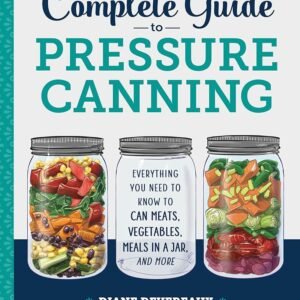
We are not going to publish processing times, pressures or procedures here, because canning safety depends on the specific food, the jar size, your altitude and the equipment, and getting it wrong is not a matter of a poor result. Use the USDA’s own published guidance and your local cooperative extension service, and follow the 76 page book that comes with the canner.
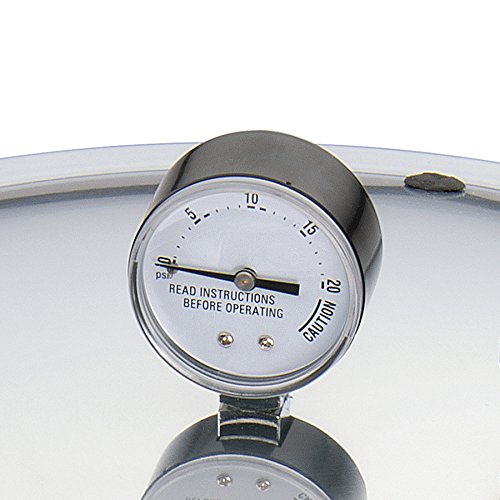
The dial gauge needs checking, and that is not optional
Presto publishes a deluxe pressure dial gauge that registers the complete range of processing pressures, and notes that precise measurement matters especially at higher altitudes. That is correct and it is the reason to prefer a dial gauge canner: it shows you the actual pressure rather than a fixed weight setting.
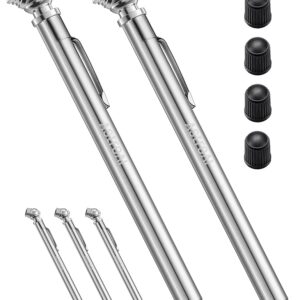
The cost of that precision is maintenance. A dial gauge is a mechanical instrument and it can drift. The standard guidance for dial gauge canners is that the gauge should be tested for accuracy periodically, usually annually, and cooperative extension offices commonly offer that testing. Confirm the current recommendation and where to get it done through your extension service or the USDA’s published material before your first season, and treat it as part of owning the canner rather than an optional extra.
The specifications that matter
Published capacity is 23 quarts, or 21.8 liters, in warp resistant heavy gauge aluminum described as heating quickly and evenly and working on both regular and smooth top ranges. Dimensions are 15.5 inches deep by 17.5 wide by 13.5 high and the published weight is 12 pounds empty. Jar capacity is stated as 26 half pints, 20 pints or 7 quarts. A canning and cooking rack and the instruction book are included, and Presto states an extended 12 year limited warranty, which is far longer than anything else in this catalog.
Consider the practicalities of the size before buying. A 23 quart canner is 17.5 inches wide, which will not fit on every burner arrangement, and it needs vertical clearance under a range hood. Full of water and jars it is heavy enough that lifting it on and off a burner is a two handed job with a hot vessel. Presto states smooth top range compatibility, but check your range manufacturer’s own position, because some glass top manufacturers set limits on the diameter and weight of canners.
It also works as a cooker, with caveats
Presto states the canner doubles as a boiling water canner for fruits, jams, jellies, pickles and salsa, and is handy as a large capacity pressure cooker. Both are true and both come with the same practical limits: it is a 12 pound manual pot that needs a burner watched and a gauge read, so it will not replace an electric cooker for a weeknight meal. For that job, a stovetop unit such as the T-fal pressure cooker is a far more manageable size.
Using it correctly
The hazards here are steam and hot liquid, and they are larger than on a small electric cooker simply because the vessel is larger.
Keep hands, arms and face away from the vent when steam is escaping. Escaping steam is hotter than boiling water and scalds fast. Never attempt to open the lid while there is pressure in the canner, and let the canner depressurize on its own rather than cooling it under a tap, which can warp the pot and crack jars. Do not exceed the fill guidance in the manual. And never leave a canner unattended while it is at pressure; the whole method depends on holding a steady pressure for a set time, and that means watching the gauge and adjusting the burner.
Before every use, check that the vent pipe is clear, inspect the sealing ring for cracks or hardening, and make sure the overpressure plug is in good condition. Those three checks take under a minute and they are where almost every canner problem starts.
The specification block describes a different kind of product
This listing’s structured data is worth ignoring almost entirely, because much of it appears to have been generated for an electric appliance.
The wattage field reads 1000 watts and the voltage field reads 100 volts AC. This is a stovetop pot. It has no motor, no element, no plug and no electrical components of any kind, and it draws its heat from your range. Both fields are meaningless.
The control method field reads “Touch”, which describes a touchscreen rather than a lid and a burner knob. The material field reads aluminum while the finish type field reads stainless steel, which cannot both describe the same pot. The department field reads “Unisex-Adult”, a clothing taxonomy value. And the UPC field contains roughly forty five different barcodes concatenated into a single string, only one of which can belong to this product.
None of that changes what arrives in the box. It does mean that if you are comparing canners on a specification table, this listing’s table will mislead you, and the feature bullets are the only part of the page worth reading.
Who should buy it and who should not
Buy it if you preserve low acid foods and want a large dial gauge canner with a long warranty, you have a range that will take a 17.5 inch pot, and you will have the gauge tested. Do not buy it as a general purpose pressure cooker, because it is large, heavy and manual where an electric model is neither, and do not buy an electric multi cooker as a substitute for it. It sits alongside other assorted items in the mixed shortlist section, which is a long way from the pressure washer listings that make up most of this site. Feedback is recorded at 4.8 out of 5 across 19,408 ratings, on a product first listed in 2002.