Description
Who this book is for and what it settles
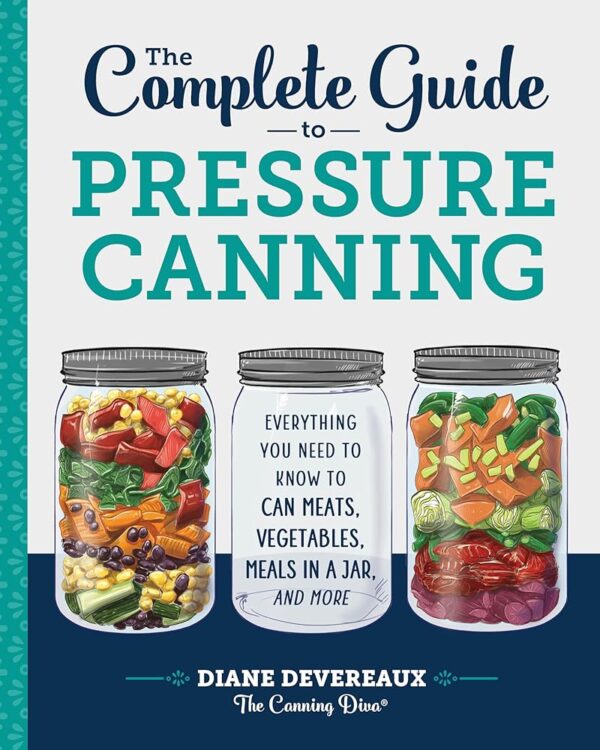
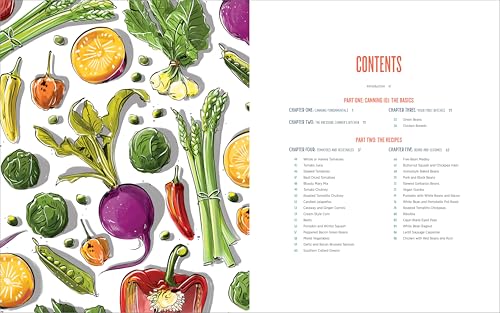
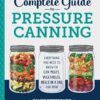
The Complete Guide to Pressure Canning is a 230 page paperback published by Callisto on July 24, 2018, and it sits in this catalog because pressure canning is the one household activity where a pressure rated vessel and a printed process chart have to be bought together. The decision it settles is narrow. If you have just ordered a canner and do not yet own a reference that lists processes for specific foods, this is the kind of title that fills that gap. If you already own a current preservation manual, a second general guide adds little.
The subtitle on the cover states the scope as canning meats, vegetables, meals in a jar and more, which places it squarely in the low acid category where pressure processing rather than boiling water processing is required. That is also the category where the consequences of an incorrect process are most serious, so the reason to own a reference at all is the process tables rather than the recipes.
What the listing actually publishes
Very little, and that is worth stating up front. The imported record for this book carries no product description and no feature bullets whatsoever. Both fields are empty. Everything below comes from the bibliographic block, from the cover subtitle, or from customer review text on the listing, and each is attributed accordingly.
The bibliographic data is straightforward. Publisher Callisto, publication date July 24, 2018, language English, paperback binding, 230 pages, ISBN-10 1641520906, ISBN-13 978-1641520904. Physical dimensions are given as 8 by 0.56 by 10 inches, which is a large format trim rather than a pocket paperback, and that trim size usually means readable tables and room for photography. Amazon showed a customer rating of 4.7 out of 5 across 13,518 ratings when the listing was captured.
The author is not named anywhere in the data
The imported record names the publisher but never names the author. For a preservation reference that is a real omission, because the credibility of a process chart rests on who compiled it and against what source. Customer review text on the listing refers to the writer as her and mentions buying all of her books, but a pronoun in a review is not an attribution. Check the cover and the copyright page before treating any book as an authority, and confirm which edition you are being shipped.
Using a canning reference correctly
A book is not a substitute for tested processes, and a review is not the place to reproduce them. Pressure canning process times and pressures depend on the specific food, the jar size, the pack style and the elevation of the kitchen. The authoritative published sources are the USDA Complete Guide to Home Canning and the National Center for Home Food Preservation, and the manual supplied with the canner itself. Treat any book, including this one, as a convenience layer over those sources rather than as a replacement for them.
The publication date matters for exactly that reason. This edition is from 2018. Preservation guidance is revised periodically, and a reader working from a book several years old should confirm that the process for any particular food still matches current published guidance before relying on it. If a recipe anywhere omits a pressure or a processing time, treat it as incomplete rather than as flexible.
The other half of the setup is the hardware. A book about pressure canning is useless without a canner that can hold pressure, and the pairing readers most often make is with a large stovetop unit such as the T-Fal 22 quart canner we review or the Presto stovetop canner review. Both carry their own manuals, and those manuals take precedence over any third party book on anything to do with pressure settings and altitude adjustment.
Limits and gaps
Beyond the missing description and the unnamed author, one specification looks wrong. The item weight is listed as 2.31 pounds. A 230 page paperback at an 8 by 10 inch trim would normally weigh well under that, so the figure is either shipping weight, a data error, or a page count that does not match the physical book. We are naming the discrepancy rather than picking a number.
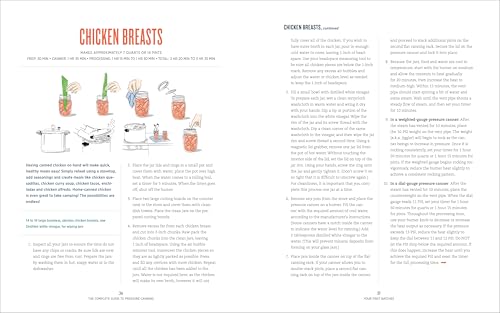
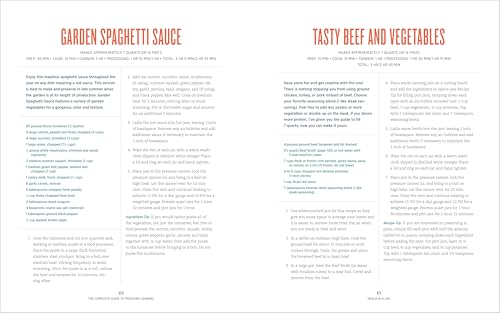
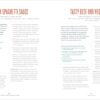
The sales rank field is also incomplete. It reads only as a reference to the top 100 in Books with no numeric position attached, so there is no usable rank figure to report. Customer review text on the listing describes step by step guides, troubleshooting advice and tested recipes, and one reviewer specifically calls it suitable for beginners, but customer impressions are not a verification of the process tables.
One more limit is worth naming for a book rather than a device. A printed reference cannot tell you whether your particular canner is holding the pressure it claims, whether the gauge has drifted, or whether the sealing ring has hardened. Those are hardware checks, and they belong to the equipment manual and to the manufacturer. A book that is used as a substitute for reading the canner manual is being used incorrectly no matter how good the book is, because process charts assume the equipment is working as designed and verified.
There is also a filing oddity worth stating. A cookbook is not a pressure device, and it sits alongside the mixed shelf of pressure rated gear we cover rather than in any category built for printed reference material. That is how the catalog is arranged and it says nothing about the book.
Alternatives worth comparing
The most useful comparison is not another book but the manual that ships with the equipment, which is free and specific to the vessel. Beyond that, readers who discover mid research that they wanted speed rather than preservation are usually looking at electric multicookers, and the Instant Pot Duo 7-in-1 review and the Instant Pot Duo Plus review cover that split. Electric multicookers are not canners unless the manufacturer states the model is approved for canning, and most are not.
For a household that wants one appliance to cover pressure cooking and frying rather than preservation, the Ninja FD401 Foodi review covers that format. None of those machines replace a reference book, and none of them replace tested process charts.
Who should buy it and who should not
Buy it if you are new to pressure canning, want a large format printed reference next to the stove, and will treat it as a companion to current published preservation guidance rather than the last word. Do not buy it expecting the listing to tell you what is inside, because the description and feature bullets are empty, and do not buy it as your only source for process times. Confirm the edition and the author on the physical copy when it arrives.