
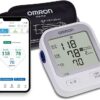



Description
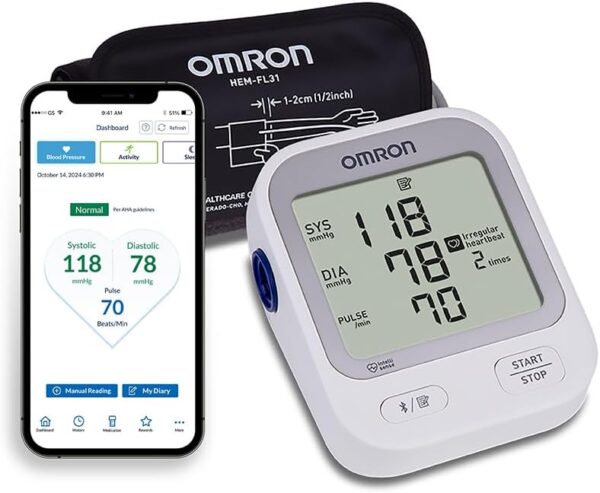
The OMRON BP5255, sold as the OMRON Silver, is an upper arm blood pressure monitor with a pre formed Easy-Wrap ComFit cuff, Bluetooth to the OMRON Connect app and a large LCD screen. It was added to the range in late 2024. This review describes the device from its published listing data. It is not medical advice, it does not tell you what any reading means, and a home monitor does not replace professional medical care. Readings belong in a conversation with a clinician who knows your history.
Who this monitor is for and what it settles
The Silver sits below the Gold and Platinum in OMRON’s consumer range and settles whether the cheaper connected model gives up anything important. On the specification sheet the answer is mostly warranty and memory. OMRON publishes a two year warranty here, against five years on the OMRON Gold BP5350 and six on the OMRON Platinum. For a device used several times a week over years, that difference is more concrete than most of the feature list.
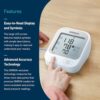
The cuff is the practical draw. OMRON describes a pre formed Easy-Wrap ComFit cuff that inflates 360 degrees around the arm, which is intended to make one handed self fitting easier and reduce errors from a poorly seated cuff. If fitting a conventional cuff single handed is a struggle, that is a real reason to choose this model. A separate Easy-Wrap cuff is also listed here for other OMRON monitors.
The cuff range, published in full
Cuff fit is the specification that decides whether a reading is worth anything. A cuff too small or too large produces wrong numbers on a device functioning perfectly, and careful technique does not compensate for it.
OMRON publishes the figure clearly: the cuff is stated to fit adult upper arms from 9 to 17 inches in circumference, and the structured band size field agrees. That is a complete specification and it is more than several listings in the blood pressure monitor section provide. Measure your upper arm at the midpoint between shoulder and elbow before ordering, using a tape measure against bare skin. If you fall outside that range, the fix is a different cuff, not a different measuring technique.
Using it correctly
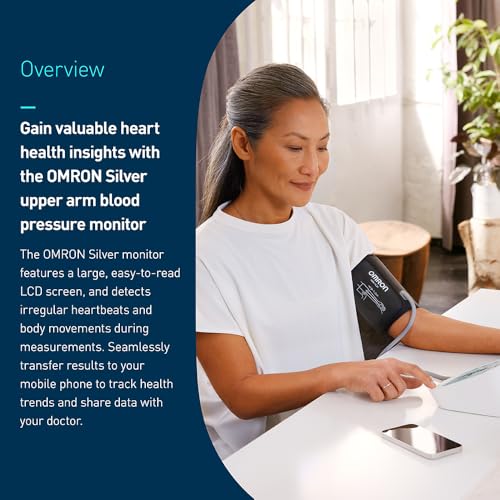
Home readings are useful to a clinician when the routine is the same every time. Sit with your back supported and feet flat on the floor, rest quietly for several minutes first, support the arm at roughly heart level, fit the cuff on bare skin rather than over a sleeve, and stay still and silent while the measurement runs. Take readings at consistent times of day. Follow OMRON’s manual, and follow any protocol your clinician has given you in preference to a general routine.
Two of the device’s features report rather than interpret, and the distinction matters.
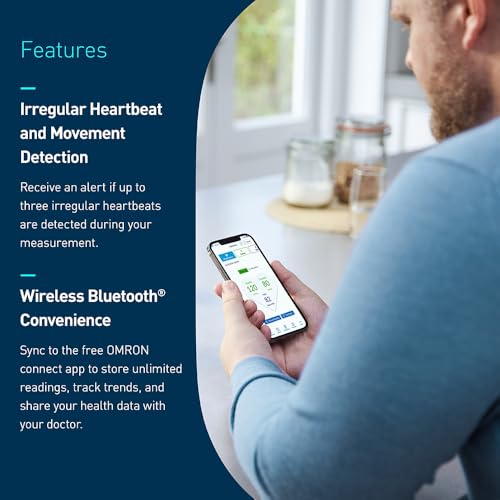
Irregular heartbeat detection alerts you when the device detects up to three irregular heartbeats during a measurement. That is a flag, not a diagnosis. It tells you the device saw something irregular in the pulse while measuring; it does not say what it was, whether it is significant, or what should be done. If the symbol appears, note it and raise it with a clinician.
The listing also states that the monitor alerts you when readings fall into a range OMRON describes as hypertensive. That is the device sorting a number into a band it has been programmed with. It is not an assessment of you, it does not account for your history, your medication or the circumstances of the measurement, and this page will not tell you what any range or alert means. Treat it as a prompt to seek professional input.
What the accuracy claims actually say, and where they conflict
This listing carries an unusually crowded set of claims and they do not all hold up equally.
The product title states the monitor is clinically validated, medical grade and FDA cleared. A feature bullet on the same listing states it is FDA registered as a medical device. FDA registration and FDA clearance are different regulatory statuses: registration means a manufacturer has listed itself and its device with the agency, while clearance means the agency reviewed a specific device before marketing. A listing that asserts both in different places is blurring the distinction. “Medical grade” is a marketing phrase with no regulatory definition at all.
The listing further states that the monitor meets Validated Device Listing criteria for clinical accuracy as determined through an independent review process. No validation protocol is named. Independent validation programs for blood pressure devices publish their own device listings, and a reader can check the model there, just as regulatory status can be checked in the FDA’s own databases rather than on a product page.
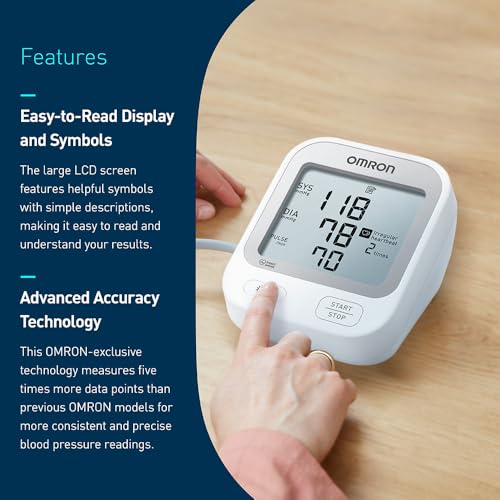
OMRON’s Advanced Accuracy Technology is described as measuring five times more data points than previous OMRON models in order to reduce the effect of body movement. That is a manufacturer statement about its own engineering, offered without a comparison figure you can verify. The listing also repeats OMRON’s brand claims about being the most recommended and the world’s best selling blood pressure monitor brand; those are marketing and we cannot verify them.
We do not test devices and we will not describe any monitor as accurate, clinically accurate or medical grade in our own voice. Feedback here is recorded at 4.4 out of 5 across 489 ratings, a small sample by OMRON standards and consistent with a product first listed in September 2024.
What the listing does not publish
Unlike the Gold and Platinum listings, this one never states how many readings the device stores on its own. It says unlimited readings are stored in the OMRON Connect app, which is a different thing: if you do not use the app, you cannot tell from this listing how much history the monitor keeps. Ask OMRON before buying if on device memory matters to you.
The included components list reads cuff, tube, pump and case, with four AA batteries supplied. No AC adapter is included. Two weight figures appear, 1.55 pounds in the dimensions field and 1.6 pounds in the item weight field, which is the same figure rounded differently rather than a real conflict.
Alternatives in this catalog
The Gold and Platinum linked above are the steps up, adding on device memory, longer warranties and, on the Platinum, an AC adapter in the box. Below this model, the OMRON Bronze BP5100 removes Bluetooth entirely for buyers who do not want an app involved. A handful of further monitors sit in the mixed shortlist section alongside unrelated pressure products.
Who should buy it and who should not
Buy it if your upper arm measures between 9 and 17 inches, the wrap around cuff solves a fitting problem for you, and you want app syncing at the lower end of OMRON’s connected range. Do not buy it if you want a long warranty, if you need a stated on device memory capacity, or if you need mains power in the box. And read the regulatory wording on the listing carefully rather than taking “medical grade” at face value.