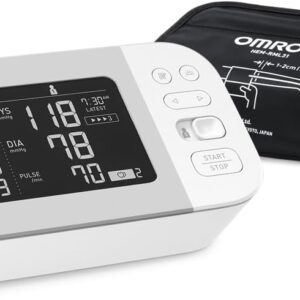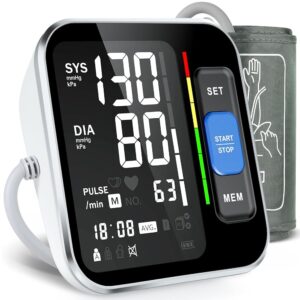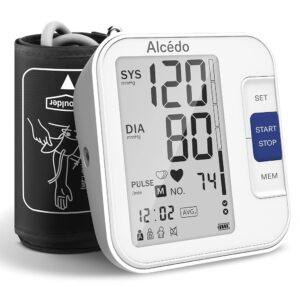


Description
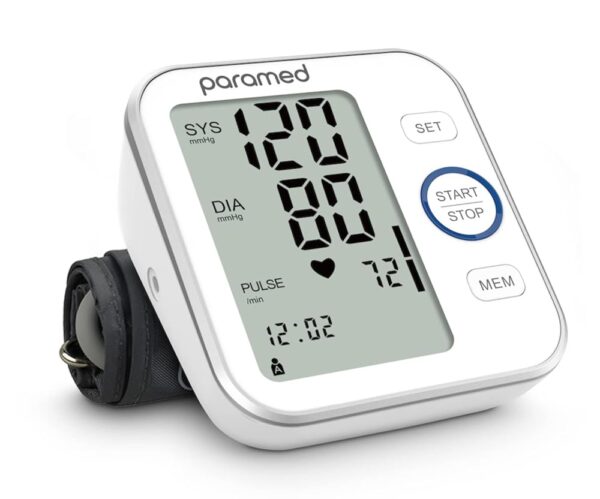
The Paramed automatic upper arm blood pressure monitor is a plainly specified device with a large LCD, big buttons, a self checking cuff and a voice broadcast that can be switched off. It has one of the largest feedback records in this catalog. It also carries one listing field that needs correcting before anything else. This review describes the device from its published listing data. It is not medical advice, it does not tell you what any reading means, and a home monitor does not replace professional medical care. Readings belong in a conversation with a clinician who knows your history.
The listing says this device is for adults and children. The cuff says otherwise.
The structured age range field on this listing reads “Adult, Child”. The cuff supplied with the device is stated to fit arm circumferences from 8.7 to 16.5 inches, or 22 to 42 centimeters, which is an adult range. No pediatric cuff is offered, described or referenced anywhere on the page.
Cuff size is not a detail here. A cuff that is too large for the arm it is wrapped around produces wrong readings on a device that is functioning perfectly, and a small child’s arm is far below the bottom of this cuff’s range. Measuring a child’s blood pressure needs a cuff sized for that child, and the interpretation of the result is a clinical matter that belongs entirely with a clinician who knows the child. Do not use this device on a child on the strength of that field. If a clinician has asked you to monitor a child at home, ask them what cuff size to use and follow that; separate pediatric cuffs such as the Elera pediatric cuff exist and compatibility with any given monitor has to be confirmed.
We are flagging the field rather than assuming it is harmless, because “Adult, Child” on a medical device listing is the kind of thing a shopper reads at face value.
The cuff range for adults, published properly
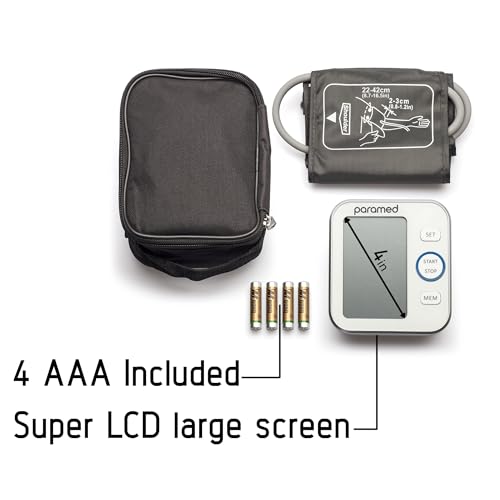
For its intended adult audience the listing does this well. The product title, a feature bullet and the structured band size field all agree: 8.7 to 16.5 inches, given as 22 to 42 centimeters, and the two units convert correctly. That is more internal consistency than most listings in the blood pressure monitor section manage.
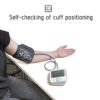
Measure your upper arm at the midpoint between shoulder and elbow before ordering. Paramed describes the cuff as self checking, stating that the feature helps you put the cuff on correctly. That is a genuinely useful addition, because a correctly sized cuff worn wrongly produces the same bad reading as the wrong size.
Who this monitor is for and what it settles
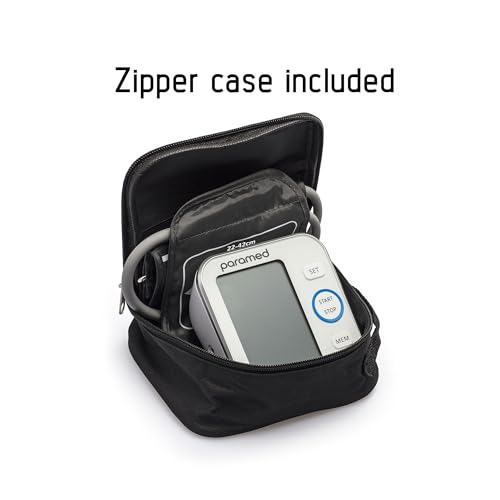
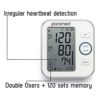
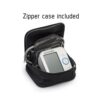
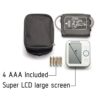
This device settles the accessibility question without adding complexity. The listing publishes a large LCD with oversized numbers, large buttons, a voice broadcast that announces readings and can be turned off for silent use, a low battery indicator and a date display. Two user profiles store 120 readings between them. Four AA batteries and a carrying bag are included.
Nothing in the listing describes Bluetooth or an app, so the on device memory is your entire record. Published weight is 550 grams. Feedback is recorded at 4.5 out of 5 across 25,421 ratings, one of the largest samples in this catalog, which measures buyer satisfaction rather than measurement performance.
Two more fields that do not hold up
The power source field reads “Corded Electric, Battery Powered”, but nothing in the listing describes a cable, an adapter or a socket connection, and the included components are only a case and batteries. Assume battery operation unless Paramed confirms otherwise, and budget for AA cells.
The material feature field reads “Safe”. That is not a specification, it is not a certification, and it means nothing. Do not read it as any kind of regulatory statement.
There is also no manufacturer model number published anywhere on this listing. This page previously used the Amazon catalog identifier as though it were a model number, which it is not. If you contact Paramed about parts, cuffs or warranty, you will need to identify the device by its title and the Amazon listing rather than by a model code.
Using it correctly
Two further gaps before the routine. The listing publishes no warranty term, where several competitors state one to six years, and it never mentions irregular heartbeat detection, which most monitors at this price advertise. Assume neither is offered unless Paramed confirms otherwise, and note that the very large ratings count on this listing tells you nothing about either point.
Home readings are useful when the routine never changes. Sit with your back supported and feet flat on the floor, rest quietly for several minutes before starting, support the arm at roughly heart level, fit the cuff on bare skin rather than over a sleeve, and stay still and silent while the measurement runs. Take readings at the same times each day so they can be compared with one another. Follow the manual for the exact fitting the device expects, and follow any protocol your clinician has given you in preference to a general routine.
With two profiles, make sure each person selects their own before measuring, or the record becomes a mixture of two people’s numbers and is useful to nobody.
What the accuracy claims actually say
The previous description on this page claimed precise readings comparable to professional medical equipment. Nothing published on this listing supports that. The listing itself is restrained and makes no numerical accuracy claim, but it also names no validation protocol, cites no independent validation body, and says nothing about FDA clearance or registration.
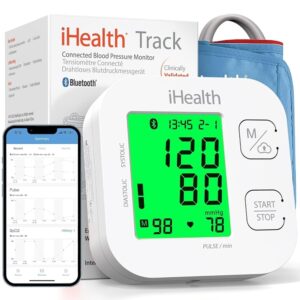
Some listings here do name something checkable, such as the iHealth Track and its reference to ESH 2010 performance standards. If validation status matters to your decision, the device listings published by validation programs and the FDA’s own databases are the places to check rather than a product page. We do not test devices and we will not describe any monitor as accurate, clinically accurate or medical grade in our own voice.
Who should buy it and who should not
Buy it if you want a simple, accessible monitor with spoken results, large controls, a self checking cuff and a very large feedback history, and your upper arm measures between 8.7 and 16.5 inches. Do not buy it for a child on the strength of the age range field, do not buy it expecting mains operation, and do not buy it if published validation matters to you. Paramed’s other devices here include a wrist monitor and a manual cuff and stethoscope set, both filed in the mixed shortlist section.