Description
The Konquest KBP-2704A is an upper arm blood pressure monitor with a large backlit LCD, an irregular heartbeat detector and a one size fits most cuff. It has been on sale since 2018 and has accumulated the second largest feedback record in this catalog. This review describes the device from its published listing data. It is not medical advice, it does not tell you what any reading means, and a home monitor does not replace professional medical care. Readings belong in a conversation with a clinician who knows your history.
Who this monitor is for and what it settles
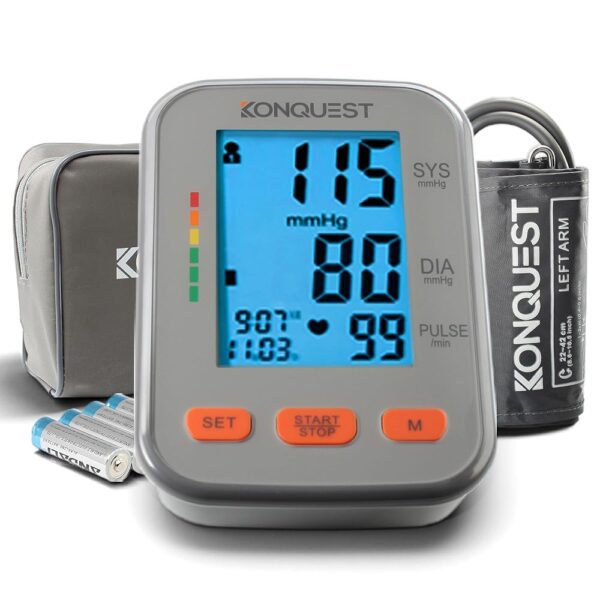
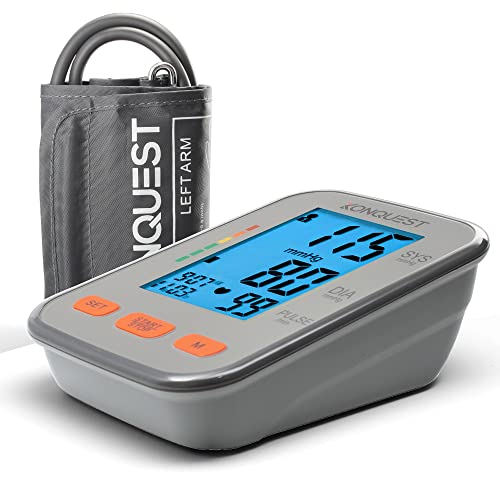
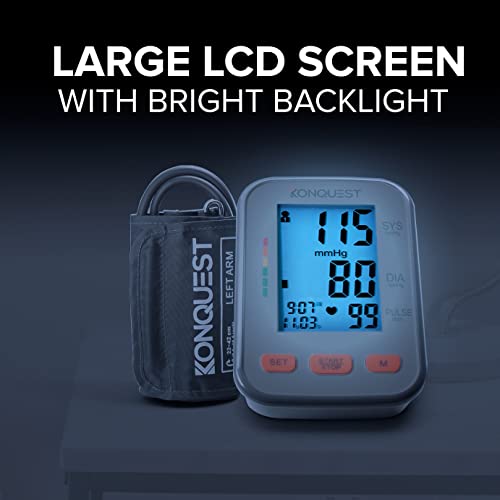
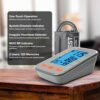
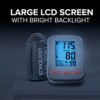
The KBP-2704A settles the question of what a plainly specified, long established consumer monitor looks like. There is no app, no Bluetooth, no voice function and no color screen. There is a large bright LCD that shows systolic pressure, diastolic pressure, pulse rate, the date, the time and the user on one screen at once, and a single button to start.
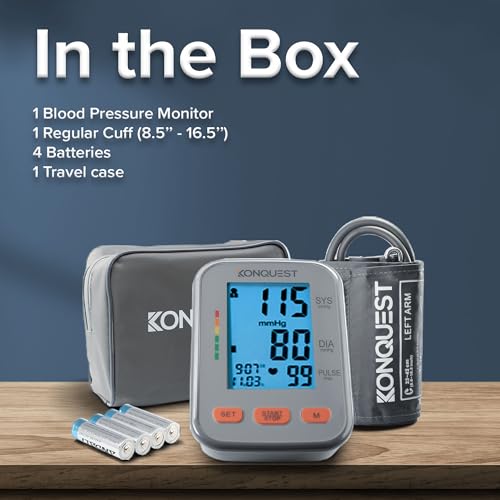
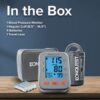
Konquest states the kit contains everything needed out of the box: the monitor, the cuff, batteries, an illustrated owner’s manual and a storage and carrying case. Published dimensions are 5.8 by 4 by 2.2 inches at 1.3 pounds. Feedback is recorded at 4.5 out of 5 across 34,109 ratings, which is a very large sample and one of the highest averages here at that volume. It measures buyer satisfaction rather than measurement performance, but a device that has been sold in those numbers since 2018 without the rating collapsing is at least a known quantity.
The cuff range, and where the listing publishes it
Cuff fit determines whether a reading is worth recording, because a cuff that is too small or too large produces wrong numbers on a device that is functioning perfectly. It is a measurement problem, not a comfort problem.
Konquest publishes the range in two feature bullets: the cuff is stated to fit adult arms from 8 and a half inches to 16 and a half inches, which the listing also gives as 22 to 42 centimeters. Those two figures do not convert precisely to each other, since 8.5 inches is closer to 21.6 centimeters than 22, but the discrepancy is small and the range itself is clear. The structured band size field, as on many listings here, reads only “16.5 inches” and gives no minimum, so work from the bullets rather than the specification table.
Measure your upper arm at the midpoint between shoulder and elbow before ordering. Konquest describes the cuff as one size fits most, and “most” is the operative word: if you measure outside 8.5 to 16.5 inches, this is the wrong device and a monitor supplied with a larger cuff, such as the LIVAROCI U80B with its 13 to 21 inch second cuff, is where to look.
Two things the listing does not settle
The batteries are described two different ways. The structured batteries field reads “4 AA batteries required, included”, while a feature bullet in the same listing says four AAA batteries are supplied. AA and AAA are different sizes and one of those statements is wrong. It matters only when you come to replace them, but it is worth checking what the device actually takes before buying a pack of the wrong thing.
More significantly, the listing never states how many readings the monitor stores. The display is described as showing a user indicator, which implies more than one profile, and the feature bullets mention nothing about memory capacity at all. On a device with no app and no export, on device memory is your entire record, so this is a real gap. Ask Konquest before buying if you intend to keep a history rather than write readings down.
Using it correctly
One further gap: the listing publishes no warranty term, where several competitors state one to six years. Ask before ordering if that matters.
Home readings are useful when the routine never changes. Sit with your back supported and feet flat on the floor, rest quietly for several minutes before starting, support the arm at roughly heart level, fit the cuff on bare skin rather than over a sleeve, and stay still and silent while the measurement runs. Take readings at the same times each day so they can be compared with one another. Follow the owner’s manual for the exact fitting the device expects, and follow any protocol your clinician has given you in preference to a general routine.
Two device features report rather than interpret, and the distinction matters.
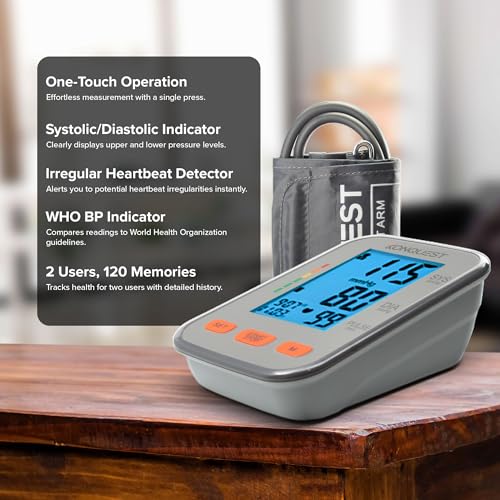
The irregular heartbeat detector alerts you automatically when the device detects an irregular beat during a measurement. That is a flag for a clinician to assess. It does not identify the irregularity, it does not say whether it is significant, and it diagnoses nothing.
The blood pressure indicator is described as based on established guidelines from the World Health Organization. Citing an organization’s published categories is not the same as that organization endorsing the device, and the indicator itself is doing nothing more than sorting a single reading into a fixed band. It knows nothing about your history, your medication or the circumstances of the measurement. This page will not tell you what any band or number means. If a reading concerns you, record it and raise it with a clinician.
What the accuracy claims actually say
The previous description on this page claimed accurate and consistent readings. The listing itself is comparatively restrained: it describes the display, the cuff, the detector and the indicator without making a numerical accuracy claim at all. What it also does not do is name a validation protocol, cite an independent validation body, or state anything about FDA clearance or registration.
Some listings in this catalog do name something checkable, such as the iHealth Track with its reference to ESH 2010 performance standards. If validation status matters to your decision, the device listings published by validation programs and the FDA’s own databases are the places to check rather than a product page. We do not test devices and we will not describe any monitor as accurate, clinically accurate or medical grade in our own voice.
Who should buy it and who should not
Buy it if you want a straightforward monitor with no app, a very large feedback history, a case and batteries in the box, and an arm between 8.5 and 16.5 inches. Do not buy it if you need a stated memory capacity before purchase, or if you want published validation. Within Konquest, the KBP-2910W is the sibling model, the rest of the monitor section covers the alternatives, and a few further devices sit in the mixed shortlist section next to unrelated pressure products.