

Description
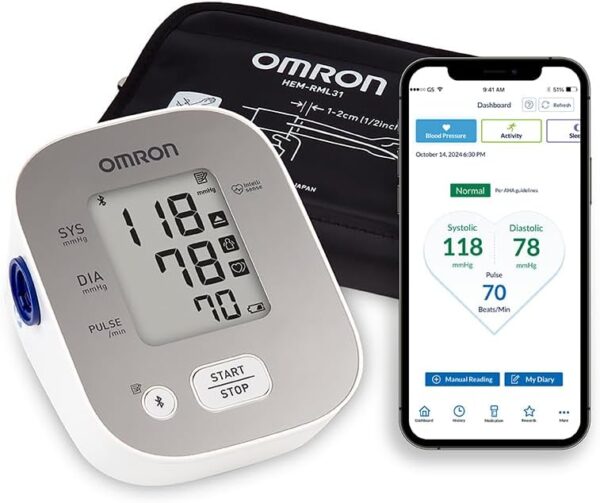
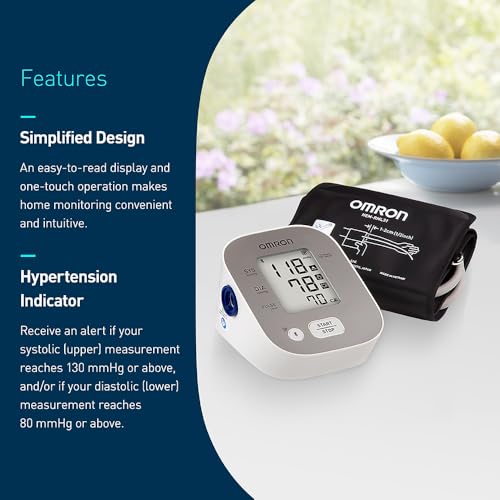
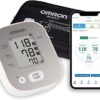
The OMRON Bronze BP5150 is the entry point of OMRON’s connected range: an upper arm monitor with a wide range D-ring cuff, Bluetooth to the OMRON Connect app, and a deliberately simplified single user design. This review describes the device from its published listing data. It is not medical advice, it does not tell you what any reading means, and a home monitor does not replace professional medical care. Readings belong in a conversation with a clinician who knows your history.
Who this monitor is for and what it settles
The Bronze BP5150 settles whether one person can get OMRON’s cuff and connectivity at the bottom of the range. The answer is largely yes, with one substantial limitation you need to understand before ordering.
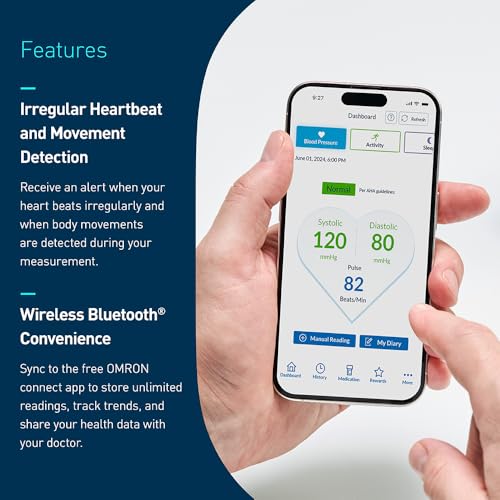
The device is designed for one user and stores 14 readings on the monitor itself. Fourteen. That is not a typing error and it is not a small number in a relative sense; it is roughly a week of morning and evening measurements. Everything beyond that lives in the OMRON Connect app, which stores an unlimited history and lets you share data with your doctor. If you intend to use the app, the on device memory is a buffer and the limitation is invisible. If you do not want a phone involved, this is the wrong device, and a monitor with a large on device memory such as the OMRON Gold BP5350 at 60 readings per user, or the higher capacity devices elsewhere in the blood pressure monitor section, is the better starting point.
Note also that this is a single user device. Two people cannot keep separate histories on it.
The cuff range, published in full
Cuff fit is the specification that decides whether readings mean anything, because a cuff too small or too large produces wrong numbers on a device working perfectly. Careful technique does not compensate for the wrong cuff.
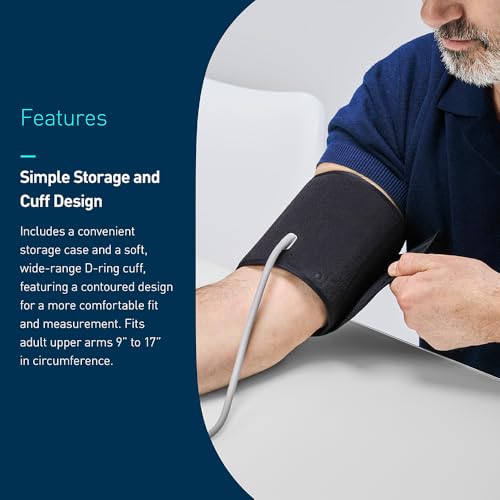
OMRON publishes this properly. The cuff is described as a soft, wide range D-ring cuff with a contoured design, stated to fit adult upper arms from 9 to 17 inches in circumference, and the structured band size field agrees at 9 to 17 inches. Measure your upper arm at the midpoint between shoulder and elbow with a tape measure against bare skin before ordering. If you fall outside that range, the answer is a different cuff, not a different technique.
Using it correctly
Consistency is what makes home readings useful to a clinician. Sit with your back supported and feet flat on the floor, rest quietly for several minutes before starting, support the arm at roughly heart level, fit the cuff on bare skin rather than over a sleeve, and stay still and silent while the measurement runs. Measure at the same times each day. Follow OMRON’s manual, and follow any protocol your clinician has given you in preference to a general routine.
Three of the device’s features report rather than interpret.
Irregular heartbeat detection alerts you when the device detects an irregular beat during a measurement. That is a flag for a clinician to assess. It does not identify the irregularity, it does not say whether it matters, and it diagnoses nothing.
Body movement detection alerts you when the device detects movement while measuring. This one is genuinely useful as a quality control feature: movement corrupts a reading, and knowing a measurement was disturbed is better than recording a number you cannot trust.
The third is the hypertension indicator. OMRON publishes specific systolic and diastolic threshold values on this listing at which the indicator triggers. We are not going to repeat those numbers here, because a threshold on a consumer device is not a diagnosis and is not guidance for you to act on. The device is sorting a reading against a fixed value; it knows nothing about your history, your medication, the time of day or how you were sitting. If the indicator appears, record it and raise it with a clinician. Nothing on this page tells you what any number means.
What the accuracy claims actually say, and where they conflict
The product title states the monitor is clinically validated, medical grade and FDA cleared. A feature bullet on the same listing states it is FDA registered as a medical device. Those are different regulatory statuses: registration means a manufacturer has listed itself and its device with the agency, while clearance means the agency reviewed a specific device before marketing. Asserting both in different places on one listing blurs a real distinction. “Medical grade” is a marketing phrase with no regulatory definition at all.
The listing further states the monitor meets Validated Device Listing criteria for clinical accuracy as determined through an independent review process, without naming the validation protocol. Independent validation programs publish their own device listings and the FDA maintains its own databases; both are better places to check than a product page.
OMRON also repeats its brand claims about being the most recommended and the world’s best selling blood pressure monitor brand. Those are marketing statements and we cannot verify them. We do not test devices and we will not describe any monitor as accurate, clinically accurate or medical grade in our own voice. Feedback here is recorded at 4.5 out of 5 across 392 ratings, a small sample consistent with a product first listed in August 2024.
Two practical details in the small print
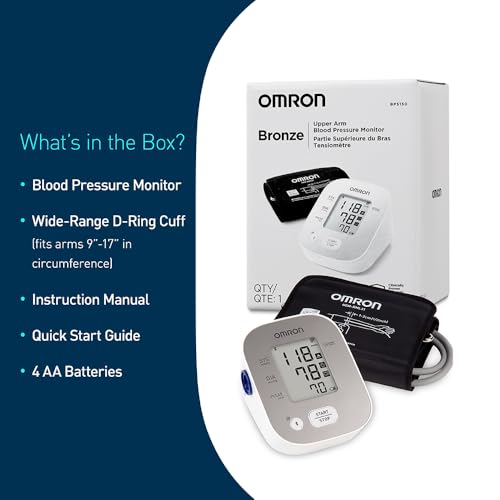
The batteries field reads “4 AA batteries required” without the word included, where several other OMRON listings explicitly say batteries are supplied. Check before ordering so the device is usable on arrival.
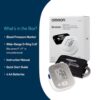
The included components list reads cuff, tube and pump, while a feature bullet describes a convenient storage case. The case may well be in the box, but the two parts of the listing do not agree, so do not count on it.
One more point about naming. This catalog contains a second OMRON device also called Bronze, the BP5100, which likewise stores 14 readings but does not publish Bluetooth. If you are shopping by the word Bronze rather than by model number you can easily end up with the wrong one. Check for BP5150 or BP5100 specifically.
Who should buy it and who should not
Buy it if one person will use it, you want OMRON’s wide range cuff and app syncing at the lowest price in the connected range, and your upper arm measures between 9 and 17 inches. Do not buy it if two people need separate histories, if you want a usable record without a phone, or if a two year warranty is too short for you. The OMRON Silver BP5255 and the Gold above it are the next steps up, and a few further monitors sit in the mixed shortlist section beside unrelated pressure products.