

Description
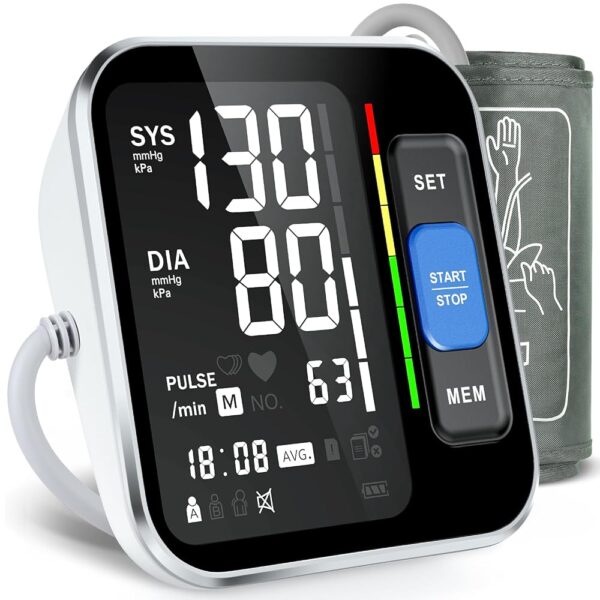
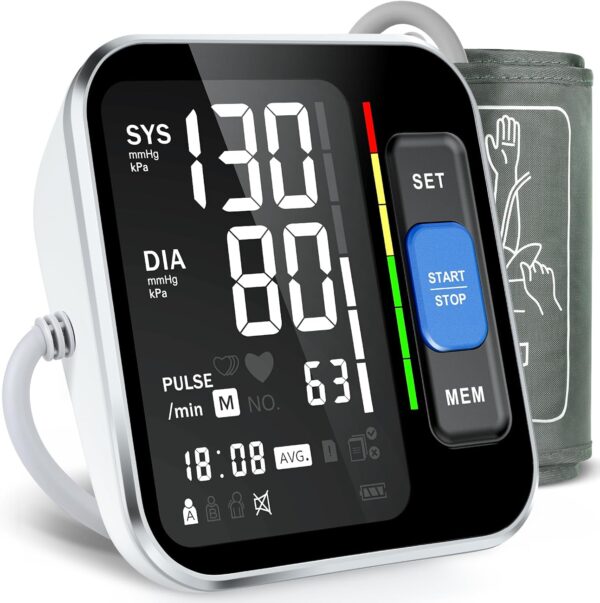
The ATUDER B23 is an upper arm blood pressure monitor with a large backlit display, storage for 240 readings across two users, and a carrying case. It is a value priced device from a contract manufacturer rather than an established medical brand, and its listing reflects that. This review describes the device from its published data. It is not medical advice, it does not tell you what any reading means, and a home monitor does not replace professional medical care. Readings belong in a conversation with a clinician who knows your history.
Who this monitor is for and what it settles
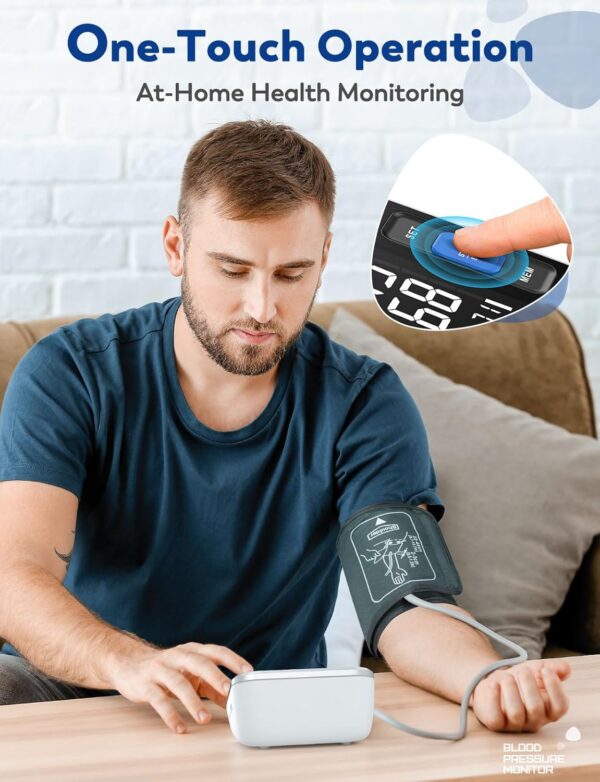
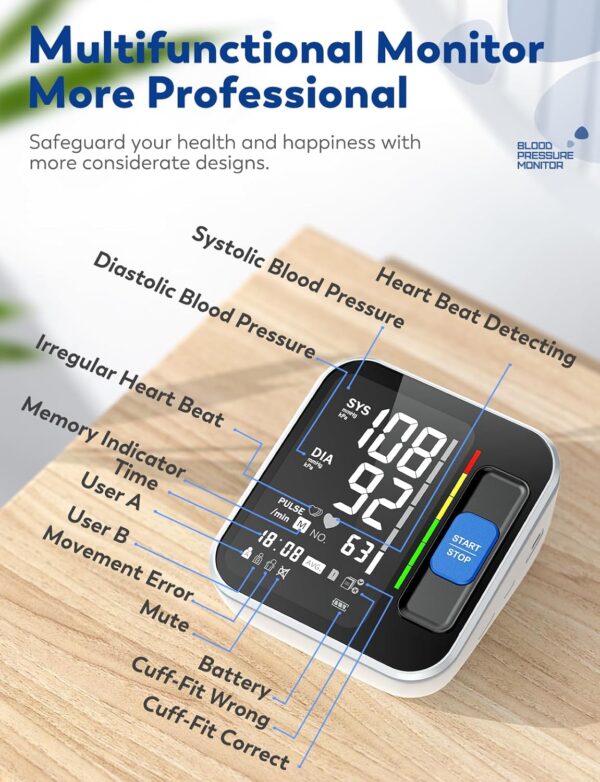
The B23 settles whether a two person household can get large memory and a legible screen without paying brand prices. It publishes 240 stored readings split as 120 per user across two profiles, which is double what several more expensive monitors store on the device itself, and a large reverse backlit display intended to be readable in low light. One button runs the measurement. A carrying case is included, and the device is small at 5 by 3 by 6 inches and about 1.15 pounds.
It runs on four AAA batteries. No AC adapter is listed as included, so mains operation is not available out of the box.
The large on device memory is worth more here than it would be elsewhere, because nothing in this listing describes Bluetooth, an app or any way of exporting readings. Whatever the monitor stores is the entire record you will have to show a clinician, so 120 readings per user is the practical limit of your history rather than a convenience feature on top of a phone app.
The cuff range is published, and it is narrower than most
Cuff fit is the specification that determines whether a reading means anything. A cuff that is too small or too large produces wrong numbers on a device that is functioning perfectly, and no amount of care with technique compensates for it.
ATUDER publishes the range in both the product title and the structured band size field: 8.7 to 15.7 inches of upper arm circumference. That consistency is welcome, because several listings in the blood pressure monitor section publish a single figure or none at all.
What you should notice is the upper end. Many competing cuffs reach 16.5 or 17 inches; this one stops at 15.7. That is roughly an inch of difference, and an inch is enough to exclude a substantial number of adults. The OMRON Gold BP5350 publishes 9 to 17 inches and the iHealth Track publishes 8.7 to 16.5 inches, so if your arm is at the larger end this is the wrong device to start with.
Measure your upper arm at the midpoint between shoulder and elbow, with a tape measure and nothing in the way, before ordering. If you measure above 15.7 inches, buy a monitor with a suitable cuff or a separate large cuff such as the extra large replacement cuff listed here, and confirm compatibility with the monitor before ordering.
Using it correctly
Consistency is what makes home readings useful. Sit with your back supported and feet flat on the floor, rest quietly for several minutes before measuring, keep the arm supported at roughly heart level, place the cuff on bare skin rather than over clothing, and stay still and silent while the device works. Measure at the same times each day so the numbers can be compared. Follow the instruction manual supplied with the device, and follow any protocol your clinician has given you in preference to a general routine.
The device also reports a heart rate alongside the blood pressure figures. A pulse reading from a blood pressure monitor is a by product of the measurement, not a rhythm assessment. If the device flags anything unusual, that is a prompt to speak to a clinician rather than information to act on yourself. Nothing on this page tells you what any number means.
What the accuracy claims actually say
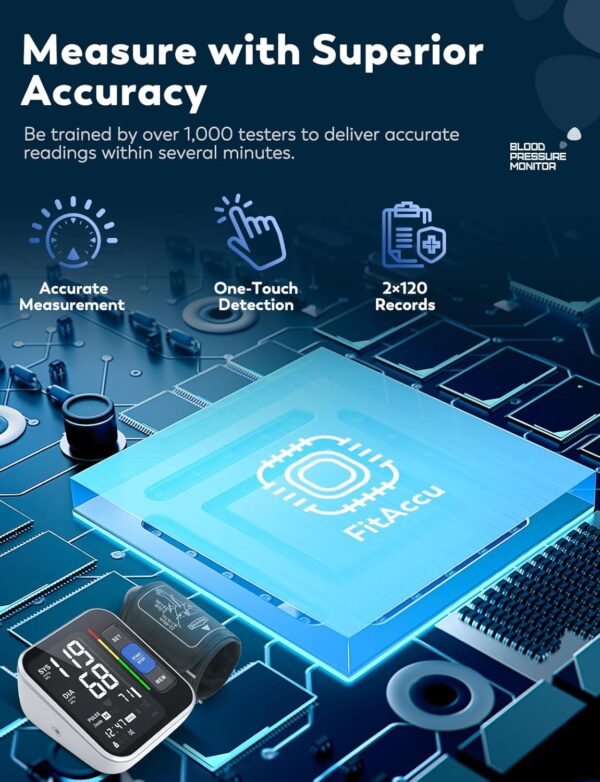
ATUDER’s headline claim is that the monitor is built around what the listing calls a FitAccu chip and advanced AI algorithms trained by over a thousand testers. Read that carefully, because it is not what it appears to be. Training an algorithm against a group of testers is a development process. It is not a clinical validation, it is not a named test protocol, and it is not an independent assessment. No validation protocol appears anywhere on this listing, and no independent validation body is cited.
Compare that with the iHealth Track listing above, which names the ESH 2010 protocol, or with OMRON’s listings, which cite a Validated Device Listing process. Naming a protocol lets a reader check the claim. Naming a chip does not.
The listing also makes no statement about FDA clearance or registration. That absence is not proof of anything, and if regulatory status matters to you the FDA’s own databases are where to check rather than the product page. We do not test devices and we will not describe any monitor as accurate, clinically accurate or medical grade in our own voice.
Feedback is recorded at 4.3 out of 5 across 7,527 ratings, which measures buyer satisfaction and not measurement performance.
Two things the listing data gets wrong
First, the model identifier. This page has carried the string B0BFQWYSWR as the model number. That is the Amazon catalog identifier, not a manufacturer model number. The stored attribute record gives the model as B23, and that is the designation to quote when contacting the seller about parts, cuffs or warranty.
Second, the feature bullets. The first five arrive as unreadable character sequences because the seller wrote the headings in decorative mathematical unicode that has not survived import, so several bullets convey nothing. The last five are not features at all; they are the search phrases “blood pressure monitor”, “blood pressure monitors for home use”, “blood pressure cuff”, “bp machine” and the brand name, repeated in the bullet field. That is keyword stuffing rather than product information, and it means the listing tells you less than its length suggests.
The manufacturer field reads Shenzhen Jamr Technology Co Ltd rather than ATUDER. The same manufacturer appears behind the Oklar W1101L wrist monitor in this catalog, which is worth knowing when comparing brands that may be the same hardware.
Who should buy it and who should not
Buy it if your upper arm measures between 8.7 and 15.7 inches, you want a large memory and a bright display at a low price, and you accept a device whose accuracy claims name no protocol. Do not buy it if your arm is at the larger end of adult sizes, if you need mains power, or if a documented validation protocol is part of your decision. A few further monitors sit in the mixed shortlist section alongside unrelated pressure products if you want to widen the comparison.