
Description
Who This Monitor Is For and What It Settles
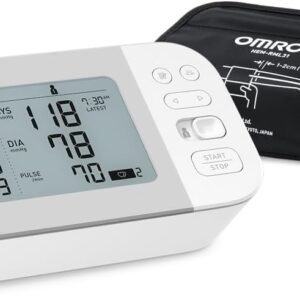
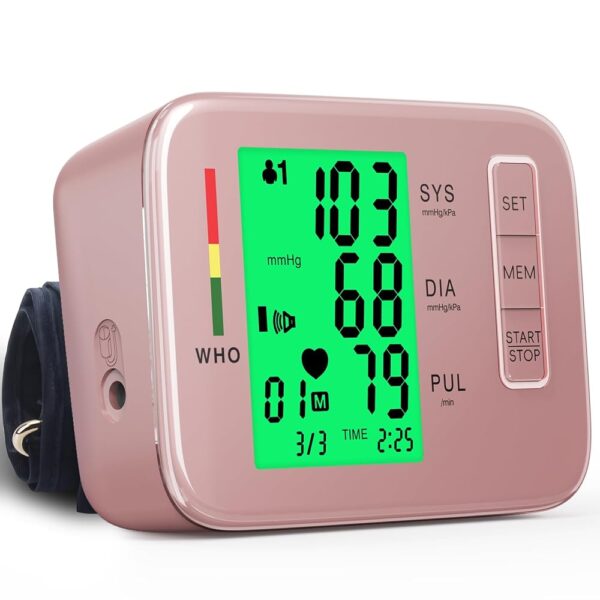
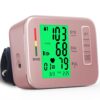
The Double Love CK-A138 is an upper arm blood pressure monitor with a color backlit screen, a voice broadcast that can be switched off, 180 stored readings across two users, and a choice between AAA batteries and a USB-C cable. It is aimed at a household where one person needs the audio and another does not, and where the device has to work at a bedside without an outlet.
Before the specifications, the standing point. This review describes a device and the data published for it. It does not interpret readings, it does not tell anyone what their numbers mean, and a home blood pressure monitor does not replace professional medical care. Readings belong in a conversation with a clinician who knows the person taking them.
The Specifications That Matter
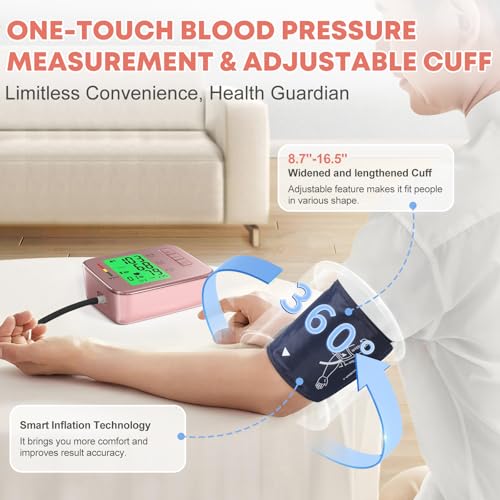
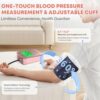
Cuff circumference is the figure that decides whether this monitor can work for a given arm, because a cuff that is too small or too large produces wrong readings on hardware that is behaving perfectly, and nothing on the display warns you. This listing publishes 8.7 to 16.5 inches in three separate places that agree with each other: the product title, the band size field and a bullet. That consistency is worth noting, because it is not the norm on this shelf.
Measure the bare upper arm at the midpoint between shoulder and elbow before ordering. If your measurement falls outside 8.7 to 16.5 inches, this is the wrong device rather than a near miss, and a documented replacement cuff such as the Alcarefam BD42 fitted to a compatible monitor is the better route.
Power, memory and the voice
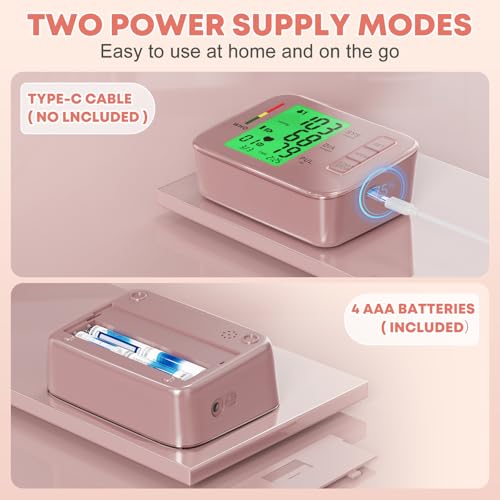
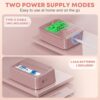
Power is four AAA batteries, included, or a USB-C cable, and a bullet states plainly that either can be used for measurements. That is a genuinely useful arrangement. The power source field itself contains a typographical error, reading orded electric where corded was meant, which is a data defect rather than a product fault but is the kind of thing that tells you how carefully the page was assembled.
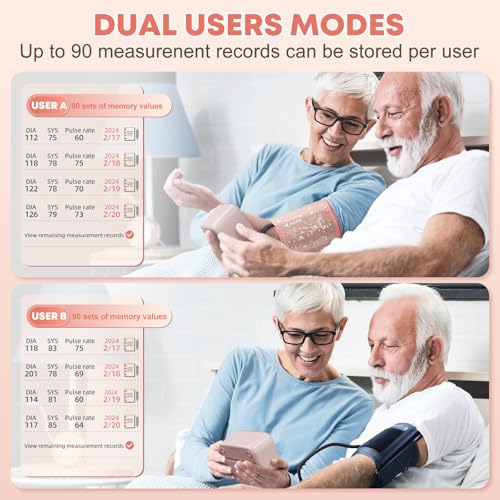
Memory is 90 readings for each of two users, 180 in total, with automatic arm detection that flags an obvious setup error through an on-screen indicator. Treat that detection as a convenience rather than a guarantee: it can confirm the cuff has found an arm, but it cannot confirm the cuff is the right size, at the right height, or aligned over the inside of the arm, and those are the errors that actually distort readings.
The voice broadcast is documented better than most. The listing says it reads precautions before use and the results after measurement, and that it can be turned off. What it does not say is whether the volume is adjustable or what language it speaks, both worth confirming before buying for someone who will depend on it. If the audio is the deciding feature, the SmartHeart 01-742T talking monitor is the other documented option here.
The Rhythm Flag and the Color Backlight
Two features on this listing need careful handling. The first bullet says the monitor detects heart rate during a measurement and alerts you if it detects an irregular heart rhythm. That is worth having, and it is worth describing precisely. An irregular heartbeat indicator flags that the device saw an irregularity during that measurement. It does not identify what the irregularity is, it does not diagnose anything, and it cannot separate a genuine finding from an artifact caused by movement, talking or a poorly placed cuff. If the indicator appears, note it and raise it with a clinician.
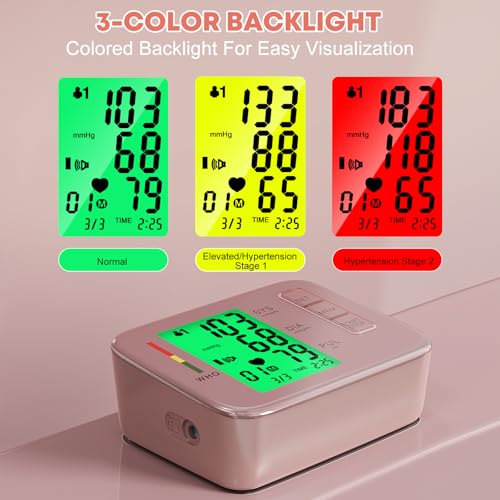
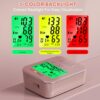
The second is the three-color backlight, which the listing says changes according to the reading so the user can understand their blood pressure status. A color band on a home device compares a measured value against thresholds stored in firmware. It is not a diagnosis, it is not a screening result, and this review does not tell anyone what any color means. Record the numbers, ignore the color, and take the log to a clinician.
What the Listing Claims, and Who Is Making the Claim
The lead bullet states the device is built with the maker’s latest chip and an advanced algorithm trained by over 2,000 testers, and that it can detect blood pressure with great accuracy. That is the seller’s claim and not ours. We do not test devices and we do not verify manufacturer statements. No accuracy figure, no tolerance, no validation protocol and no regulatory clearance appears anywhere in the data, and 2,000 testers is a number without a method attached to it. Validation status for home monitors can be checked independently through the registries medical bodies maintain, and that check is worth making before purchase.
Using It Correctly
Fit the cuff to the bare upper arm rather than over a sleeve, with the tubing running down the inside of the arm toward the palm and the lower edge roughly an inch above the elbow crease, closed so one finger slides underneath with mild resistance. Sit with the back supported and both feet flat on the floor, rest the arm so the cuff sits level with the heart, and stay silent and still through the inflation and the release.
Rest for several quiet minutes before the first reading rather than measuring straight after activity, and use the same arm at the same times each day so the record compares with itself. Set the user slot before the first measurement so the two banks stay separate, and decide up front whether the voice stays on, since a shared room usually settles that question.
Limits and Data Oddities
The description field is empty, so six bullets and a specification table carry the technical case, and two of those bullets are about appearance and customer service. Nothing is published about the pressure or pulse measurement range, tolerance, averaging across readings, battery life, or digit height.
Several fields in the record are simply wrong. The material feature entries describe the monitor as biodegradable, which is not a meaningful claim about an electronic device with a pump and a circuit board. The product title advertises a pink machine while also specifying a blue cuff in parentheses, and a bullet describes a pink body, so the color you actually receive is not clear from the page. Weight is given as 9 ounces against dimensions of 4.7 by 3.5 by 1.2 inches, which is slim for an arm monitor containing an inflation pump.
The manufacturer of record is Shenzhen Changkun Technology, which supplies several brands in this catalog under the CK model prefix, including a closely numbered sibling in the Rsorvia CK-A139 and a wrist model in the Greetmed CK-W118. One factory, several brand names, specification blocks that do not always agree.
The point that outranks all of it: this device produces numbers, announces them and colors them. It does not diagnose, it does not replace professional medical care, and nothing in this review is guidance about anyone’s health.
Alternatives Worth Comparing
The full selection of upper arm monitors, talking models, wrist units and replacement cuffs sits in our blood pressure monitor category, which is the right starting point if you want the same feature set from a listing whose own specification fields agree with one another.
Who Should Buy It, Who Should Not
Buy it if your arm falls inside 8.7 to 16.5 inches, you want spoken results you can switch off, and the AAA or USB-C choice suits where the device will live. Skip it if you need documented accuracy or validation, if you need to know the volume and language of the voice before committing, if the color you receive matters to you, or if a specification block calling an electronic device biodegradable undermines your confidence in the rest of it.