



Description
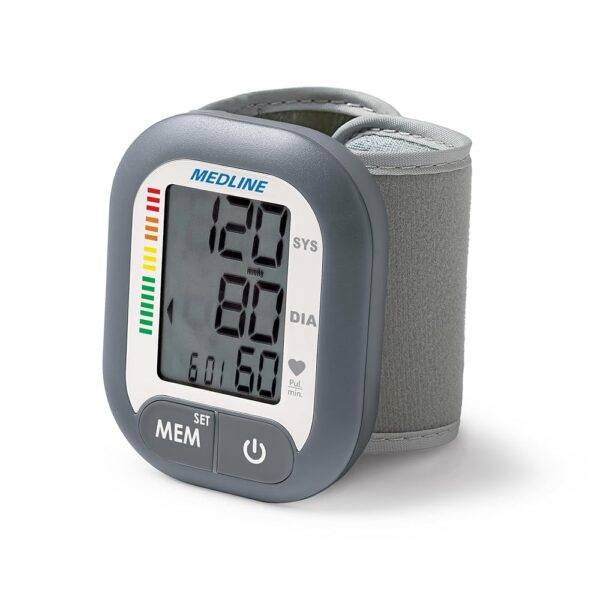
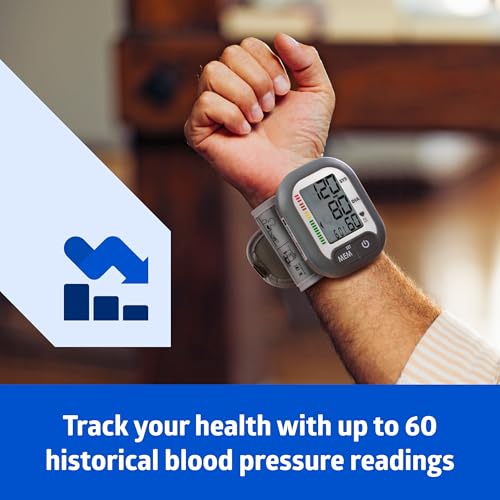
The Medline MDS4003 is a digital wrist blood pressure monitor from an established medical supply company, storing 60 readings with date and time stamps for a single user. It is one of the few devices in this catalog sold by a business whose main customers are hospitals and clinics rather than consumers. This review describes the device from its published listing data. It is not medical advice, it does not tell you what any reading means, and a home monitor does not replace professional medical care. Readings belong in a conversation with a clinician who knows your history.
Wrist monitors and upper arm monitors are not interchangeable
This is a wrist device, and that governs the rest of the decision.
Positioning matters far more on a wrist monitor than on an upper arm monitor. The wrist has to be held at the correct height relative to the heart during the measurement, and small differences in how the arm is supported change the result. Upper arm devices are the usual recommendation for home blood pressure monitoring, and a wrist device should not be treated as a smaller version of the same instrument.
There are sound reasons to use one anyway. A wrist monitor is far easier to fit single handed, needs no sleeve rolled up, and may be the only practical option where an upper arm cuff is uncomfortable or does not fit. If you are choosing between formats, that is a question for your clinician rather than a matter of convenience. Upper arm alternatives in the blood pressure monitor section include the OMRON Gold BP5350, which publishes a full 9 to 17 inch cuff range.
The cuff range is not published at all
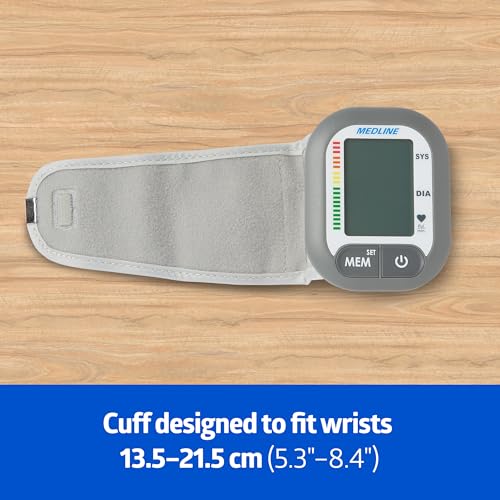
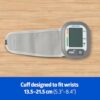
This is the most important gap on the listing and it needs stating plainly. Nowhere on this product page is there a wrist circumference range. There is no band size field. The size field reads “Medium” and nothing else. The feature bullets describe automatic inflation and deflation without giving a single dimension.
Cuff fit determines whether a reading is worth recording, because a cuff outside its intended range produces wrong numbers on a device that is working perfectly. “Medium” is not a measurement. Compare that with the MMIZOO W1681, which publishes 5.31 to 7.68 inches, or the Oklar W1101L, which publishes 4.92 to 8.46 inches. Both tell you before you order whether the device fits.
Measure around your wrist just below the hand with a tape measure, then contact Medline and ask for the cuff range before buying. The listing publishes a manufacturer contact number, which is more than most sellers here provide, so the question is answerable. Do not order this device on the assumption that a medium fits you.
Who this monitor is for and what it settles
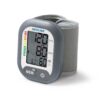
The MDS4003 settles whether a wrist device can come from a clinical supply company rather than a consumer electronics brand. Medline Industries Healthcare supplies hospitals and care facilities, and the product is described as intended for at home use. Practically, what you get is a small device, 4 by 3 by 3.13 inches at about 5 ounces, that inflates and deflates automatically, reports systolic and diastolic pressure and pulse rate, and stores 60 records with date and time stamps.
Note that the memory is for one user. There is no second profile, no Bluetooth, no app and no export. Sixty time stamped records on the device are the whole history you can show a clinician.
Using it correctly
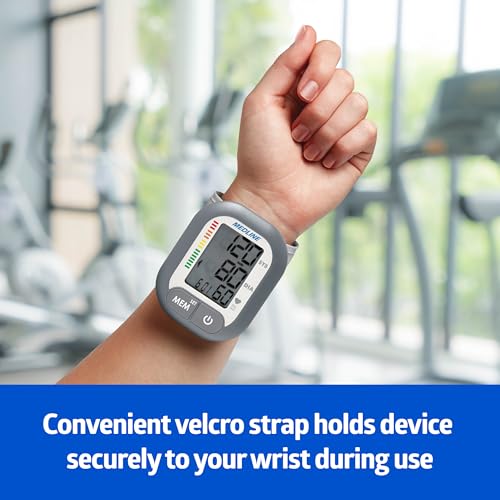
Technique carries more weight on a wrist device than on an upper arm one. Sit with your back supported and feet flat on the floor. Rest quietly for several minutes before starting. Fit the cuff against bare skin on the wrist, not over a sleeve or a watch strap. Support the arm so the device sits at roughly heart level, which usually means resting the elbow on a table and raising the wrist rather than letting the arm hang. Stay still and silent while the measurement runs. Measure at the same times each day so the numbers can be compared with one another, and follow any protocol your clinician has given you in preference to a general routine.
The listing describes a color gauge for what it calls quick detection. That is the device sorting a reading into a fixed band. It takes no account of your history, your medication, the time of day or how you were sitting, and it diagnoses nothing. A color is not a result to act on. This page will not tell you what any color or number means; if one surprises you, record it and raise it with a clinician.
Batteries, and other practical details
Two AAA batteries are included, and Medline is specific about the type in a way most sellers are not: alkaline, explicitly not lithium. That instruction is worth following, because lithium AAA cells run at a different voltage and manufacturers sometimes exclude them for that reason. Keep alkaline cells on hand for replacements.
A quick start guide is included and country of origin is given as China. One field on the listing is an obvious import artifact: the department field reads “unisex-adult”, a clothing taxonomy value with no meaning for a medical device. The product description also carries stray characters where line breaks were meant to be, which is a sign the text was imported rather than written for this page.
What the listing does and does not support
The previous description on this page claimed reliable performance and accuracy compared with professional medical devices. Nothing published here supports that. No validation protocol is named, no independent validation body is cited, and there is no statement about FDA clearance or registration. Medline’s standing as a clinical supplier is not a substitute for any of those, and it should not be read as one. If independent validation status matters to you, check the listings published by validation programs and the FDA’s own databases rather than the product page. We do not test devices and we will not describe any monitor as accurate, clinically accurate or medical grade in our own voice.
Feedback is recorded at 4.1 out of 5 across 3,117 ratings. That is the lowest average among the monitors in this part of the catalog, on a reasonably large sample, and it measures buyer satisfaction rather than measurement performance. Reading recent reviews before ordering is sensible here.
Who should buy it and who should not
Buy it if a wrist device suits your circumstances, you want time stamped records without an app, and you have confirmed the cuff range with Medline directly. Do not buy it as a casual substitute for an upper arm monitor, do not buy it for a household where two people need separate records, and do not buy it without asking what wrist sizes it fits, because the listing does not say. Further options sit in the mixed shortlist section alongside unrelated pressure products.