

Description
Who This Cuff Is For and What It Settles
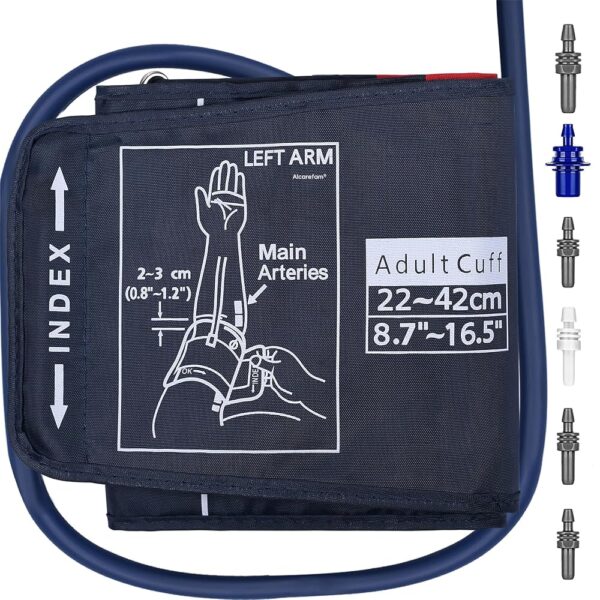
This is not a blood pressure monitor. The Alcarefam BD42 is a replacement cuff, a bladder and sleeve with a hose and a bag of connectors, meant to be fitted to a monitor you already own. It solves one problem, and it is the most common problem in home blood pressure measurement: the cuff supplied with a monitor does not fit the arm using it.
That problem is worth taking seriously because a cuff of the wrong size produces wrong readings on a monitor that is working exactly as designed. Too small and the device has to squeeze harder than it should; too large and it does not squeeze enough. Neither failure shows up as an error on the screen, which is what makes it dangerous in a way a broken device is not. This review covers the cuff and its published specifications. It does not interpret readings and it is not medical advice; a home monitor and its accessories do not replace professional medical care, and readings belong in a conversation with a clinician.
The Specifications That Matter
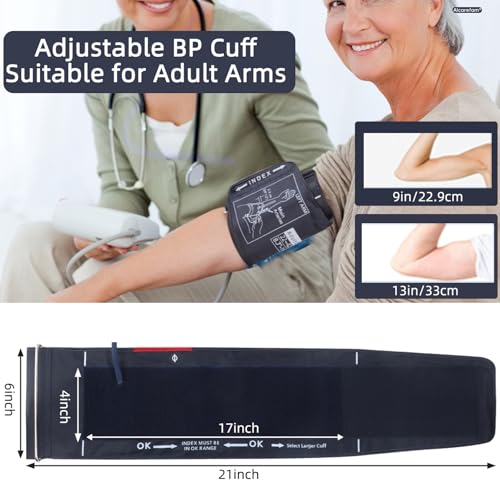
The circumference range is published clearly and consistently, which is the main thing you want from an accessory like this. The cuff is stated to fit adult upper arms from 8.7 to 16.5 inches, given in the listing as 22 to 42 cm, and that figure appears in the product title, in a bullet and in the stored attributes on this site. The structured specification field is less helpful, listing only a band size of 16.5 inches, which is the upper bound with the lower bound dropped. Take the full range from the title and the bullet rather than the truncated spec entry.
Measure the bare upper arm at the midpoint between shoulder and elbow before ordering. If your measurement lands within that span but near the top, you are in the intended range. If it exceeds 42 cm, this is not the right cuff and something larger such as the Alcarefam BD66 XXXL cuff covers the sizes above it.
Connectors and compatibility
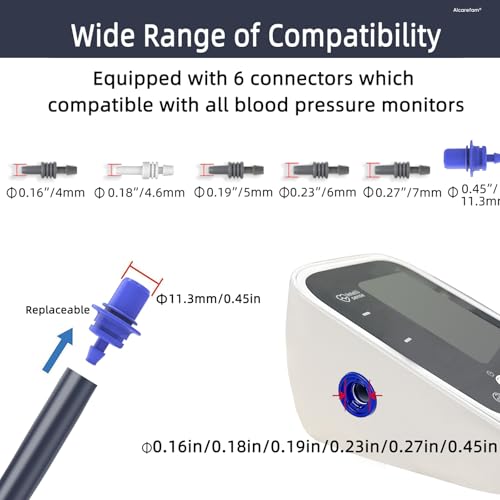
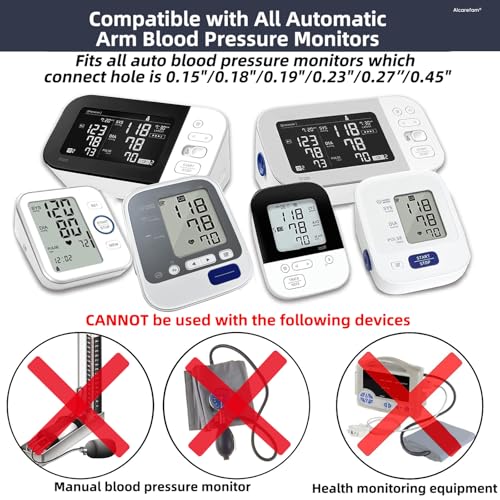
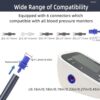
The kit ships with seven connectors, listed as 4 mm, 4.6 mm, 5 mm, 6 mm, 7 mm, 7.2 mm and 11.3 mm, plus a quick guide. That connector spread is the reason to consider a third party cuff at all, since it covers the hose fittings used by most consumer monitors. The listing is not consistent about what that buys you. The product title says the cuff is compatible with Omron monitors specifically, while a bullet broadens that to most brands of blood pressure monitor. Those are different promises. A connector that physically fits is not the same as a cuff a monitor manufacturer has validated with its own hardware, and a bladder with different dimensions or inflation characteristics can shift results even when the fit is mechanically correct.
The practical position is this: check the hose fitting on your monitor against the seven sizes listed, and check with your monitor’s manufacturer whether it sanctions non-original cuffs before relying on readings taken with one. Where the manufacturer sells its own sized cuffs, as with the Omron 9515373-3 cuff, that is the lower risk route even if the connector count is smaller.
Materials and Build
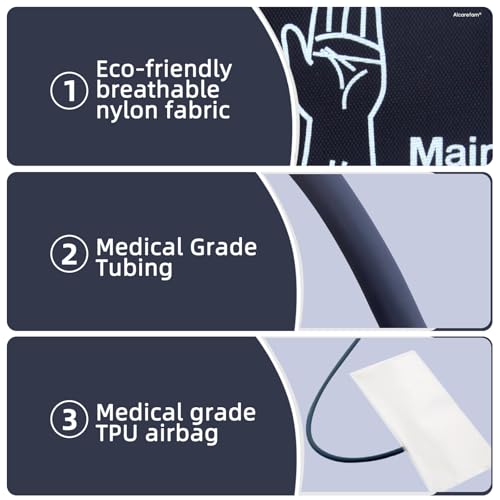
The sleeve is nylon with a TPU air bladder, described by the seller as non-toxic and odorless, with a soft hook and loop closure chosen so it does not catch arm hair. Packed size is 5.91 by 3.94 by 2.36 inches at 4.66 ounces, so it stores easily alongside a monitor. The listing carries a UPC and a one year warranty offer from the seller covering refund or replacement.
One bullet needs flagging as unsupported. The listing states that the replacement cuff is easy to independently calibrate in order to enhance precision. A cuff is a sleeve and a bladder; it has nothing in it to calibrate, and calibration on a blood pressure device happens at the monitor, not the cuff, and generally only through the manufacturer. Treat that sentence as marketing noise rather than a feature, and do not buy this cuff expecting a calibration procedure that does not exist.
Using It Correctly
Fit the cuff to the bare upper arm, not over a sleeve, with the hose running down the inside of the arm toward the palm and the lower edge roughly an inch above the elbow crease. Most cuffs carry an artery marker that should sit over the inside of the arm; align it rather than eyeballing the wrap. Close it snugly enough that one finger slides underneath with mild resistance. Sit with the back supported and feet flat, rest the arm so the cuff is level with the heart, and stay silent and still through the measurement.
After swapping to a new cuff, treat your log as starting over rather than continuing. A change of cuff is a change in the measurement setup, so comparing readings taken with the old cuff against readings taken with the new one is comparing two different arrangements. Make a note of the date you changed it so the record makes sense later, and mention the change to your clinician rather than quietly folding both sets of numbers together.
Limits and Gaps in the Published Data
The description field is empty, so six bullets and a specification table carry everything. Nothing is published about bladder dimensions, which is the figure that actually determines whether a cuff suits a given arm circumference, and nothing is published about pressure rating or expected service life. There is no statement of any validation testing, no clearance claim, and no compatibility list naming specific monitor models, only the broad claim of most brands.
The listing also disagrees with itself on intended user. The specification block records the age range as General while the stored attributes on this site say Adult. Given a 22 to 42 cm range, this is plainly an adult accessory, and anyone shopping for a child should be looking at a pediatric cuff and taking direction from the child’s clinician rather than sizing down an adult product.
To restate the part that matters most: a cuff is a measuring accessory. It does not replace professional medical care, and no reading taken with it should be interpreted at home. If readings change noticeably after fitting a new cuff, that is information for a clinician, not a conclusion to draw yourself.
Alternatives Worth Comparing
Buyers who want the widest possible arm coverage from a single accessory should compare the Omron wide range cuff, which is made by a monitor manufacturer for its own hardware. Those shopping at the large end can compare the iHealth extra large cuff, and anyone whose main worry is the connector rather than the size should look at the AQESO universal cuff. Cuffs and the monitors they attach to are all filed together in our blood pressure monitor category.
Who Should Buy It, Who Should Not
Buy it if your upper arm measures between 22 and 42 cm, your monitor’s hose fitting matches one of the seven supplied connectors, and you have checked that your monitor’s maker does not object to a third party cuff. Skip it if your arm exceeds 42 cm, if your monitor manufacturer sells a sized cuff of its own, if you need published bladder dimensions before committing, or if you thought you were buying a complete monitor rather than a replacement part.