Description
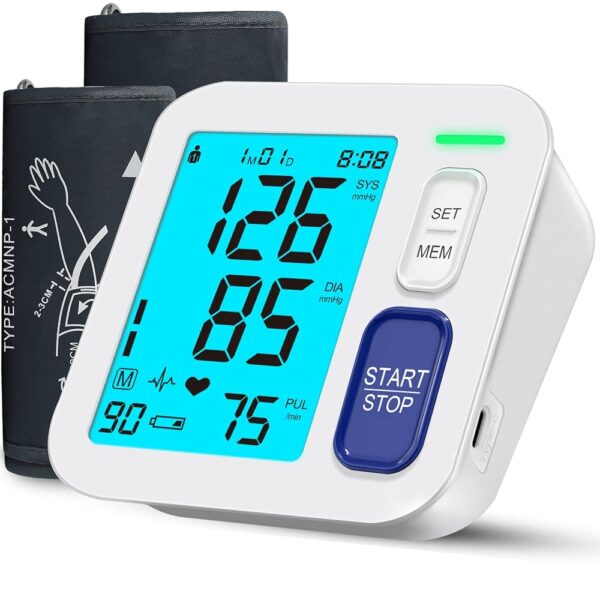
The ALPHAGOMED U80BH is an upper arm blood pressure monitor supplied with two cuffs, one covering 9 to 17 inches and an extra large cuff covering 13 to 21 inches. That second cuff is the reason to consider it. This review describes the device from its published listing data. It is not medical advice, it does not tell you what any reading means, and a home monitor does not replace professional medical care. Readings belong in a conversation with a clinician who knows your history.
The extra large cuff is the point
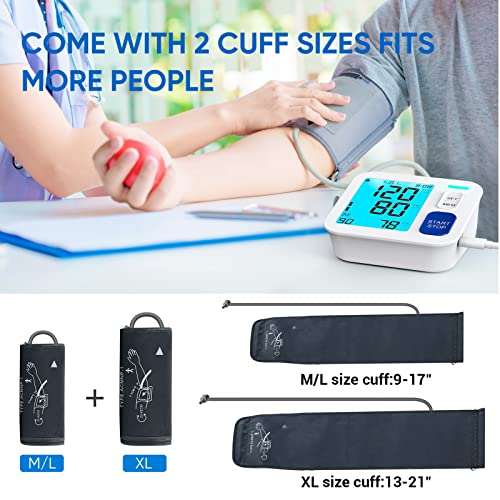
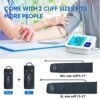
Cuff fit determines whether a reading is worth recording, because a cuff that is too small produces wrong numbers on a device that is working perfectly. Most monitors in the blood pressure monitor section stop at 15.7, 16.5 or 17 inches, which leaves a substantial number of adults with no fitting option in the box, or forces them to buy a monitor and then hunt for a compatible larger cuff separately.
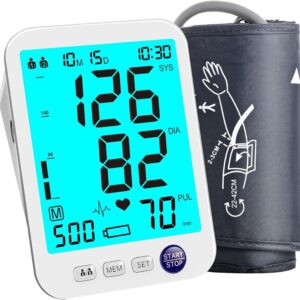
ALPHAGOMED supplies both: an M/L cuff stated at 9 to 17 inches and an XL cuff stated at 13 to 21 inches, with what the listing calls updated inflation technology for faster readings on large arms. Twenty one inches is the widest cuff range published in this catalog, matched only by the LIVAROCI U80B, and it removes a real and frustrating obstacle.
The structured band size field reads only “21 inches”, giving the maximum with no minimum and no indication that two cuffs are supplied, so work from the bullet figures. Measure your upper arm at the midpoint between shoulder and elbow before ordering, and check the printed range markings on each cuff when the device arrives so you use the right one. Then use the same cuff every time: switching between them mid series makes readings incomparable with each other, which defeats the point of keeping a record.
The same labeling error appears here as on its sibling
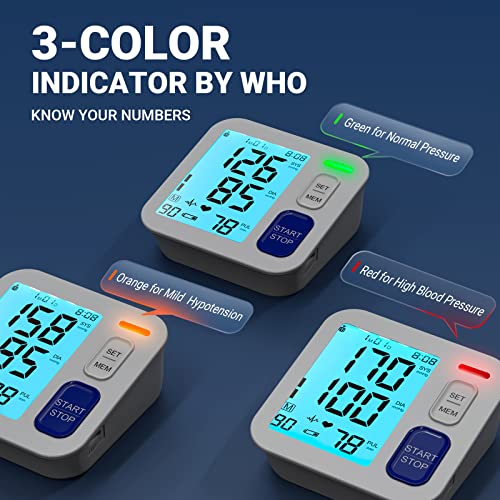
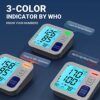
A feature bullet describes a three color indicator and states that the colors correspond to, in the listing’s own words, normal, mild hypotension and high. Hypotension means low blood pressure. Hypertension means high blood pressure. They are opposites, and a scale running normal, low, high in ascending order is not coherent.
This is almost certainly a translation error for hypertension. We are naming it rather than silently correcting it, because a mislabeled indicator on a medical device listing is a serious thing. Note also that the identical wording appears on the LIVAROCI listing linked above, from the same manufacturer, so this is a copied error rather than a one off typing slip.
Do not rely on the color scale for anything. It sorts a single reading into a fixed band, it knows nothing about your history, your medication, the time of day or how you were sitting, and it diagnoses nothing. This page will not tell you what any color or number means. If a reading concerns you, record it and raise it with a clinician. If you buy the device, check whether the same error appears in the printed manual.
Who this monitor is for and what it settles
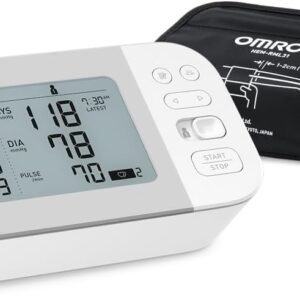
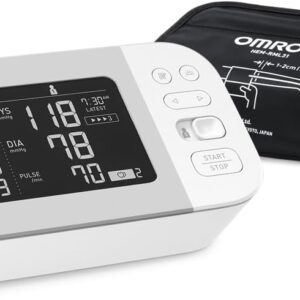
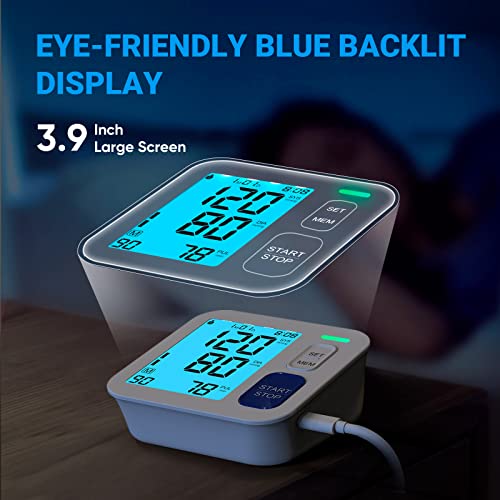
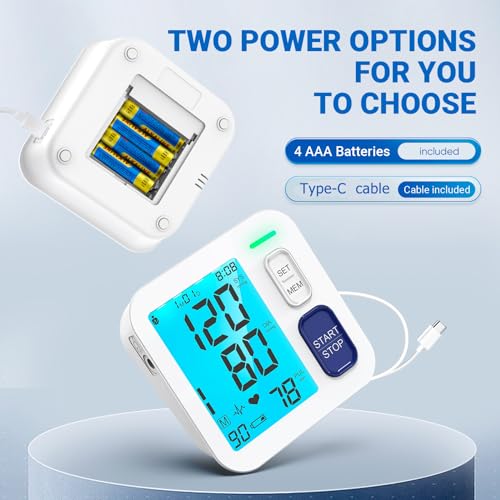
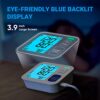
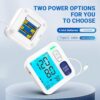
Beyond the cuffs, the specification is a competent value priced monitor: an extra large backlit LCD with large fonts, two oversized operation buttons intended to be easy for older users, two user profiles storing 99 readings each, and two power routes covering four AAA batteries and a cable. The stated box contents are the monitor, the standard cuff, the extra large cuff, a nylon carry bag, a cable, four AAA batteries and a user manual, with 12 months of limited support.
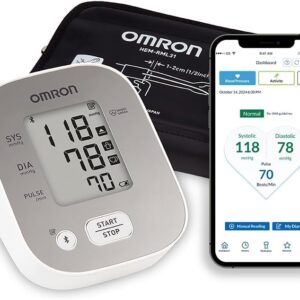
Nothing in the listing describes Bluetooth or an app, so the 99 readings per user on the device are your complete record. One small inconsistency: one bullet calls the supplied cable a DC to USB cable and another calls it a Type-C cable. Check which fitting your device uses before buying a spare.
Using it correctly
Home readings are useful when the routine never changes. Sit with your back supported and feet flat on the floor, rest quietly for several minutes before starting, support the arm at roughly heart level, fit the correct cuff on bare skin rather than over a sleeve, and stay still and silent while the measurement runs. Take readings at the same times each day so they can be compared with one another. Follow the user manual for the exact fitting the device expects, and follow any protocol your clinician has given you in preference to a general routine.
With two profiles, each person must select their own before measuring, or the record becomes a mixture of two people’s numbers and is useful to nobody.
What the accuracy claims actually say
The first bullet states the monitor is built with a smart chip and advanced AI algorithms providing accurate readings based on thousands of clinical data points collected from hypertension patients’ tests. Training an algorithm on a data set is a development process, not a validation. No validation protocol is named, no independent validation body is cited, and there is no statement about FDA clearance or registration anywhere on this listing.
The listing also attributes its color indicator to the World Health Organization. Citing an organization’s published categories is not the same as that organization endorsing a device, and given the labeling error above the citation should not add confidence.
Compare that with the iHealth Track, which names the ESH 2010 protocol. If validation status matters to your decision, the device listings published by validation programs and the FDA’s own databases are the places to check rather than a product page. We do not test devices and we will not describe any monitor as accurate, clinically accurate or medical grade in our own voice. Feedback is recorded at 4.2 out of 5 across 385 ratings, a modest sample that measures buyer satisfaction rather than measurement performance.
One structured field is an obvious placeholder: product dimensions read 1.2 by 1 by 1 inches at 1.48 pounds, which is a pound and a half packed into an inch cube. The manufacturer field reads Shenzhen Urion Technology Co Ltd rather than ALPHAGOMED, and the same U80 platform appears across several brands here, including the ALPHAGOMED U80AH, so an apparently wide field of choices is narrower than it looks.
Who should buy it and who should not
Buy it if your upper arm is larger than a standard cuff accommodates, because two cuffs reaching 21 inches in one box solves a problem that is otherwise expensive and fiddly. Do not buy it for the color indicator, which is mislabeled on the listing, and do not buy it if you need published validation or app export. Further options sit in the mixed shortlist section alongside unrelated pressure products.