
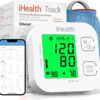


Description
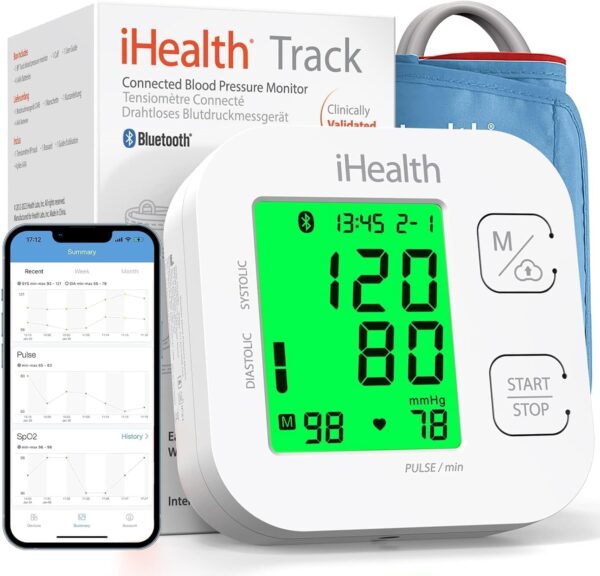
The iHealth Track 550BT is an upper arm blood pressure monitor with a wide range cuff, a large backlit display and Bluetooth to iHealth’s phone app. It has been on sale since 2016 and carries one of the largest feedback histories in this catalog. This review describes the device from its published listing data. It is not medical advice, it does not tell you what any reading means, and a home monitor does not replace professional medical care. Readings should be discussed with a clinician who knows your history.
Who this monitor is for and what it settles
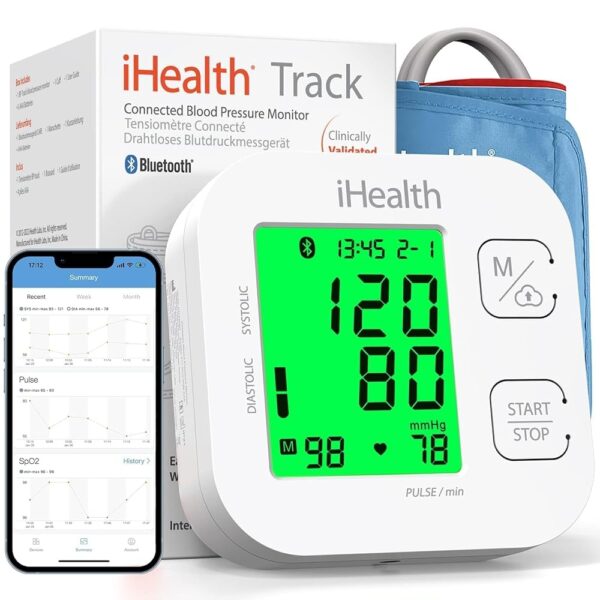
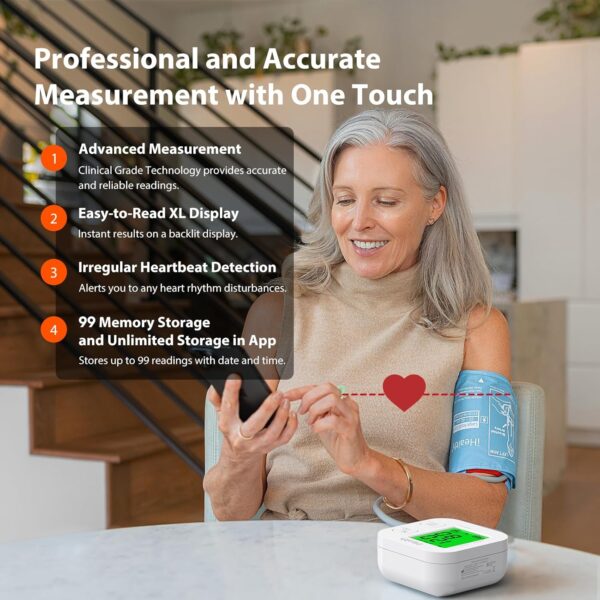
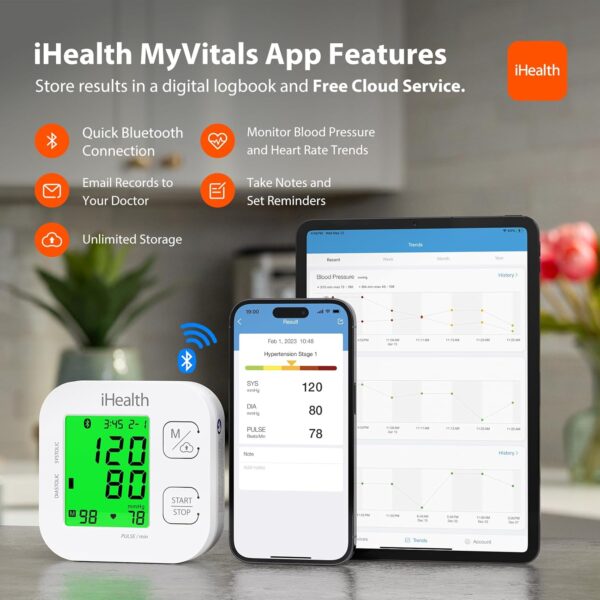
The Track settles whether you can get a connected upper arm monitor without buying into a premium brand’s range. It publishes Bluetooth syncing, a large multi color backlit display, storage for 99 readings on the device and unlimited readings in the free iOS and Android apps. Two buttons run the whole device.
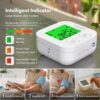
The display is the practical selling point. iHealth publishes oversized numbers on a backlit screen, which matters for anyone measuring in poor light or with limited vision. The device is small at 3.9 by 3.9 by 1.6 inches and about 15.5 ounces, and it runs on four AAA batteries supplied in the box. No AC adapter is listed, so mains operation is not an option out of the box.
One caveat before the specification section: the app has stated requirements of iOS 12 or later, Android 9 or later, and Bluetooth 4.0 or above. On a product first listed in 2016 those requirements are unremarkable now, but if the monitor is intended for someone using an older phone, check compatibility first, because the connected features are much of the reason to choose this over a non connected device such as the OMRON Bronze BP5100.
The cuff range, and where the listing publishes it
Cuff fit is the specification that decides whether readings are meaningful. A cuff too small or too large produces wrong numbers on a device working perfectly. This is a measurement problem, not a matter of comfort.
iHealth publishes the range in the feature bullets: the wide range cuff is stated to fit upper arms from 8.7 to 16.5 inches, which the listing also gives as 22 to 42 centimeters. That is a proper two ended range and it covers most standard and large adult arms.
The structured band size field, however, reads only “42 cm”. A shopper skimming the specification table would see the upper bound and no lower bound, which is the same partial data problem that appears on several listings in the blood pressure monitor section. Use the bullet figures, and measure your upper arm at the midpoint between shoulder and elbow before ordering. If you fall outside 8.7 to 16.5 inches, buy the correct cuff rather than compromise; iHealth publishes an extra large cuff separately.
Using it correctly
Readings are useful to a clinician when they are taken consistently. Sit with your back supported and feet flat on the floor, rest quietly for several minutes before starting, keep the arm supported at roughly heart level, fit the cuff on bare skin rather than over a sleeve, and stay still and silent during the measurement. Measure at the same times each day. Follow the instruction manual, which iHealth asks you to read before first use, and follow any protocol your clinician has given you in preference to a general routine.
Two of the device’s features report rather than interpret, and it is important to treat them that way.
The color coded display shows a green, yellow or red indicator alongside the numbers. That is the device sorting a reading into a band it has been programmed with. It is not a diagnosis, it does not account for your history, your medication or the circumstances of the measurement, and a color is not a reason to change anything you are doing. If a color surprises you, the correct response is to record it and raise it with a clinician.
The heart rhythm disturbance feature displays a warning symbol after a measurement when the device detects an irregularity in the pulse. Again, this is a flag for a clinician to assess and it diagnoses nothing. It does not tell you what the irregularity was or whether it is significant.
What the accuracy claims actually say
iHealth makes three claims here and one of them is more substantial than the others.
The substantial one is the statement that the monitor meets ESH 2010 performance standards. That is a named protocol, the European Society of Hypertension International Protocol in its 2010 revision, and it is a real published test procedure for automated blood pressure devices. Most listings in this catalog claim accuracy without naming any protocol at all, so naming one is meaningfully better disclosure. It remains the manufacturer’s statement, and independent validation programs publish their own device listings that a reader can check.
The weaker claims are the bullet headed “Clinically Accurate” and the phrases “Advanced Accuracy” and “No Calibration required”. Those are marketing terms rather than measurements. We do not test devices and we will not describe any monitor as accurate, clinically accurate or medical grade in our own voice.
What the listing does not contain is any statement about FDA clearance or registration, where several competing listings make one. That absence is not evidence of anything either way, but if regulatory status matters to you, look the device up in the FDA’s own databases rather than inferring from the product page.
Feedback is recorded at 4.4 out of 5 across 38,622 ratings. That is a very large sample and it tells you about buyer satisfaction, not about measurement performance. The published warranty is 12 months, which is short next to the five and six year terms on OMRON’s upper models.
Alternatives in this catalog
Within iHealth, the BP5S Neo is the slimmer connected model. For a longer warranty and a fuller regulatory statement, the OMRON Gold BP5350 publishes a 9 to 17 inch cuff range and five years of coverage. The Greater Goods Bluetooth monitor is another value priced connected option. A handful of monitors also sit in the mixed shortlist section beside unrelated pressure products.
Who should buy it and who should not
Buy it if you want app syncing and a large legible display at a modest price, your upper arm measures between 8.7 and 16.5 inches, and your phone meets the app requirements. Do not buy it if you need mains power, a long warranty, or a device that publishes its regulatory status on the listing. Measure your arm first, and remember that everything the device reports is information for a clinician rather than a conclusion for you.