

Description
Who This Monitor Is For and What It Settles
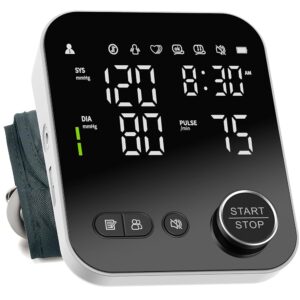
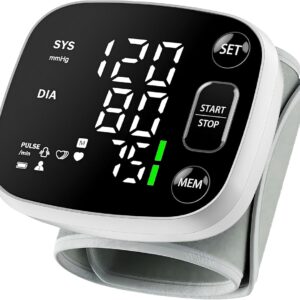
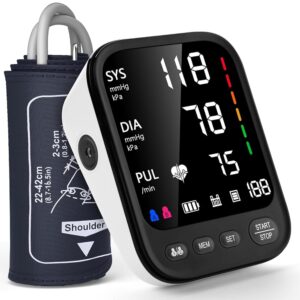
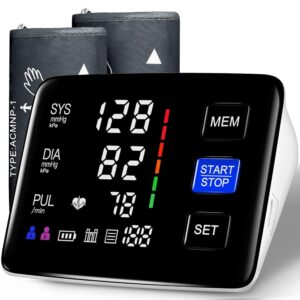
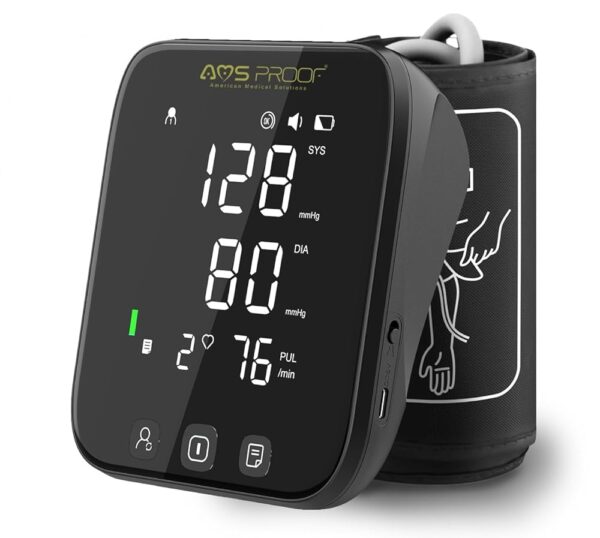
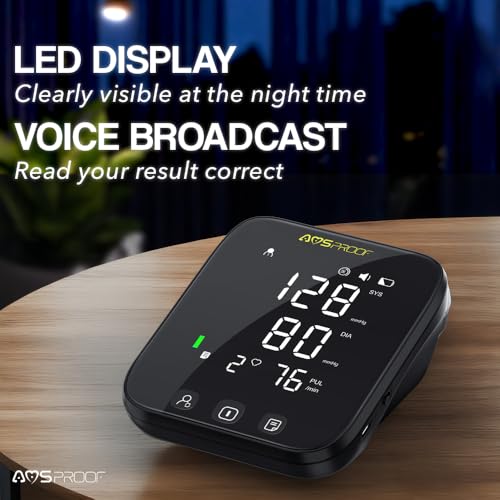
The AMSPROOF AMS 101 US is an upper arm blood pressure monitor with a large backlit LED screen, a voice broadcast that can be switched off, two user memory and a wide range cuff. On features alone it is a well specified device: everything is in the box, the audio is documented properly including the mute option, and a measurement completes in under 40 seconds.
It also carries the strongest set of regulatory and endorsement claims in this catalog, and those need to be handled before anything else, because they are the reason a buyer would choose this over a cheaper equivalent. Before going further: this review describes a device and its published specifications, it does not interpret readings, and a home blood pressure monitor does not replace professional medical care.
The Claims in the Title
The product title states two things in three words each: clinically validated, and FDA cleared. Both are the seller’s claims and neither is ours. We do not test devices and we do not verify clearances or validations.
Those two phrases mean different things and the listing supports neither with a reference. Clinical validation means an assessment against a named protocol, published as a study or a registry entry. No protocol is named here, no study is cited, no test population is described and no registry listing is referenced. Regulatory clearance means a specific submission with a number attached. No clearance number appears anywhere in the source data, and the manufacturer of record is simply the brand name.
Both are checkable if the underlying facts exist. Clearance status can be looked up through the relevant regulator’s device database, and validation status through the independent registries medical bodies maintain. Anyone choosing this monitor because of those two phrases should do both checks before purchase rather than after, because a claim printed in a product title is not evidence of the thing it claims.
The endorsement claim
A separate bullet goes further. It states that American Medical Solutions is the recommended home blood pressure monitor brand by doctors and pharmacists for clinically accurate home monitoring, and that the company has more than 40 years of experience as a leading manufacturer.
That is an endorsement claim about named professions, and nothing in the listing supports it: no survey is cited, no sample is described, no professional body is named, and no source of any kind is given. The forty year claim sits oddly beside a listing first published in September 2024 with the brand itself recorded as the manufacturer. We repeat none of it as fact. A monitor recommended by professionals would normally be able to say by whom.
The Specifications That Matter
Cuff circumference decides whether the monitor works for a given arm, because a cuff that is too small or too large produces wrong readings on hardware that is functioning perfectly, and nothing on the display warns you. Here the figure appears three times with two different lower bounds. The included components field says 8.7 to 16.5 inches. Two bullets say 8 and a half inches to 16 and a half inches, and one of them gives 22 to 42 cm alongside it. The structured band size field records only 16.5 inches.
The metric figure is the one that appears with a conversion attached, so treat 22 to 42 cm as the working range. Measure the bare upper arm at the midpoint between shoulder and elbow before ordering, and if your measurement is near 22 cm, ask the seller which lower bound is correct rather than trusting whichever field you read first. Buyers outside the range should look at a documented replacement cuff fitted to a compatible monitor.
Memory, display, audio and power
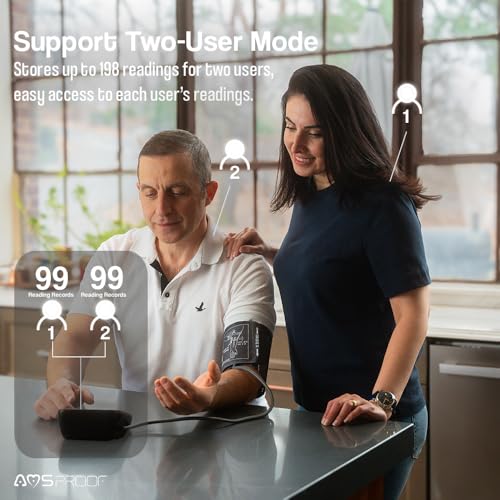
Memory is described in the title as up to 200 readings for two users. The listing never says whether that is 100 each or 200 each, which for a household buying on shared use is worth settling before ordering.
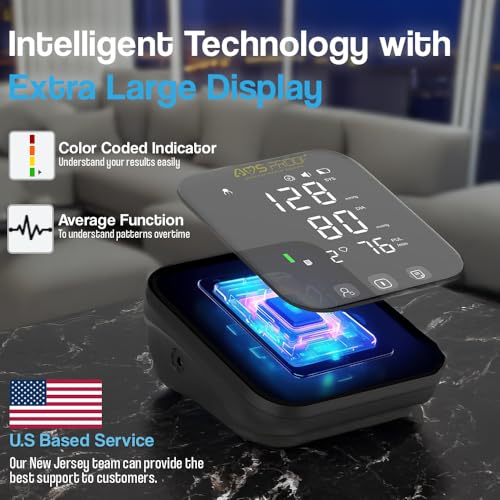
The display is a large backlit LED showing systolic pressure, diastolic pressure, pulse rate, a memory indicator, a heart rate detection indicator and the user slot, all on one screen. No digit height is published. The voice broadcast is documented in its own bullet and can be turned off, which is the detail most talking monitor listings omit and the reason this one is worth comparing against the SmartHeart 01-742T.
Power is four AA batteries, included, with a USB-C cable also in the box. The unit measures 5.5 by 4.5 by 2 inches at 15.2 ounces, and the two weight fields agree with each other. The device shuts off after 60 seconds of inactivity, and a carrying case is included.
Using It Correctly
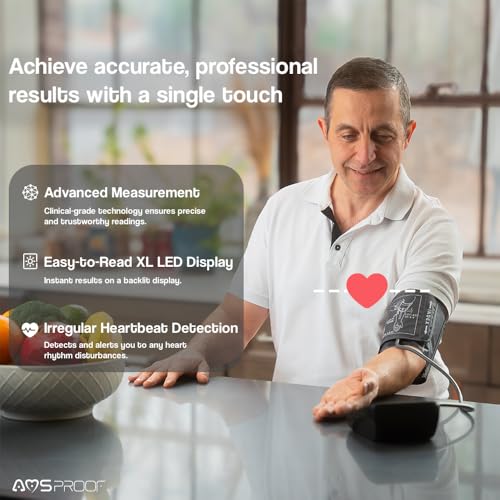
Fit the cuff to the bare upper arm rather than over a sleeve, with the tubing running down the inside of the arm toward the palm and the lower edge roughly an inch above the elbow crease, closed so one finger slides underneath with mild resistance. Sit with the back supported and both feet flat on the floor, rest the arm so the cuff sits level with the heart, and stay silent and still through inflation and release.
Rest for several quiet minutes before the first reading rather than measuring straight after activity, and use the same arm at the same times each day so the record compares with itself. Set the user slot before the first measurement, and decide whether the voice stays on, since a shared room usually settles that question quickly.
Limits and the Statement That Matters
The description field is empty, so six bullets and a specification table carry everything. Nothing is published about the pressure or pulse measurement range, tolerance, averaging across readings, or battery life, and the heart rate detection indicator on the display is never explained. The model name field contains a generic phrase rather than a designation, and the components field misspells manual.
The point that outranks every claim above: this device produces numbers, stores them and reads them aloud. It does not diagnose, it does not replace professional medical care, and nothing in this review tells anyone what a reading means. A monitor described as clinically validated is still a monitor, and the log still belongs with a clinician.
Alternatives Worth Comparing
If documentation is what you are actually buying, the A&D Medical UA-651BLE publishes four cuff ranges and its app requirements in full, and the Omron BP5100 Bronze comes from a manufacturer with a long public record. For a plain two user device without the claims, the Greater Goods 0663 is the closer comparison. The full selection sits in our blood pressure monitor category.
Who Should Buy It, Who Should Not
Buy it if your arm falls inside 22 to 42 cm, you want spoken results with a genuine mute option and everything supplied in one box, and you are willing to verify the validation and clearance claims yourself. Skip it if you need those claims evidenced on the page rather than checked afterwards, if the memory split between two users needs settling first, if the professional endorsement claim is what persuaded you, or if the two different cuff lower bounds leave you guessing.