

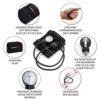


Description
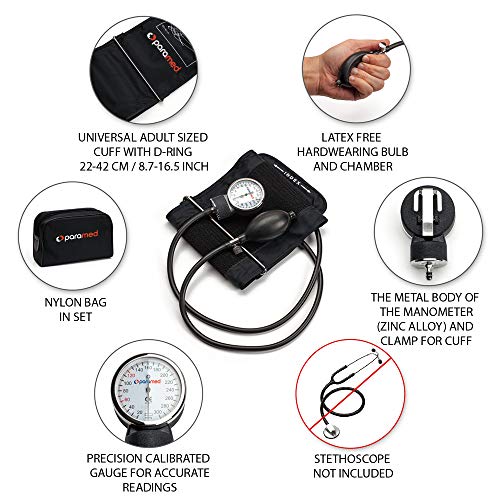
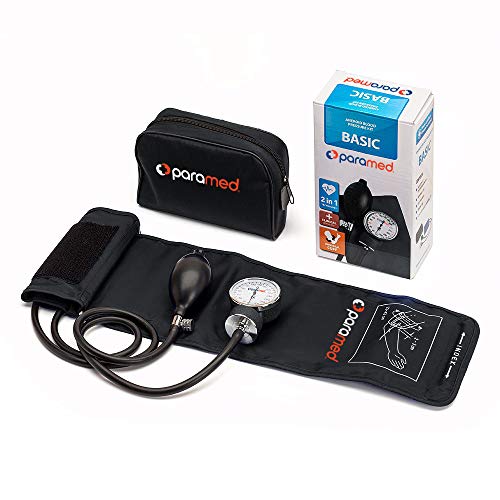
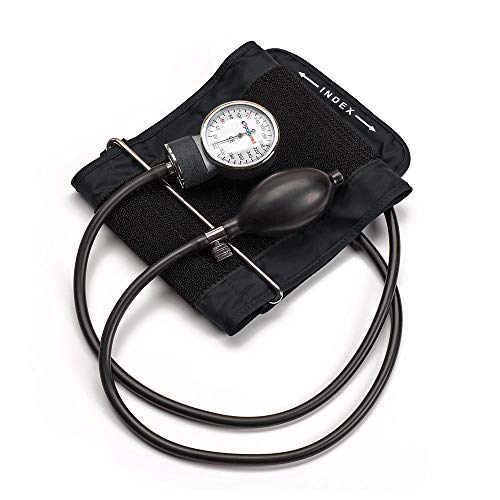
The PARAMED aneroid sphygmomanometer is a manual blood pressure cuff with a dial gauge, a bulb and a valve. There is no display, no battery and no automatic anything. Most importantly, and the listing says this in its own title, there is no stethoscope in the box. This review describes it from the published listing data. It is not medical advice, it does not tell you what any reading means, and no blood pressure device replaces professional medical care.
You cannot use this on your own without a stethoscope and the skill to use it
This is the point that decides whether the product is right for you, and it needs stating before anything else.
An aneroid sphygmomanometer does not measure blood pressure by itself. It inflates a cuff and shows the pressure in that cuff on a dial. The measurement comes from listening through a stethoscope to the sounds in the artery as the cuff deflates, and noting the dial reading at two specific points. That listening is a clinical skill. It takes instruction and practice to do reliably, it is harder in a noisy room, and it is harder still on yourself.
PARAMED states clearly that no stethoscope is included, in the product title and again in the first feature bullet. So out of the box, this kit cannot take a blood pressure reading at all. You need to buy a stethoscope separately, or buy a combined kit such as one of the sphygmomanometer and stethoscope sets listed here.
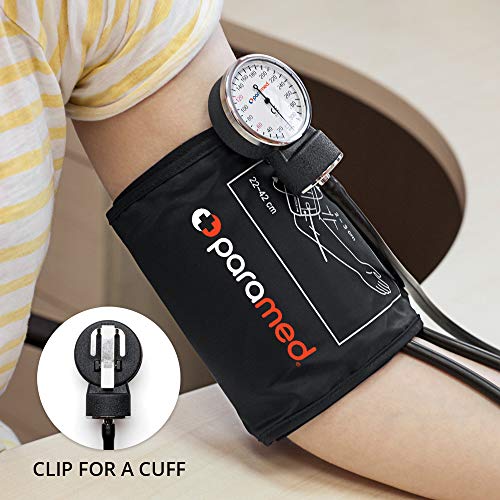
One feature bullet describes a comfortable velcro strip that allows easy one hand self measuring at home. Treat that with caution. Fitting the cuff one handed is possible; taking a reliable auscultatory reading on yourself, holding a stethoscope in place with the same arm you are measuring, is a different proposition. If you want a device you can use on yourself without training, an automatic monitor from the blood pressure monitor section is the right category, not this one.
Who this kit is for
It is for someone who has been taught to take blood pressure by auscultation: a nurse, a paramedic, a student, a caregiver who has been shown how by a clinician, or a veterinary or teaching setting. In those hands a good aneroid unit is simple, needs no batteries, and does not go wrong in the ways electronics do.
The published build supports that use. PARAMED states a zinc alloy body, a metal air needle valve with smooth pressure relief regulation, a large easily readable number dial, and a check valve with a reticulated filter to keep dust out of the mechanism. The cuff is described as extra durable nylon with a D-ring. A carrying case is included and the published weight is 12 ounces.
The cuff range
Cuff fit determines whether a reading is worth recording, because a cuff too small or too large produces wrong numbers however good the gauge is. On a manual device there is no software to hide behind: the cuff is the measurement.
The product title states 8.7 to 16.5 inches and a feature bullet gives the same range as 22 to 42 centimeters, which converts correctly. The structured band size field, as on many listings here, reads only “16.5 inches” and gives no minimum. Work from the title and the bullet, and measure the upper arm at the midpoint between shoulder and elbow before ordering.
Using it correctly
The measurement conditions matter as much on a manual device as on an automatic one. The person being measured should sit with their back supported and feet flat on the floor, rest quietly for several minutes beforehand, have the arm supported at roughly heart level, and wear the cuff on bare skin rather than over a sleeve. Readings should be taken at consistent times so they can be compared with one another, and repeated measurements should be spaced a couple of minutes apart.
Two practical points specific to this device. An aneroid gauge can drift out of calibration if it is dropped or knocked, and unlike an automatic monitor there is no error message when it does; the dial simply reads wrong. Treat the case as part of the product rather than a nicety, and if the needle does not sit at zero with the cuff deflated, the unit needs checking. Second, deflate slowly. Releasing the valve too fast is the most common reason manual readings come out wrong, because the sounds you are listening for pass by before you can read the dial.
Nothing on this page tells you what any reading means, and a manual device gives you no indicator, no color band and no alert to lean on. The numbers go in a record and the record goes to a clinician.
Aneroid versus automatic, in one paragraph
An aneroid unit has no electronics to fail, no batteries to replace and no algorithm between you and the measurement, which is why clinical settings still use them. In exchange it needs a trained operator, a stethoscope, a quiet room and a gauge that has not been knocked out of calibration. An automatic monitor removes all of that and adds its own failure modes instead. If you want the manual approach with everything supplied, the Dixie EMS aneroid set listed here includes a stethoscope.
What the claims actually say
One bullet states that the device gives reliable results and is clinically tested and approved. No protocol is named, no testing body is identified, no approving authority is specified and no reference is given that a reader could follow. There is no statement about FDA clearance or registration and no warranty term. “Clinically tested and approved” with nothing attached to it is a marketing phrase.
The same bullet set describes the product as helping you balance your blood pressure. A cuff and a gauge measure; they do not balance anything. We do not test devices and we will not describe any blood pressure device as accurate, clinically accurate or medical grade in our own voice.
Feedback is recorded at 4.4 out of 5 across 23,678 ratings, a large sample that measures buyer satisfaction rather than measurement performance. One oddity in the data: the sales rank field places this product within industrial and scientific rather than health and household, where every other blood pressure device in this catalog sits. That is a categorization artifact rather than anything about the product.
Who should buy it and who should not
Buy it if you already take blood pressure by auscultation and want a solid, battery free unit with a durable cuff and a case. Do not buy it as a home monitor for yourself unless you have been trained, and do not buy it expecting to use it out of the box, because there is no stethoscope in the kit. Paramed’s automatic upper arm monitor is the self measurement option from the same brand, and this kit sits in the mixed shortlist section alongside other assorted pressure related products.