Description
Who this set is for and what it settles
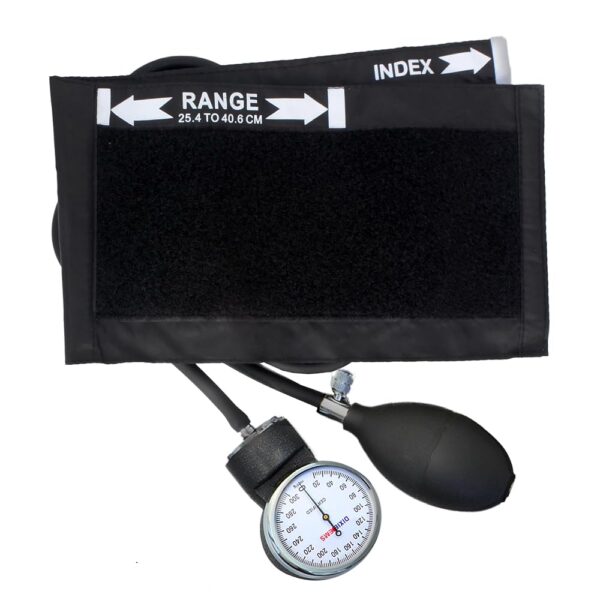
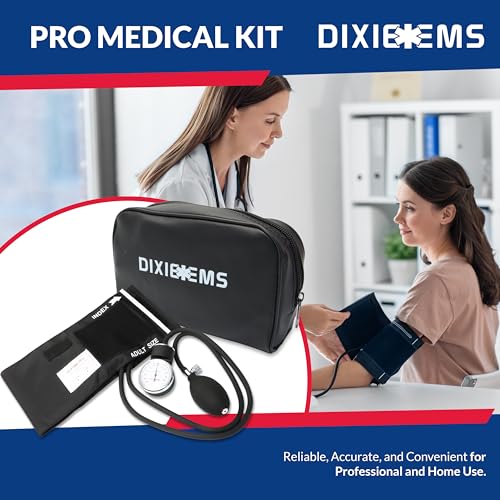
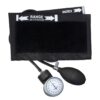
The Dixie EMS Deluxe Aneroid Sphygmomanometer is a manual blood pressure set, and the decision it settles is whether you want a manual instrument or an automatic one. This is not a device you press a button on. An aneroid sphygmomanometer is a cuff, a bulb, a release valve and a dial gauge, and the reading is taken by inflating the cuff by hand, releasing the pressure slowly, and listening through a stethoscope while watching the needle. That technique is a trained skill. It is standard equipment for nursing students, EMS crews and clinical instructors, and it is a poor fit for someone who simply wants a number at the kitchen table each morning.
Anyone in that second group is shopping the wrong shelf and should look at the automatic home monitors we cover instead, where the device does the inflation, the timing and the reading. This review describes the device only. It is not medical advice, it does not interpret any reading, and a home blood pressure device of any kind does not replace professional medical care. Readings should be discussed with a clinician, and any decision about treatment belongs to that clinician rather than to a product page.
The specifications that matter most
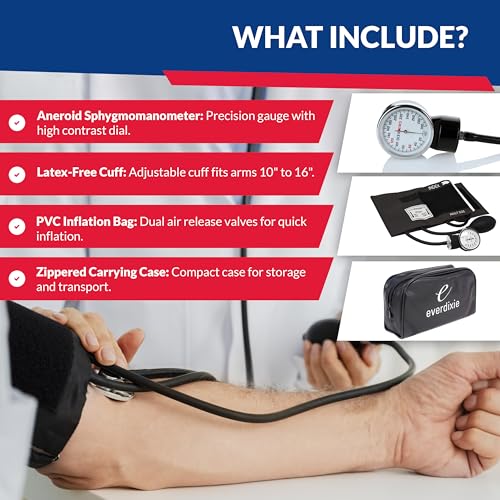
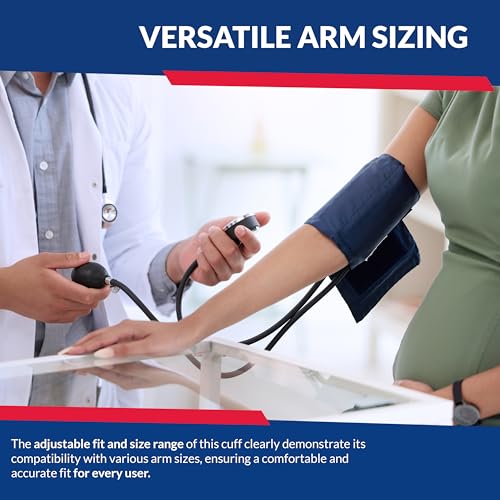
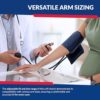
Cuff circumference is the single most consequential specification on any blood pressure device, because a cuff that is too small or too large produces a wrong reading on hardware that is working correctly. Dixie EMS publishes the range twice and the two figures agree. The specification block gives a band size of 25.4 cm to 40.6 cm, and a feature bullet gives the same range in inches as adult arms between 10 and 16 inches in circumference. Measure the midpoint of your upper arm with a tape before ordering. If your measurement falls outside 10 to 16 inches, this cuff is not the right one and no amount of tightening will fix that.
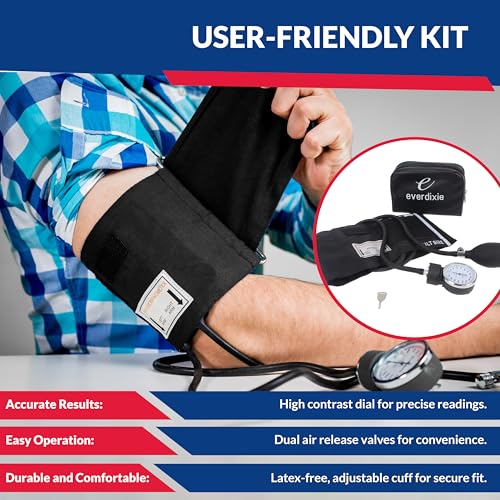
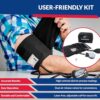
The cuff is described as durable nylon with a Velcro closure and a latex free PVC inflation bag, which matters for anyone with a latex sensitivity. The listing states the bulb assembly uses two types of air release valve, a screw type and a push type, and says the valve can be operated with a single finger or thumb. The manometer body is aluminum alloy with what Dixie EMS calls a high contrast dial, and it carries a clip so it can be attached to clothing or a belt during use. The set is rated for adult use and weighs 8 ounces, which the specification block also expresses as 0.5 pounds. Those two figures agree. A zippered carrying case is included, and the product title also names a calibration tool.
What ships in the box, and what does not
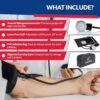
This is the gap that matters most on this listing. The included components field names only a cuff, a tube and a case. No stethoscope appears anywhere in the specification block or the feature bullets. An aneroid sphygmomanometer cannot produce a reading on its own, because the reading comes from listening to sounds in the brachial artery while the cuff deflates. If a stethoscope is not already on hand, one has to be bought separately, and the listing does not say so. The calibration tool named in the title is also not described anywhere in the body of the listing, so what it is and how it is used are not published.
Using a manual set correctly
Cuff placement drives everything on a manual set just as it does on an automatic one. The cuff goes on the bare upper arm rather than over a sleeve, positioned so the artery marker sits over the brachial artery, with the lower edge above the bend of the elbow. The arm should be supported at heart height with the back supported and the feet flat, and the person being measured should be still and quiet for several minutes beforehand. Manufacturer instructions are the authority on the specifics for this device, and they should be read rather than skipped.
The part unique to manual instruments is deflation rate. Releasing the valve too quickly makes the needle fall faster than the ear can track, which is why the two valve types on this bulb exist. Learning to hold a slow steady release is the actual skill, and it is why we describe this as an instrument for trained users. Where a household wants a routine that a family member can run without training, an automatic upper arm device such as the Greater Goods BD3439 we review is the format built for that job.
Limits, gaps in the published data, and the safety statement
We do not describe this or any device as accurate, clinically accurate, medical grade or hospital grade in our own voice, and there are specific reasons here. Dixie EMS does not publish an accuracy tolerance for the manometer, so the usual figure for aneroid gauges is not stated on this listing. No validation protocol is named, and no clearance or standard is cited anywhere in the data. Aneroid gauges also drift with use and with being dropped, and the listing publishes no recalibration interval, which is a real gap given that a calibration tool is advertised in the title.
Two fields in the imported data are simply wrong rather than incomplete. The use for field reads Hands, which cannot be right for an upper arm cuff. The product title states the color is black, while customer review text in the same listing describes a purple unit, which points to color variants sharing one listing without the imported record distinguishing them. We are naming both rather than resolving them.
The safety statement bears repeating in plain words. This device does not replace professional medical care. It does not diagnose anything, no reading from it means anything on its own, and nothing in this review should be used to decide whether to start, stop or change any treatment. Take that conversation to a clinician. If a reading concerns you, that is a reason to contact a healthcare professional rather than to consult a review.
Alternatives worth comparing
The closest comparison in our catalog is the Paramed manual blood pressure cuff review, which is the same instrument category and is usually decided on cuff range and on whether a stethoscope is bundled. At the professional end, the Omron HEM-907XL review covers a clinic style automatic unit, which is a different price class and a different use case. For a plain home routine, the Medline MDS4003 review is a more typical starting point.
Wrist devices come up in this search and deserve a direct statement. The Paramed automatic wrist monitor review covers that format, but wrist and upper arm devices are not interchangeable. Wrist readings depend heavily on holding the wrist at the correct height and position, and upper arm devices remain the usual recommendation for home monitoring.
Who should buy it and who should not
Buy it if you are trained in manual measurement, already own a stethoscope, need a portable set for coursework or field use, and your arm measurement falls inside the published 10 to 16 inch range. Do not buy it as a first home monitor, do not buy it expecting a stethoscope in the box, and do not buy it if you want a device that produces a number without technique. Whatever you buy, the readings are information for a clinician, not a substitute for one.