
Description
Who This Monitor Is For and What It Settles
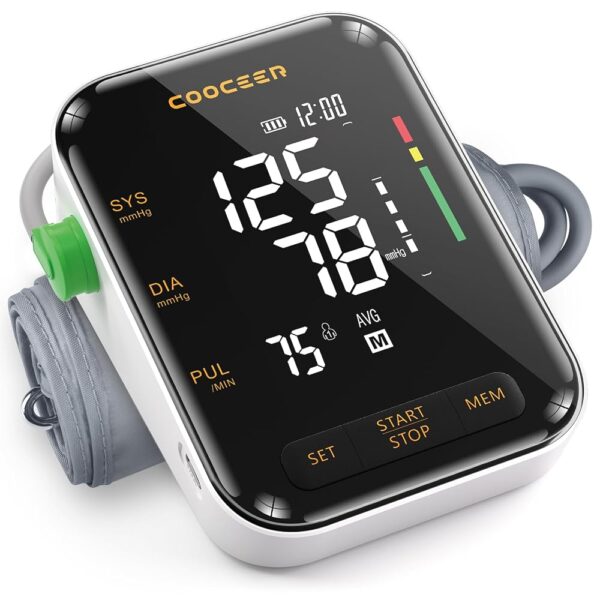
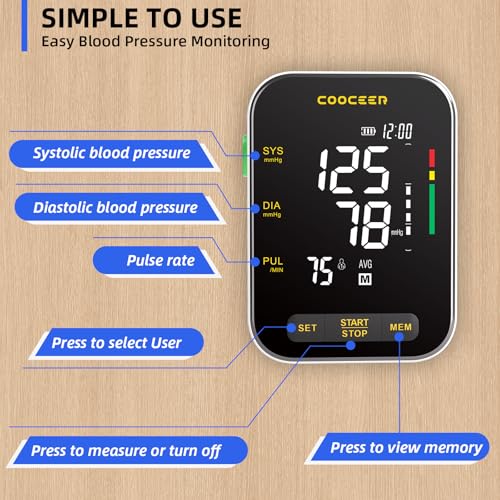
The COOCEER X8 is an upper arm blood pressure monitor with one button, an oversized backlit display and 198 stored readings across two users. It is aimed at a household where two people keep separate logs and where at least one of them wants the largest possible numbers on the screen. There is no app, no Bluetooth and no export.
What makes this listing unusual is that it publishes an accuracy figure, which almost nothing else on this shelf does. That figure needs careful handling and it is the subject of a section below. First, the standing point: this review describes a device and its published specifications, it does not interpret readings, and a home blood pressure monitor does not replace professional medical care.
The Specifications That Matter
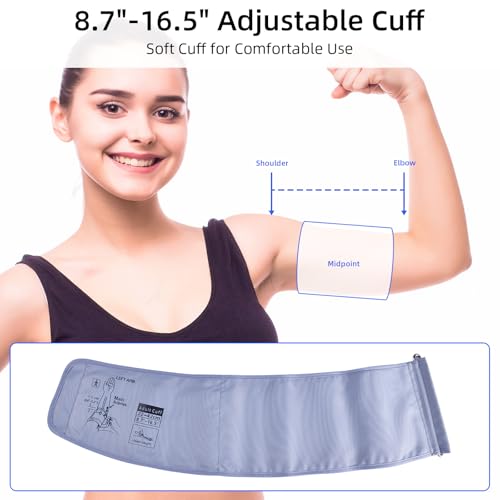
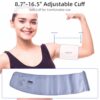
Cuff circumference is the specification that decides whether this monitor can work for a given arm, because a cuff that is too small or too large yields wrong readings on hardware that is behaving perfectly, and the display gives no warning. The product title publishes 8.7 to 16.5 inches, which covers most adult arms. The structured band size field records only 16.5 inches, the upper bound with the lower bound dropped, so take the range from the title.
Measure the bare upper arm at the midpoint between shoulder and elbow before ordering. If your measurement sits outside that span, a documented replacement cuff such as the Alcarefam BD42 fitted to a compatible monitor is the sounder route than hoping an adjustable cuff stretches far enough.
Display, memory and power
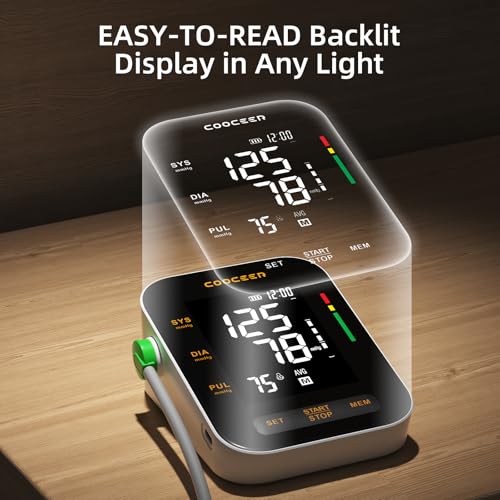
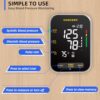
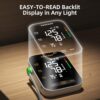
The display is described in a bullet as an oversized high-definition LED backlit panel with bolded larger digits, aimed explicitly at older users, while the structured display field says only large display. No digit height is published, so the actual character size has to be judged from photographs, which is the weak point of every legibility claim in this category.
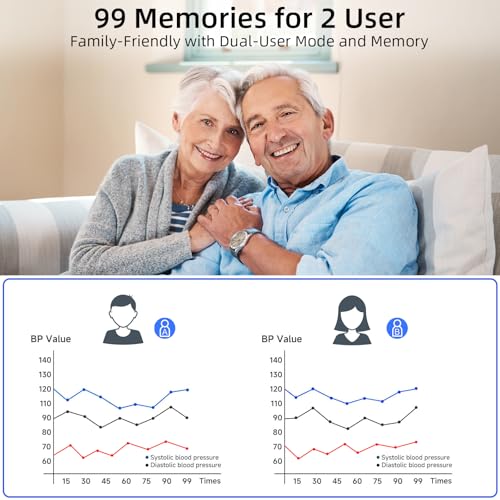
Memory is 99 readings for each of two users, 198 in total. That is deep enough for months of twice daily logging before anything is overwritten, and it is the practical argument for this device over a single user monitor.
Power is where the listing goes quiet. The power source field says battery powered and the included components list a Type-C cable, but no battery type, count or life is published anywhere, and the listing never explains whether the Type-C port charges an internal cell or simply runs the device. If the monitor will live somewhere without a convenient outlet, settle that with the seller before ordering.
The 3 mmHg Claim
The lead bullet states that the monitor has deviations of 3 mmHg or less. That is a specific, checkable-sounding number, and it is more than most listings offer, so it deserves to be handled precisely rather than either repeated or dismissed.
It is the manufacturer’s claim, not ours. We do not test devices and we do not verify performance figures. What the listing does not give is the context that would make the number mean something: no test protocol is named, no standard or edition is cited, no sample size or population is described, and no clearance or certificate reference appears anywhere in the data. A tolerance figure without a protocol behind it is a number, not a validation. The same bullet also invites the reader to say goodbye to guesswork, which overstates what any home measurement can settle on its own.
Anyone relying on this device for readings that will inform care should check its validation status through the independent registries medical bodies maintain, and should treat the published figure as a claim to be verified rather than a specification already proven.
Using It Correctly
Fit the cuff to the bare upper arm rather than over a sleeve, with the tubing running down the inside of the arm toward the palm and the lower edge roughly an inch above the elbow crease, closed so one finger slides underneath with mild resistance. Sit with the back supported and both feet flat on the floor, rest the arm so the cuff sits level with the heart, and stay silent and still through the inflation and the release.
Rest for several quiet minutes before the first reading rather than measuring straight after activity, and use the same arm at the same times each day so the record compares with itself. Set the user bank before the first measurement. With 99 slots each there is no reason for two people to share one bank, and separating them from the start avoids a log that cannot be untangled later.
Limits and Data Quality
The description field is empty, so five bullets and a specification table carry the technical case, and the bullets are noticeably padded. One of them repeats the same sentence twice in a row, word for word, which is a small thing but tells you how much attention the page received. Nothing is published about the pressure or pulse measurement range beyond the deviation figure, and nothing about irregular heartbeat detection, averaging across readings, digit height or battery life.
The included components field lists a five year USA warranty as though it were an item in the box, alongside the quick start guide, manual, cuff, monitor, bag and Type-C cable. A warranty is a commitment rather than a component, and packing it into a components list is the kind of thing that makes the rest of the field harder to trust. The manual is also spelled incorrectly in the same field.
The unit measures 5.7 by 3.7 by 2.3 inches at 1.19 pounds. The manufacturer of record is Jiangxi AICARE Medical Technology, which is not the brand on the box, a normal arrangement but relevant if warranty support is the reason the five year claim caught your eye.
The point that outranks the rest: this device produces numbers and stores them. It does not diagnose, it does not replace professional medical care, and nothing in this review tells anyone what a reading means.
Alternatives Worth Comparing
If deep two-user memory with a plain interface is what you want, the Greater Goods 0663 and the Medline MDS4001 cover similar ground from manufacturers with longer records behind them. If you would rather buy on published documentation than on a single deviation figure, the A&D Medical UA-651 is the closer comparison. The full selection sits in our blood pressure monitor category.
Who Should Buy It, Who Should Not
Buy it if your arm measures between 8.7 and 16.5 inches, two people need 99 readings each, and a large backlit display is the deciding feature. Skip it if you need the power arrangement settled before you commit, if you want a validation protocol rather than a bare tolerance figure, if irregular heartbeat detection matters to you and its absence from the data is a problem, or if a components list containing a warranty is a sign you would rather not ignore.