


Description
Who the A&D Medical UA-651 is for, and what it settles
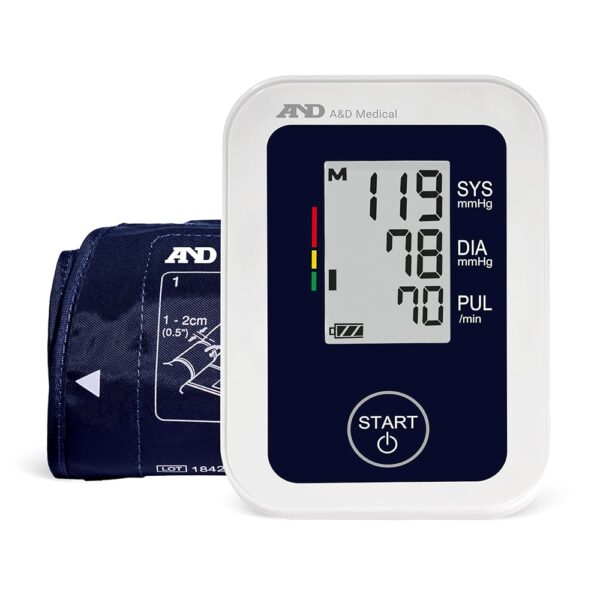
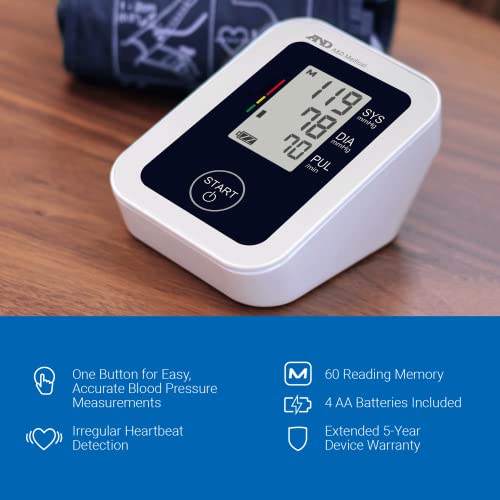
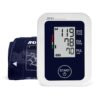
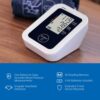
The UA-651 is a plain upper arm monitor from a manufacturer that has been supplying blood pressure equipment to clinical buyers for decades. It has one button, a large LCD, 60 readings of memory and a wide range cuff, and it has been on sale since 2014, which is unusually long for this category. It settles the question of what to buy when you want a conventional, serviceable machine from a brand that also sells replacement cuffs in several sizes, rather than a sealed appliance you replace when the band wears out.
It is deliberately not a connected device. If you want app history, A&D sells a Bluetooth sibling covered in our UA-651BLE review, and the two are otherwise close relatives.
Whatever the readings show, this is a home instrument. It does not replace professional medical care, and a home log is something to bring to a clinician rather than something to act on by yourself.
The specification that matters most, and it contradicts itself
This listing publishes the cuff range three separate times and does not agree with itself. The product title gives 22 to 42 centimeters. The feature bullet gives 8.6 to 16.5 inches, which is 22 to 42 centimeters, matching the title. The specification field gives a band size of 22 to 32 centimeters. That is a ten centimeter difference at the top end, and it is not a rounding error.
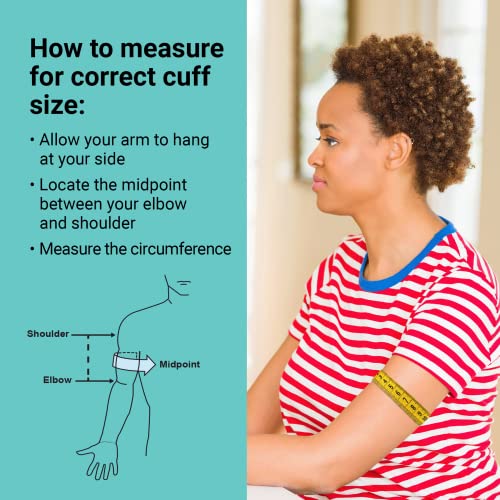
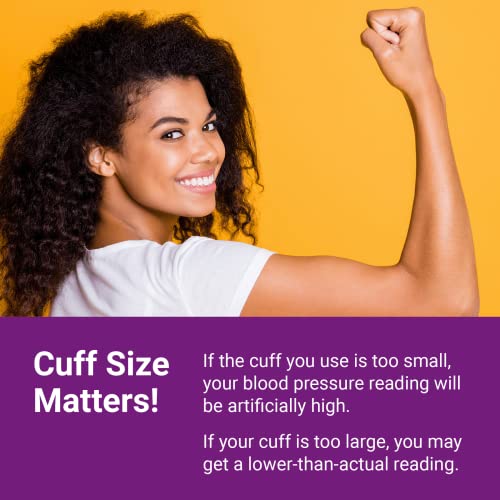
We are not going to pick one. The gap matters because the difference between a 32 centimeter ceiling and a 42 centimeter ceiling is the difference between a standard adult cuff and a genuinely large one, and a cuff that has run out of adjustment produces wrong numbers on a monitor that is working correctly. If your measured upper arm circumference is comfortably under 32 centimeters, the contradiction does not affect you. If it is between 32 and 42, the whole purchase turns on which figure is right, and you should get an answer from A&D before ordering rather than from a listing field.
The useful part of A&D’s approach is that this is a serviceable design. The listing names three optional cuffs by part number, with ranges attached: the UA-289A small at 16 to 24 centimeters, the UA-290A medium at 23 to 37 centimeters and the UA-291A large at 31 to 45 centimeters, each sold separately. That means an arm outside the supplied band is a cuff purchase rather than a new machine. Buyers considering a replacement band should also read our LifeSource UA-280 cuff review, since LifeSource is the same manufacturer’s long standing consumer label.
The rest of the specifications
Memory and averaging
The device stores and recalls 60 readings. A&D calls its averaging feature Snapshot Averaging and describes it as automatically calculating the average of all readings to establish a baseline. Note the wording: this is described as an average across stored readings rather than a three measurement sequence taken back to back, which is what several competing monitors mean by averaging. If your clinician has asked for a particular measurement routine, that distinction is worth confirming with A&D rather than assuming.
Cuff fit detection
The listing advertises cuff fit detection, described as eliminating errors from incorrect cuff placement. That is A&D’s claim about a feature, and it is a useful one, because placement is among the most common causes of a bad home reading. It is not a guarantee, and it does not remove the need to measure your arm and buy the right size in the first place.
Power, and a second contradiction
The title and the feature bullets both say four AA batteries are included. The specification field says four AAA batteries are required and included. AA and AAA are not interchangeable. This is a small thing next to the cuff range, but it is the same category of problem, so we are naming it rather than choosing. No AC adapter is named in the published data, though A&D sells adapters for several of its monitors, so ask if mains power matters to you.
Size, weight and eligibility
Listed dimensions are 3.78 by 2.68 by 5.12 inches, and the listed weight of 10.58 ounces matches the 300 gram figure given elsewhere in the same listing, which is a rare instance of two fields agreeing. The listing states the product is FSA and HSA eligible, which is the seller’s statement about a purchasing category rather than a claim about the device itself.
What the listing does not say
There is no validation protocol named, no clearance number quoted and no accuracy figure published in this listing, despite the word accurate appearing in the marketing copy several times. We are not repeating that word in our own voice. A&D has a long history of supplying professional equipment, but a manufacturer’s reputation is not the same thing as a validation record for a specific model, and the two should not be conflated. Validation status for any home monitor can be checked independently through the lists that medical societies publish, and doing that check yourself is a better use of ten minutes than reading any retail description, including this one.
Using it correctly
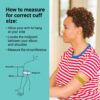
Rest for five minutes before you measure. Sit with your back supported, feet flat, legs uncrossed, and put the cuff on a bare upper arm rather than over a sleeve. The lower edge of the band should sit about an inch above the elbow crease, with the artery marker on the inside of the arm, and the fit should allow two fingers under the edge with mild resistance. Support the arm on a table so the cuff is level with your heart.
Do not talk during the measurement and do not move. Take readings at consistent times of day, and write down the time next to each result, because 60 stored values with no context are much harder for a clinician to use than a short handwritten log with dates.
If you buy one of the optional cuffs later, take a few readings under the same conditions with both bands and note whether the results look broadly similar. If they diverge sharply, raise it with your clinician or a pharmacist who can compare against their own equipment rather than deciding for yourself which one to believe.
Alternatives worth comparing
Within the same family, the A&D UA-767FAC is the fuller featured sibling and is worth a look if 60 readings feels thin. If you want to avoid replacement cuffs entirely and prefer an all in one band, our Beurer BM81 review covers the tubeless approach, with the trade off that the cuff and the monitor become the same disposable object. For a band that fits awkward or conical upper arms more comfortably than a flat rectangle, the Omron wide range cuff is the reference point. The full home blood pressure monitor section lists cuffs and machines together so ranges can be compared before you commit.
Who should buy it, and who should not
Buy the UA-651 if you want a simple, long lived machine from a manufacturer that still sells parts for it, if your arm measures comfortably under 32 centimeters, and if you are content keeping records on paper. Hold off if your measurement falls between 32 and 42 centimeters, at least until A&D confirms which of its two published ranges applies to the cuff in the box, and skip it if you want digital history or a listing whose battery specification agrees with its own title.