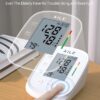
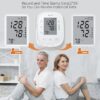
Description
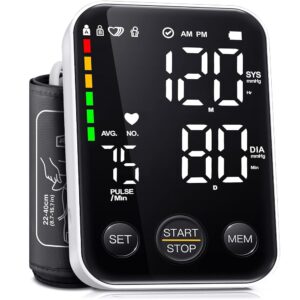
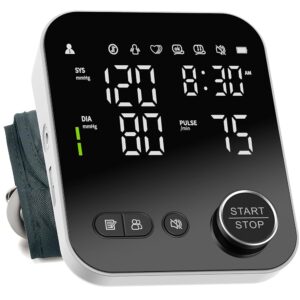
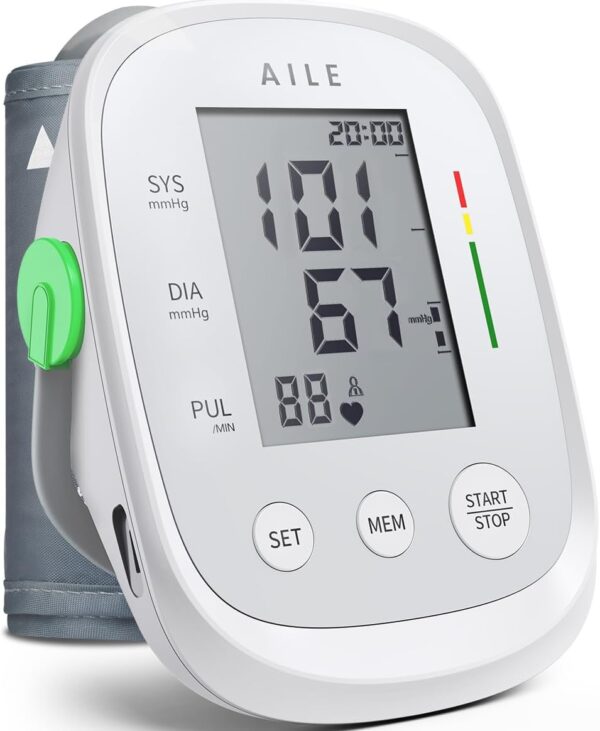
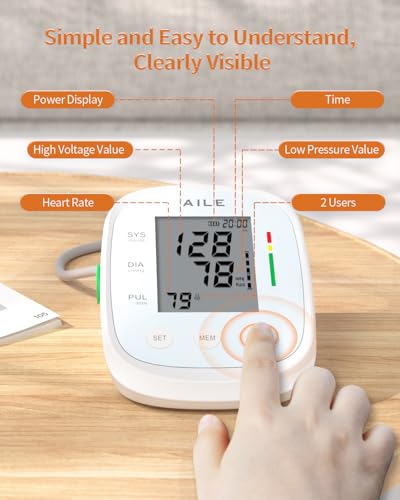
The AILE X5 is an upper arm blood pressure monitor with a large screen, storage for 99 timestamped readings each across two users, and a listing that makes a more specific accuracy claim than almost anything else in this catalog. This review describes the device from its published listing data. It is not medical advice, it does not tell you what any reading means, and a home monitor does not replace professional medical care. Readings belong in a conversation with a clinician who knows your history.
The cuff range, and where the listing falls short of publishing it
Cuff fit determines whether a reading is worth recording. A cuff too small or too large produces wrong numbers on a device functioning perfectly, and careful technique does not correct for it. This is a measurement problem, not a comfort problem.
The product title and a feature bullet both state an adjustable large cuff fitting 8.7 to 16.5 inches. Those agree with each other, and 16.5 inches is a reasonable upper bound. The structured band size field, however, reads only “16.5 inches”, giving the top of the range with no bottom. Anyone comparing from the specification table rather than the marketing copy would see one number where a cuff needs two.
Measure your upper arm at the midpoint between shoulder and elbow before ordering and work from the 8.7 to 16.5 inch figures. If you fall outside that span, buy a device or a separate cuff that fits rather than pulling this one tight; the blood pressure monitor section lists replacement cuffs in larger and smaller sizes, including the AILE replacement cuff.
Who this monitor is for and what it settles
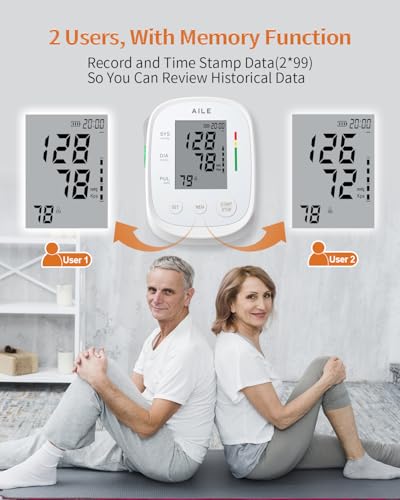
The X5 settles whether a value priced monitor can keep a long timestamped history for two people. It stores 99 measurements for each of two users, 198 in total, each with a time stamp, and AILE states a measurement completes in about 30 seconds. Nothing in the listing describes Bluetooth or an app, so what the device holds is the entire record you can bring to an appointment.
The kit is well specified for the price: the monitor, a large cuff, a blood pressure indicator card, an instruction manual and a USB cable are all listed as included. Published dimensions are 5.5 by 3.8 by 2.7 inches at 13.4 ounces. AILE also states the product is climate neutral certified by ClimatePartner, which is an environmental claim rather than a performance one and can be checked with that certifier directly.
The accuracy claim is specific, which cuts both ways
Most value priced listings in this catalog say the word accurate and stop. AILE goes further and publishes a figure: it states a measurement error within 3 mmHg for blood pressure, alongside a claim about pulse accuracy that is truncated in the imported data. It also states that each device is individually calibrated and that the chips are sourced from a Dutch supplier.
A specific number is more useful than an adjective, because it is a claim that can in principle be tested. What the listing does not do is say who tested it. No validation protocol is named. No independent validation body is cited. There is no statement about FDA clearance or registration. A manufacturer stating its own error margin is not the same as a device having been validated against a published protocol by someone with no commercial interest in the result.
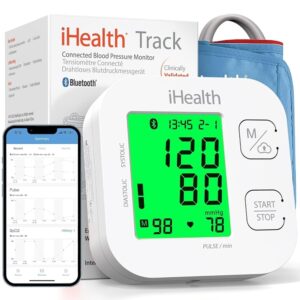
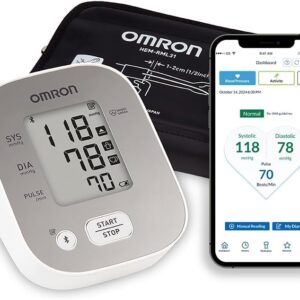
Compare that with the iHealth Track, which names the ESH 2010 protocol, or with OMRON’s listings, which cite a Validated Device Listing process. Naming a protocol gives a reader something to look up. If validation status matters to your decision, the device listings published by validation programs and the FDA’s own databases are the places to check rather than a product page. We do not test devices and we will not describe any monitor as accurate, clinically accurate or medical grade in our own voice.
The listing’s marketing language runs well ahead of its evidence in places, describing the accuracy of every device in absolute terms. Read the 3 mmHg figure as the manufacturer’s specification and treat the surrounding adjectives as advertising.
Using it correctly
Before the routine, two gaps worth knowing. The listing publishes no warranty term at all, where established brands state two to six years, and it never mentions irregular heartbeat detection, which most competing monitors advertise. Assume neither is offered unless AILE confirms otherwise. The USB cable in the kit also needs a word: the listing describes it as a power connection rather than a charging cable, and it does not say whether a plug is supplied, so treat mains operation as unconfirmed until you check.
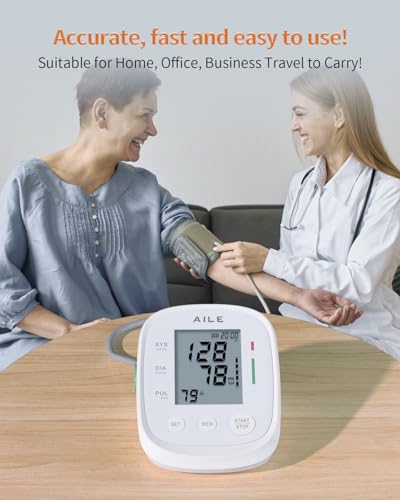
Home readings are useful when the routine never changes. Sit with your back supported and feet flat on the floor, rest quietly for several minutes before starting, support the arm at roughly heart level, fit the cuff on bare skin rather than over a sleeve, and stay still and silent while the measurement runs. Take readings at the same times each day so they can be compared with one another. Follow the instruction manual for the exact fitting the device expects, and follow any protocol your clinician has given you in preference to a general routine.
A note on the blood pressure indicator card included in the box. A printed reference card sorts numbers into bands. It knows nothing about your history, your medication, the time of day or how you were sitting, and it is not a diagnosis or a reason to change anything you are doing. This page will not tell you what any band or number means. If a reading concerns you, record it and raise it with a clinician.
Alternatives in this catalog
Within AILE, the AILE 111 is the sibling device worth comparing field by field. For a cuff that reaches 17 inches with a full range published in the specification table, the Urion U81RH also stores far more readings, and for a named validation process the OMRON range is the step up in price. Further monitors sit in the mixed shortlist section alongside unrelated pressure products.
Who should buy it and who should not
Buy it if you want two user timestamped history without an app, your upper arm measures between 8.7 and 16.5 inches, and a published error specification is worth more to you than a brand name. Do not buy it if you need independent validation, if your arm is near or above 16.5 inches, or if you want app export. Feedback is recorded at 4.3 out of 5 across 9,801 ratings, which measures buyer satisfaction and not measurement performance.