

Description
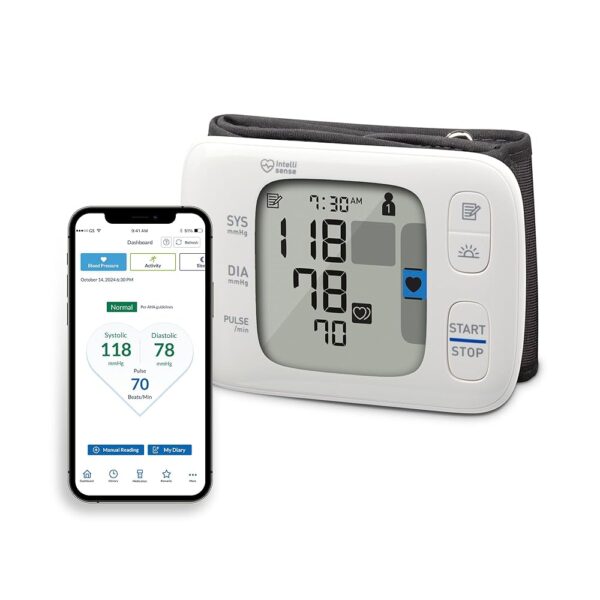
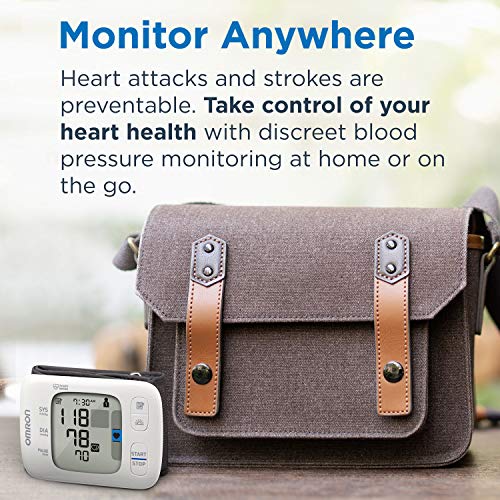
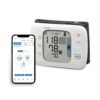
The OMRON Gold BP4350 is a wrist blood pressure monitor with Bluetooth to the OMRON Connect app, storage for 100 readings each across two users, and a positioning feature OMRON calls Heart Zone Guidance. Note the word wrist. This review describes the device from its published listing data. It is not medical advice, it does not tell you what any reading means, and a home monitor does not replace professional medical care. Readings belong in a conversation with a clinician who knows your history.
This is the wrist Gold, not the upper arm Gold
OMRON sells two different products called Gold. The BP4350 reviewed here is a wrist device. The BP5350, also called Gold, is an upper arm device with a 9 to 17 inch cuff. They share a name, a price bracket and a feature list, and they are not the same kind of instrument. Check the model number, not the metal.
The distinction is not cosmetic. Positioning matters far more on the wrist than on the upper arm, because the wrist must be held at the correct height relative to the heart during the measurement and small differences in how the arm is supported change the numbers. Upper arm devices are the usual recommendation for home blood pressure monitoring, and a wrist device is not a compact version of the same thing. If you are choosing between the formats, that is a conversation to have with your clinician.
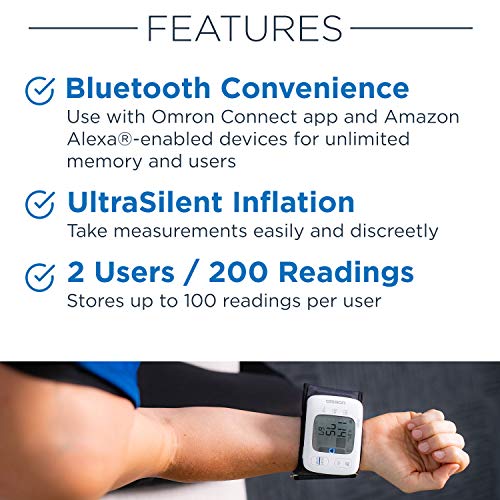
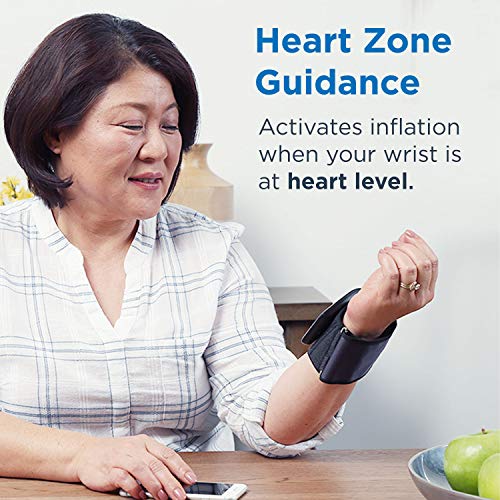
To OMRON’s credit, this device addresses the positioning problem head on. Heart Zone Guidance is described as guiding your wrist to the proper position at heart level, which is precisely the failure mode wrist monitors are prone to. Ultra-Silent inflation is also published, which makes the device usable in a quiet room or in public without drawing attention.
The cuff range is incompletely published
Cuff fit determines whether a reading is worth recording, because a cuff outside its intended range produces wrong numbers on a device that is working perfectly. On a wrist device the band is smaller and the margin for error is correspondingly tighter.
The structured band size field on this listing reads “8.5 inches” and nothing else. That is one number where a cuff specification needs two, a minimum and a maximum wrist circumference. No feature bullet supplies the missing figure either. By contrast, most value branded wrist devices in the blood pressure monitor section publish both ends, with ranges running from around 4.9 inches to around 8.5 inches, though the Medline MDS4003 publishes no range at all.
Measure around your wrist just below the hand before ordering, and ask OMRON to confirm the full range. Do not assume 8.5 inches is a maximum that comfortably fits you without checking where the minimum sits.
Who this monitor is for and what it settles
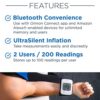
The BP4350 settles whether a wrist device can be as well equipped as an upper arm one. It stores 200 readings in total for two users, 100 each, with unlimited history in the OMRON Connect app on iOS and Android, and support for Amazon Alexa through the OMRON Health Skill. The app shows trend graphs and charts and allows sharing with family, caregivers or a doctor.
Physically it is tiny: 3.6 by 0.5 by 2.5 inches at 3.17 ounces, running on two AAA batteries which are included, with a storage case in the box. For travel that is a genuine advantage over any upper arm monitor with a separate cuff and tube.
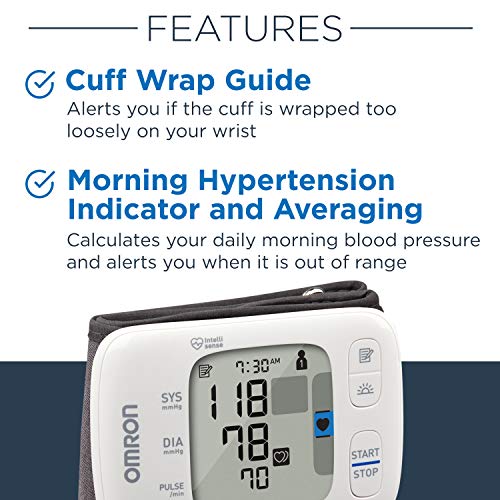
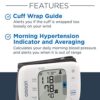
The high morning average indicator is also published here. OMRON describes it as alerting the user when morning measurements fall outside a range the device applies, and connects that in its own copy to cardiovascular risk. That framing belongs to the manufacturer. Treat the indicator as a prompt to speak to a clinician, not as a result to act on. This page will not tell you what any number or alert means.
Using it correctly
Technique carries more weight on a wrist device than on an upper arm one. Sit with your back supported and feet flat on the floor. Rest quietly for several minutes before starting. Fit the cuff against bare skin on the wrist rather than over a sleeve or a watch strap. Use the Heart Zone Guidance rather than ignoring it, and support the arm so the device sits at heart level. Stay still and silent while the measurement runs, and measure at the same times each day so the numbers are comparable. Follow OMRON’s manual, and follow any protocol your clinician has given you in preference to a general routine.
Where the listing contradicts itself
Two conflicts sit on this page and one of them is substantial.
The warranty is stated twice with different terms. One feature bullet says the monitor is backed with a five year warranty. Another says it has a two year warranty. Those are not reconcilable and the difference is meaningful for a device you expect to keep for years. Ask OMRON which applies before buying.
The regulatory wording conflicts in the same way it does across OMRON’s range. The product title states the device is clinically validated and FDA cleared. Two feature bullets state it is registered with the FDA as a medical device. Registration means a manufacturer has listed itself and its device with the agency; clearance means the agency reviewed a specific device before marketing. A listing that asserts both is blurring a real distinction, and the FDA’s own databases are a better place to check than a product page.
The listing further states the monitor meets Validated Device Listing criteria for clinical accuracy as determined through an independent review process, without naming the protocol. OMRON also repeats its brand claims about being the most recommended and the world’s best selling blood pressure monitor brand, which are marketing statements we cannot verify. We do not test devices and we will not describe any monitor as accurate, clinically accurate or medical grade in our own voice.
Feedback is recorded at 4.2 out of 5 across 11,962 ratings. That is a large sample and the lowest average of the OMRON devices in this catalog, which is worth noting given that wrist devices depend more on user technique than upper arm devices do.
Who should buy it and who should not
Buy it if a wrist device is right for your circumstances, portability matters, and you want the positioning guidance and app history that cheaper wrist devices such as the Oklar W1101L and the Care Touch wrist monitor do not offer. Do not buy it assuming it is the upper arm Gold, do not buy it without confirming the wrist size range, and read the warranty terms carefully given the conflict on the page. A few further monitors sit in the mixed shortlist section beside unrelated pressure products.