
Description
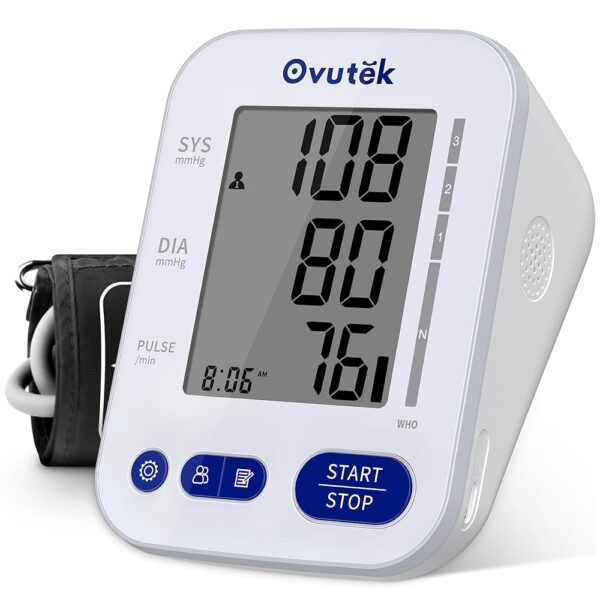
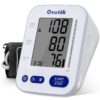
The OVUTEK HBP430, also carrying the code F1103T, is an upper arm blood pressure monitor storing 240 timestamped readings across two user profiles, with both batteries and a Type-C cable supplied. It is the two user counterpart to OVUTEK’s three user model. This review describes the device from its published listing data. It is not medical advice, it does not tell you what any reading means, and a home monitor does not replace professional medical care. Readings belong in a conversation with a clinician who knows your history.
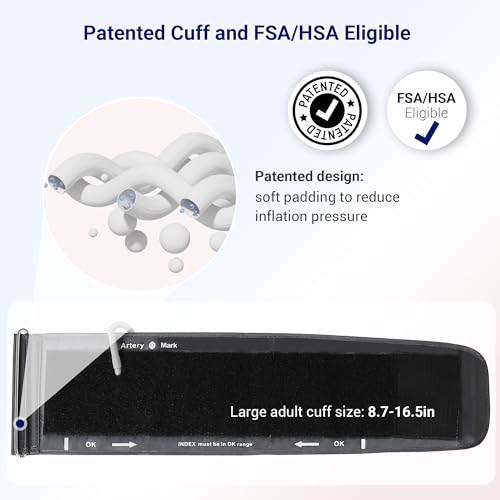
The cuff range, published properly
Cuff fit determines whether a reading is worth recording, because a cuff too small or too large produces wrong numbers on a device that is functioning perfectly. Technique does not compensate for the wrong cuff.
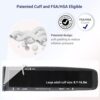
This listing publishes the range correctly in the structured band size field: 8.7 to 16.5 inches, written with a small spelling error but complete at both ends. That is better than the sibling OVUTEK VBP441, whose specification table gives only the upper figure, and better than most value priced listings in the blood pressure monitor section.
Measure your upper arm at the midpoint between shoulder and elbow before ordering. If you measure above 16.5 inches, choose a monitor supplied with a larger cuff rather than pulling this one tight.
The listing has another product’s model number in it
This is worth flagging before you order. The item model number field reads HBP430(F1103T), which matches the product title. The model name field on the same listing reads F1701T, which is the code belonging to OVUTEK’s other monitor, the VBP441 linked above.
Two OVUTEK products with similar names, similar specifications and overlapping codes, one of which has a field containing the other’s identifier, is a recipe for ordering the wrong device. The two differ in ways that matter: this one supports two users and includes a Type-C cable, while the VBP441 supports three users and does not include the cable. Check the model code on the listing and on the box, and quote HBP430 or F1103T specifically when contacting the seller.
Who this monitor is for and what it settles
The HBP430 settles whether a two user monitor can arrive genuinely complete. The stated contents are the monitor, three AA batteries, a Type-C cable, the arm cuff, a user manual, a quick user guide and a storage bag. Both power routes are covered without a further purchase, which is not true of several competitors, and the device is FSA and HSA eligible.
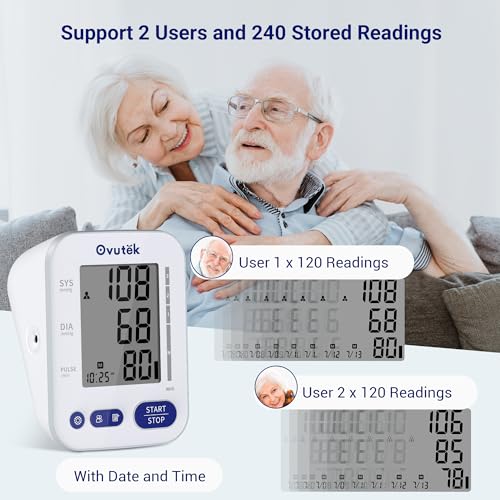
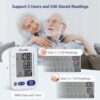
Storage is 240 readings in total across two users, each with an individual time stamp. Nothing in the listing describes Bluetooth or an app, so that is the entire record you can bring to an appointment. The monitor also averages the three most recent readings automatically, which removes a common source of arithmetic error at the kitchen table.
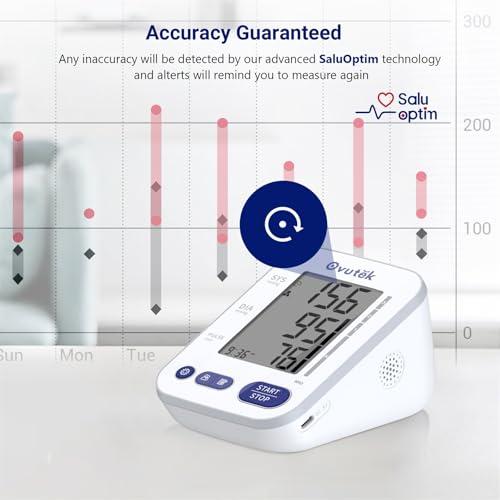
The alert system is the feature worth the most. OVUTEK states the device prompts you to measure again when it detects an error such as a loose cuff or movement during measurement. A silently bad reading is the main failure mode of home monitoring, and a device that tells you when a measurement was compromised is more useful than one with a brighter screen.
Using it correctly
Two gaps before the routine. This listing publishes no warranty term, and like its sibling it never mentions irregular heartbeat detection, which most competing monitors advertise. Assume neither is offered unless OVUTEK confirms otherwise.
Home readings are useful when the routine never changes. Sit with your back supported and feet flat on the floor, rest quietly for several minutes before starting, support the arm at roughly heart level, fit the cuff on bare skin rather than over a sleeve, and stay still and silent while the measurement runs. Take readings at the same times each day so they can be compared. Follow the user manual for the exact fitting the device expects, and follow any protocol your clinician has given you in preference to a general routine.
With two profiles, each person must select their own before measuring. A reading filed under the wrong user corrupts two records at once.
One feature bullet describes the monitor detecting low or high blood pressure and displaying related reminders. Read that as the device sorting a single reading into a band the manufacturer has programmed. It knows nothing about your history, your medication, the time of day or how you were sitting, and it diagnoses nothing. This page will not tell you what any band or number means. If a reading concerns you, record it and raise it with a clinician rather than acting on the display.
What the accuracy claims actually say
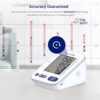
OVUTEK states that each monitor is individually calibrated using what it calls SaluOptim technology. Individual calibration is a manufacturing claim and SaluOptim is a brand name for a proprietary method. Neither is a validation. No validation protocol is named on this listing, no independent validation body is cited, and there is no statement about FDA clearance or registration.
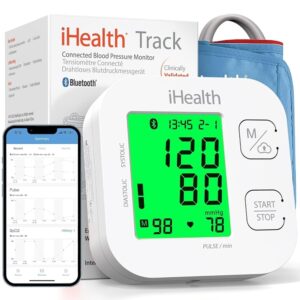
Compare that with the iHealth Track, which names the ESH 2010 protocol, or with the AILE X5, which at least publishes a numerical error specification. Naming a protocol or a number gives a reader something to check; naming a technology does not. If validation status matters to you, the device listings published by validation programs and the FDA’s own databases are the places to look. We do not test devices and we will not describe any monitor as accurate, clinically accurate or medical grade in our own voice.
One phrase in the same bullet is odd enough to note: the listing says the device provides readings “in minutes”. A cuff based measurement normally completes in well under a minute, and competing listings quote 30 to 45 seconds. Either the wording is loose or the device is slower than its rivals; the listing does not clarify which.
Feedback is recorded at 4.3 out of 5 across 608 ratings. The manufacturer field on this listing reads Ovutek, where the sibling product’s field reads Shenzhen Jamr Technology Co Ltd, so even the manufacturer of record is recorded inconsistently between two products from the same brand.
Who should buy it and who should not
Buy it if two people need separate timestamped records, your upper arm measures between 8.7 and 16.5 inches, and you want batteries and a cable in the box. Do not buy it if you need published validation or app export, and check the model code carefully before ordering given the mixed identifiers on the listing. Further options sit in the mixed shortlist section alongside unrelated pressure products.