
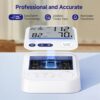
Description
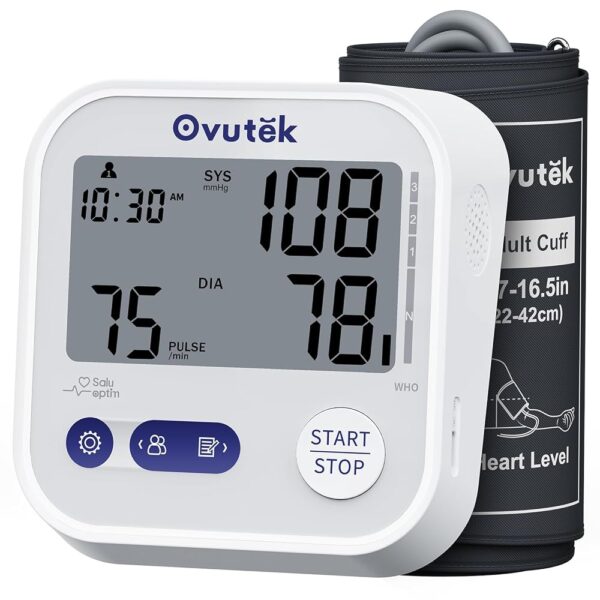
The OVUTEK VBP441, also carrying the code F1701T, is an upper arm blood pressure monitor that stores 245 timestamped readings across three user profiles. Three profiles is unusual; almost every competing device in this catalog supports one or two. This review describes the device from its published listing data. It is not medical advice, it does not tell you what any reading means, and a home monitor does not replace professional medical care. Readings belong in a conversation with a clinician who knows your history.
Who this monitor is for and what it settles
The VBP441 settles the multi generation household problem. Where a two user device forces a third person to share a profile and contaminate someone else’s history, this one gives each person their own record with individual time stamps. For a house with two parents and a grandparent, or two adults and an adult child, that is the whole argument.
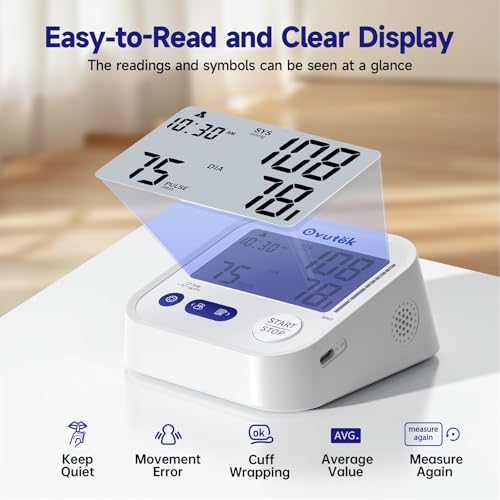
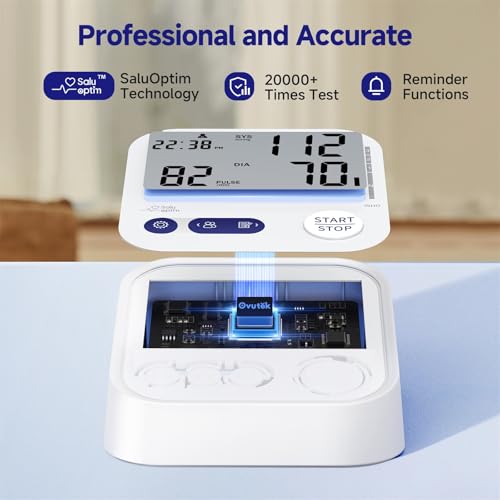
The rest of the specification is a competent value priced monitor: a large display OVUTEK says stays readable in low light, an averaging function covering the last three readings, and an alert system that prompts you to measure again when it detects an error such as a loose cuff or movement during measurement. That error alert is more useful than it sounds, because a silently bad reading is the main failure mode of home monitoring.
The box contains the monitor, three AA batteries, the arm cuff, a user manual and a storage bag. Type-C operation is supported but OVUTEK states plainly that the cable is not included, which is worth noting because the sibling OVUTEK HBP430 does list a cable in the box. The device is FSA and HSA eligible.
The cuff range, and where the listing falls short
Cuff fit determines whether a reading is worth recording, because a cuff too small or too large produces wrong numbers on a device that is working perfectly. Technique does not compensate for it.
The product title and a feature bullet both state a cuff for arm circumferences from 8.7 to 16.5 inches, and those agree. The structured band size field reads only “16.5 inch”, giving the maximum with no minimum, so anyone comparing from the specification table sees half a specification. Work from the bullet figures and measure your upper arm at the midpoint between shoulder and elbow before ordering.
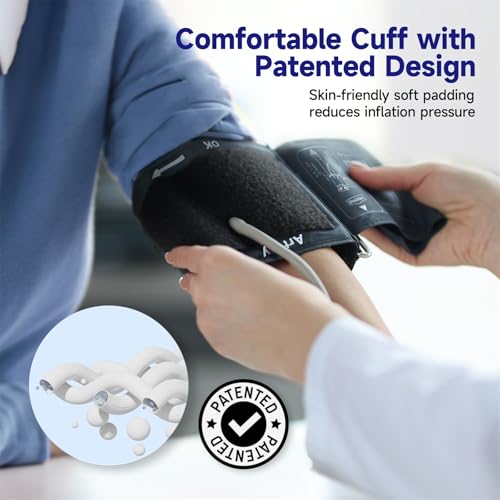
OVUTEK describes the cuff as using a patented technology that reduces inflation pressure for comfort. No patent number is given, so that claim cannot be checked from the listing.
The listing invites you to interpret your own readings, and you should not
This needs saying directly, because it is the most consequential thing on the page. A feature bullet tells you that you can compare your readings to standards printed on the back of the device to determine whether your blood pressure is normal, low or high, and that this allows timely action.
That is the listing encouraging self assessment and self directed action on the basis of a home reading, and it is not something we will endorse. A printed chart sorts a single number into a fixed band. It knows nothing about your history, your medication, the time of day, the arm you used, how long you had been sitting, or whether the cuff was correctly placed. A single reading is not a picture of anything, and a band is not a diagnosis.
This page will not tell you what any band or number means. If a reading concerns you, the correct action is to record it, keep measuring consistently, and take the record to a clinician. Nothing on the back of a device replaces that.
Using it correctly
Two gaps before the routine. The listing publishes no warranty term, and it never mentions irregular heartbeat detection, which most competing monitors advertise. Assume neither is offered unless OVUTEK confirms otherwise. The patented cuff claim is also unverifiable from the page, since no patent number appears; if the reduced inflation pressure is the reason you are buying, ask the seller which patent it refers to.
Home readings are useful when the routine never changes. Sit with your back supported and feet flat on the floor, rest quietly for several minutes before starting, support the arm at roughly heart level, fit the cuff on bare skin rather than over a sleeve, and stay still and silent while the measurement runs. Take readings at the same times each day so they can be compared with one another. Follow the user manual for the exact fitting the device expects, and follow any protocol your clinician has given you in preference to a general routine.
With three profiles available, make sure each person selects their own before measuring. A reading filed under the wrong user is worse than no reading, because it corrupts two records at once.
What the accuracy claims actually say
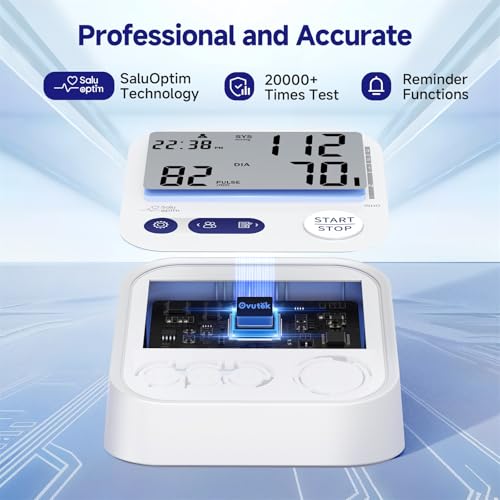
OVUTEK attributes accuracy to what it calls SaluOptim technology. That is a brand name for a proprietary method, not a validation. No validation protocol is named anywhere on this listing, no independent validation body is cited, and there is no statement about FDA clearance or registration.
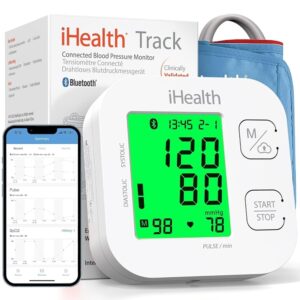
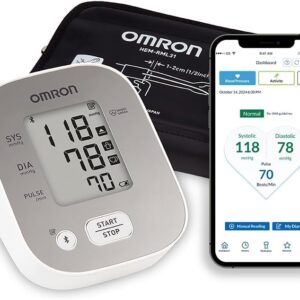
Compare that with the iHealth Track listing, which names the ESH 2010 protocol, or with OMRON’s listings, which cite a Validated Device Listing process. Naming a protocol gives a reader something to look up; naming a technology does not. If validation status matters to your decision, the device listings published by validation programs and the FDA’s own databases are where to check. We do not test devices and we will not describe any monitor as accurate, clinically accurate or medical grade in our own voice.
Feedback is recorded at 4.2 out of 5 across 282 ratings, on a product first listed in August 2024. That is a small sample. The manufacturer field reads Shenzhen Jamr Technology Co Ltd rather than OVUTEK, and the same manufacturer sits behind several other brands in the blood pressure monitor section, including the ATUDER B23, so devices that look like independent alternatives may be the same hardware.
Who should buy it and who should not
Buy it if three people need separate records on one device, your upper arm measures between 8.7 and 16.5 inches, and the error alert appeals to you. Do not buy it if you want a published validation protocol, if you were counting on a Type-C cable in the box, or if you intend to use the printed chart on the back as guidance. For a larger feedback history at similar money, the Konquest KBP-2704A is the obvious comparison, and further options sit in the mixed shortlist section.