Description
Who the MBUPAI CK-W355 is for, and the wrist question first
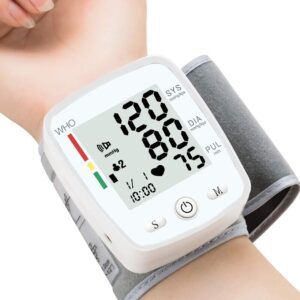
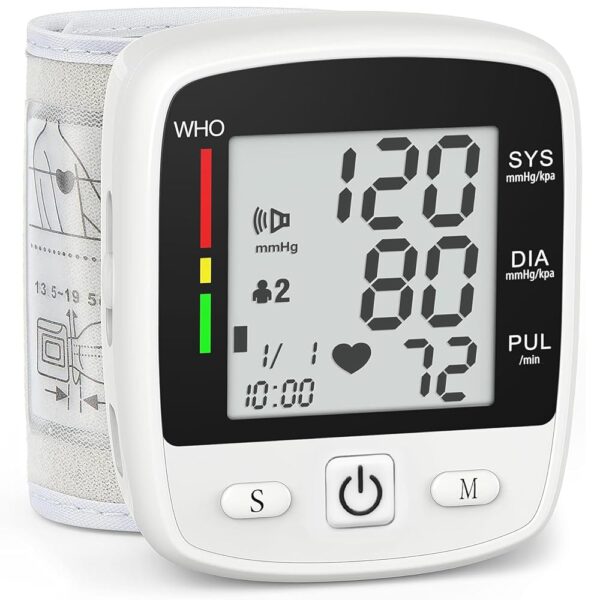
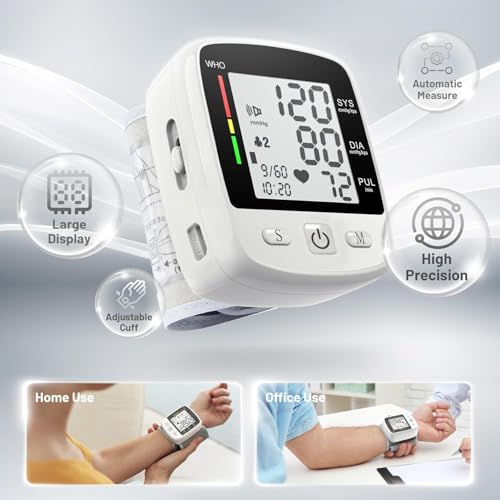
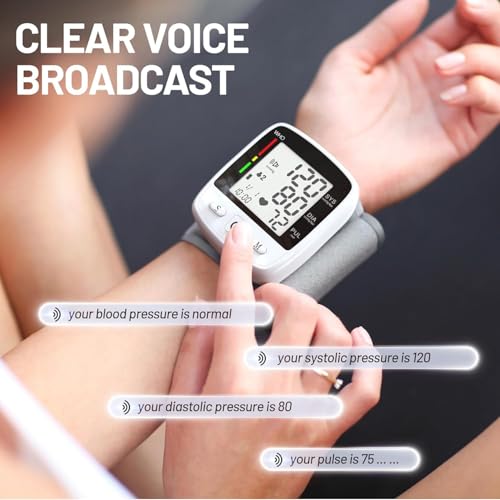
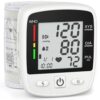
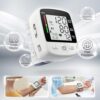
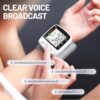
This is a talking wrist blood pressure monitor with a rechargeable battery, two user memories and a carrying case. The voice function is the reason most people will look at it: the listing states that a female voice announces the systolic figure, the diastolic figure and the pulse, which makes it usable by someone who cannot read a small screen.
The category comes first though. Wrist devices and upper arm devices are not interchangeable. On the wrist, how high you hold your arm relative to your heart changes the number, and the site is smaller and more variable than the upper arm. Upper arm devices are the usual recommendation for home monitoring, and a wrist device is normally chosen for a specific reason. Talking upper arm monitors do exist, so the voice function on its own does not oblige you to choose a wrist device.
It records numbers for a clinician to review. It is not a diagnostic device and it does not replace professional medical care.
Wrist size and the specifications that matter
The listing states an adjustable cuff for wrists of 5.3 to 7.7 inches, and the stored attribute agrees. That upper limit is narrower than several competing wrist monitors, which commonly reach 8.5 inches, so measure the wrist you intend to use, just above the wrist bone, with a tape measure before ordering. A wrist cuff that will not close properly cannot compress the artery as the device expects, and it will report a number rather than an error.
Memory, charging and what is in the box
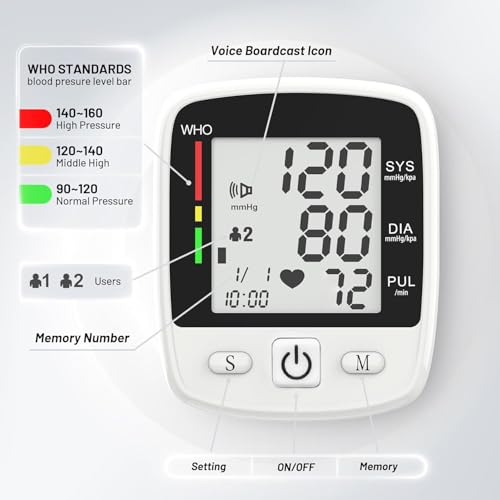
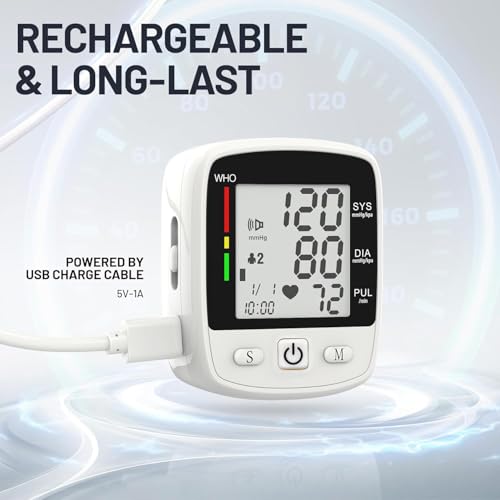
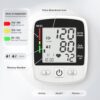
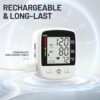
The device supports two users with 90 stored readings each, 180 in total. Power is by USB charging rather than disposable batteries, and the listing states a full charge takes two to three hours from a laptop, a power bank or similar. Rechargeable operation is a genuine advantage on a wrist monitor, which is otherwise a device that eats AAA cells. The package contains the monitor, a USB charging cable, a storage case, an instruction manual and a quick start guide. The unit weighs 8.15 ounces packed.
One inconsistency in the record: the specification block describes the power source as one lithium metal battery, required and included, while the feature text describes a rechargeable USB charged device. Lithium metal cells are not rechargeable, so those two statements do not fit together. The practical reading is that this is a rechargeable device, but if battery type matters to you, for shipping or disposal reasons, confirm it with the seller.
Using it correctly, and what the readings are for
Wrist technique carries the whole measurement. Sit with your back supported and your feet flat on the floor, and rest quietly for several minutes before starting. Fit the cuff on a bare wrist, palm upward as the listing describes, snug rather than tight. Then support your forearm with the other hand or on a cushion so that the device sits at about the height of your heart, and hold still and silent while it inflates. Holding the wrist in your lap or up near your chest changes the number. Use the same wrist at about the same time each day.
What you produce is a record. What any reading means, whether a pattern across your readings is significant, and whether anything about your care should change are questions for a healthcare professional who knows your history and your medication. This device does not replace professional medical care, and no reading from it should be used to start, stop or alter treatment on your own.
The product description mentions an irregular heartbeat indicator, though the feature bullets do not. Where such an indicator appears it is a flag: it reports that the device noticed an irregularity during a measurement. It does not identify a rhythm, it does not diagnose anything, and it is a reason to mention the finding at an appointment.
Claims, and a platform note
The listing states that the monitor has been tested and verified countless times to ensure high precision. That is the seller’s wording and it names no test, no protocol and no assessing body. We do not test products and we will not describe any monitor as accurate in our own voice. No independent validation protocol is named here, so check whether this model number appears on an independent validation listing if that matters to you.
A catalog note that is worth having when you compare listings. The model number CK-W355 appears in our catalog under at least four different brand names, with the manufacturer recorded here as Shenzhen Changkun Technology. That is a shared hardware platform sold under several labels. It means the comparison between these listings is usually about what is in the box, what the seller supports and how long the warranty runs, rather than about a different device.
Limits and gaps
The 7.7 inch upper wrist limit rules the device out for a proportion of adults who would fit a competing wrist monitor. There is no app and no wireless connection, so 180 readings across two users is the complete history unless you write them down. No averaging function is described. No warranty term appears in the record we hold, and no volume control or headphone option is described for the voice function, which is worth confirming in a shared household.
Nothing in the listing describes a heart level positioning aid or a cuff tightness guide, which are the two features that most reduce error on a wrist device. Their absence leaves positioning entirely to the user, which matters more than usual when the device is being chosen for someone with limited vision.
Alternatives worth comparing
The same model number appears in our catalog as the MBUPAI CK-W355 under a second listing and a third, as well as under other brands including the PeakMe CK-W355 and the Nouyan CK-W355. Compare them on package contents rather than assuming the hardware differs. For a wrist device that addresses positioning directly, the Omron BP6350 with heart level guidance and a cuff wrap guide is the comparison. Our index of home monitors and cuffs separates wrist listings from arm listings.
Who should buy it and who should not
Buy it if spoken readings solve a real accessibility problem, your wrist measures between 5.3 and 7.7 inches, two people will share it, and rechargeable operation appeals. Do not buy it if your wrist is near the top of that range, do not choose it over an upper arm device without a reason, and do not read the precision language in the listing as validation.