

Description
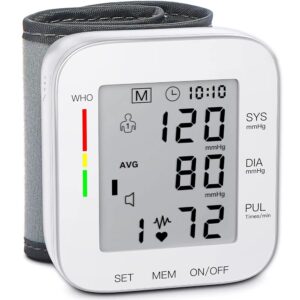
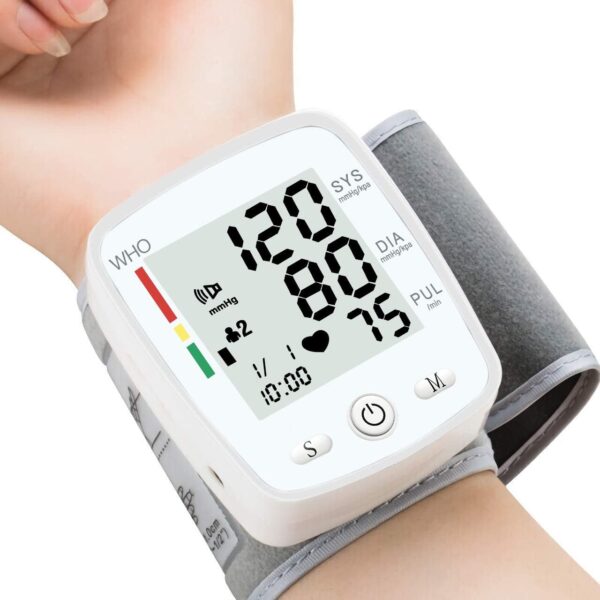
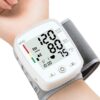
The PEAKME CK-W355 is a rechargeable wrist blood pressure monitor with a voice function and storage for 90 readings each across two users. It is a recent listing with a very small and, unusually for this catalog, unfavorable feedback record. This review describes the device from its published listing data. It is not medical advice, it does not tell you what any reading means, and a home monitor does not replace professional medical care. Readings belong in a conversation with a clinician who knows your history.
Wrist monitors and upper arm monitors are not interchangeable
This is a wrist device and that governs everything else. Positioning matters far more on the wrist than on the upper arm: the wrist has to be held at the correct height relative to the heart during the measurement, and small differences in how you support your arm change the numbers. Upper arm devices are the usual recommendation for home blood pressure monitoring, and a wrist device is not a compact version of the same instrument.
The description previously carried on this page claimed readings comparable to traditional upper arm cuffs. We are removing that rather than softening it, because presenting the two formats as equivalent is exactly the claim that should not be made. Nothing published on this listing supports it.
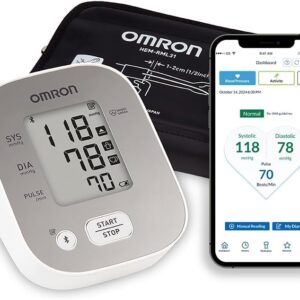
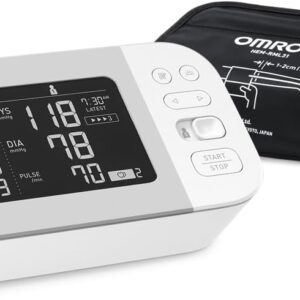
If a wrist device is right for your circumstances, that is a decision to make with your clinician rather than on convenience. Upper arm alternatives in the blood pressure monitor section include the OMRON Gold BP5350, with a full 9 to 17 inch cuff range published.
One further point about the listing structure: the “use for” field, which on every other monitor here records arm or wrist, is missing entirely from this listing. Anyone comparing from the specification table would have no indication that this is a wrist device at all.
The cuff range is published twice, with two different figures
Cuff fit determines whether a reading is worth recording, because a cuff outside its intended range produces wrong numbers on a device that is working perfectly.
A feature bullet states the wrist strap adjusts to fit wrists from 5.3 to 7.7 inches. The structured band size field reads “7.8inches”. Those disagree: the field gives a single number where a cuff needs two, and its figure is a tenth of an inch above the bullet’s upper bound. A tenth of an inch is trivial in itself, but a listing that cannot state its own cuff size consistently is not a listing to take other numbers from without checking.
Measure around your wrist just below the hand before ordering, and if you are near the top of the range, ask PEAKME to confirm the actual dimensions.
Who this monitor is for and what it settles
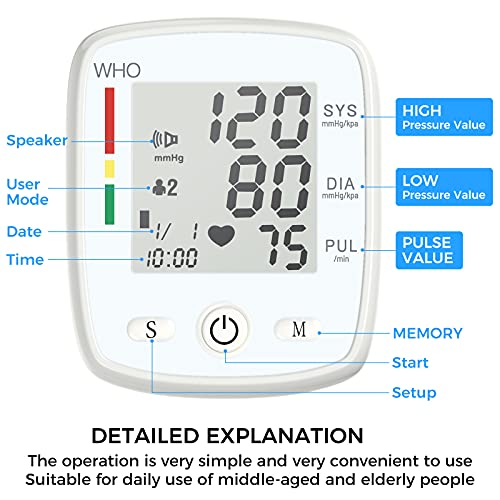
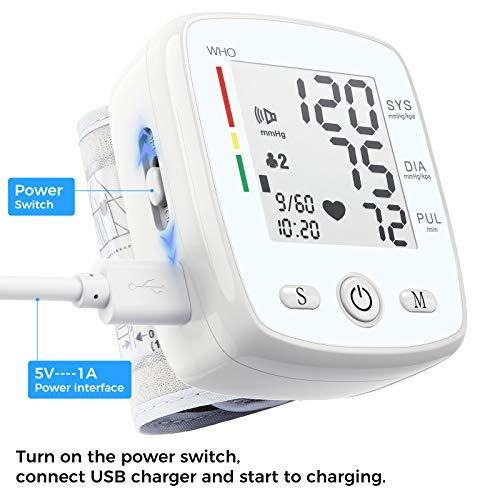
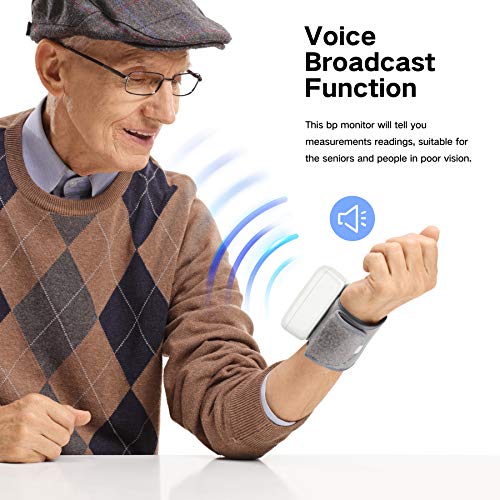
The published package is a rechargeable wrist device with a voice function that announces readings and can be disabled, a digital display, two user profiles holding 90 measurements each, and a storage box. The box contains the monitor, a Micro USB charging cord, an instruction manual and the case. PEAKME states plainly that the AC adapter is not included, so you will need a USB charger of your own.
Nothing in the listing describes Bluetooth, an app or data export, so the 90 readings per user held on the device are your complete record.
The feedback record is the weakest in this catalog
This listing shows 3.6 out of 5, across just 17 ratings. Both halves of that matter. Seventeen ratings is far too few to draw a conclusion from in either direction. But 3.6 is also the lowest average of any blood pressure monitor in this catalog, where the normal band runs from 4.1 to 4.9 and where devices with tens of thousands of ratings sit at 4.4 to 4.5.
We are not going to tell you what that means, because seventeen people is not a sample. We are telling you it is there, because a listing first published in November 2024 with a below average score and almost no history is a different proposition from an established product, and the sensible response is to read every one of those reviews before ordering.
Using it correctly
Technique matters more on a wrist device than on an upper arm one. Sit with your back supported and feet flat on the floor. Rest quietly for several minutes before starting. Fit the cuff against bare skin on the wrist, not over a sleeve or a watch strap. Support the arm so the device sits at roughly heart level, which usually means resting the elbow on a table and raising the wrist rather than letting the arm hang. Stay still and silent while the measurement runs, and measure at the same times each day. Follow the manual for the exact positioning the device expects, and follow any protocol your clinician has given you in preference to a general routine.
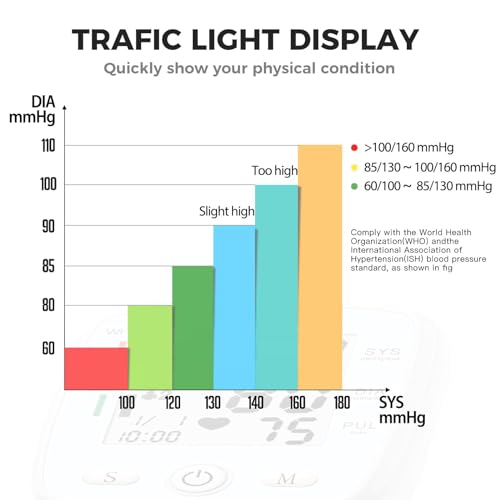
A feature bullet states that a warning symbol appears when a reading exceeds what the listing calls the normal range. That is the device comparing a single number against a fixed threshold. It knows nothing about your history, your medication or the circumstances of the measurement, and it diagnoses nothing. This page will not tell you what any symbol or number means. If one appears, record it and raise it with a clinician.
What the accuracy claims actually say
The first bullet is headed “Accurate and User-Friendly” and states that the device accurately measures blood pressure. No validation protocol is named. No independent validation body is cited. There is no statement about FDA clearance or registration, and no warranty term is published anywhere.
Compare that with the iHealth Track, which names the ESH 2010 protocol. Naming a protocol lets a reader check the claim; the word accurate does not. If validation status matters to you, the device listings published by validation programs and the FDA’s own databases are the places to look. We do not test devices and we will not describe any monitor as accurate, clinically accurate or medical grade in our own voice.
The manufacturer field reads Shenzhen Changkun Technology Co Ltd rather than PEAKME. The CK-W355 designation appears on several other brands in this catalog, including the Mbupai CK-W355 and the NOUYAN CK-W355, so what looks like a choice between brands may be the same hardware from one factory.
Who should buy it and who should not
Buy it only if a wrist device is right for you, your wrist is comfortably inside the stated range, and you have read the existing reviews and are satisfied by them. Do not buy it as a substitute for an upper arm monitor, do not buy it expecting a charging plug in the box, and do not buy it if a published validation protocol or a warranty term matters to your decision. Further options sit in the mixed shortlist section alongside unrelated pressure products.