




Description
Who This Monitor Is For and What It Settles
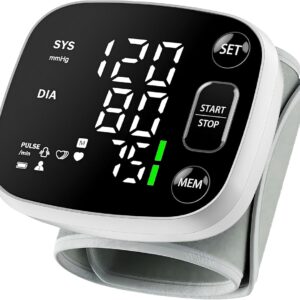
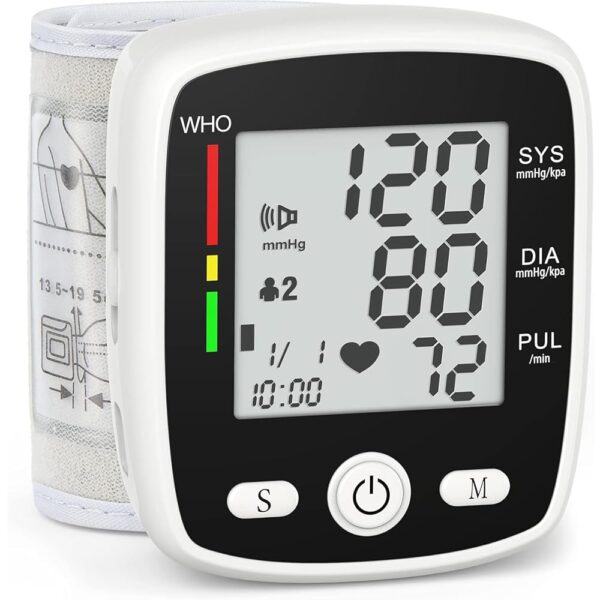
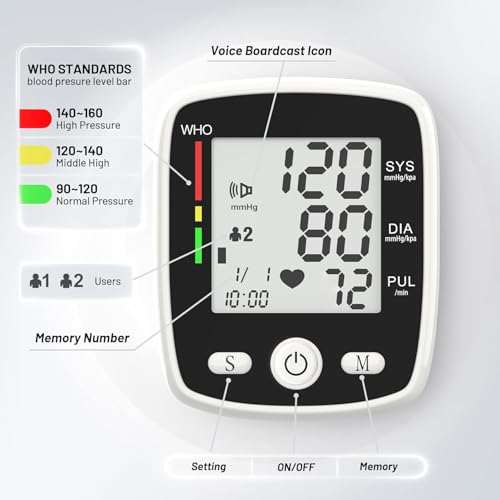
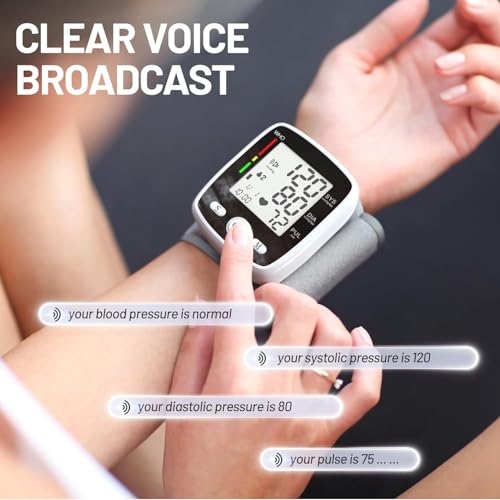
This is the black MBUPAI CK-W355, a wrist blood pressure monitor whose defining feature is that it reads results aloud. A voice announces the systolic figure, the diastolic figure and the pulse, which makes it a candidate for anyone who finds a small screen hard work. Alongside that it carries a large LCD, 180 stored readings across two users, USB charging and a storage case.
Decide the form factor before anything else. Wrist monitors are not equivalent to upper arm monitors. On the wrist, the angle of the joint and the height of the device relative to the heart both change the result, so positioning matters far more than it does on the arm. Upper arm devices remain the usual recommendation for home monitoring, and a documented arm unit such as the Omron BP5100 Bronze is the fair comparison before choosing a wrist device on convenience alone. This review describes a device. It does not interpret readings, and a home monitor does not replace professional medical care.
The Specifications That Matter
The wrist range is published in the structured specification field as 5.3 to 7.7 inches, and the stored attributes agree with it. That is the figure to work from. Measure around the bare wrist just above the wrist bone before ordering. A strap that will not close is simply the wrong purchase, and one that closes loosely will not seal against the skin, a failure the display gives no warning about.
Ignore the size field, which reads Medium. On a wrist device with a stated inch range, a garment-style size label describes nothing useful and is best treated as filler.
Voice, display and memory
The voice function is documented in both the product title and a bullet rather than appearing only in loose marketing copy, which is more than several talking monitors in this catalog manage. The listing says the announcement covers the high pressure figure, the low pressure figure and the heartbeat. It does not say whether the voice can be muted, whether the volume is adjustable, or what language it speaks, and all three are worth confirming before buying for someone who will depend on it.
The screen is an LCD described as large with large digits, though no digit height is published, so the actual character size is a matter for the photographs. Memory is 90 readings for each of two users, 180 in total, switched by user before measuring. A reading completes within about a minute, started with a single central button and the palm facing up.
Where the Record Disagrees With Itself
Power is described three different ways. A bullet says the device is powered by USB charging and takes two to three hours to reach a full charge from a laptop or a power bank. The specification block says one lithium ion battery is required and included. The power source field, in both the specifications and the stored attributes, says corded electric, which implies mains operation this device does not appear to offer. The included components list a USB charging cord and no batteries, which supports the rechargeable reading, but the listing never settles the question.
There is a second discrepancy visible only when this page is compared with its siblings. A separate MBUPAI CK-W355 listing publishes the same dimensions for the same model but records the battery as lithium metal rather than lithium ion, and gives the weight as 8.15 ounces against the 9.59 ounces here. Lithium metal is a non rechargeable chemistry and lithium ion is not, so the two pages describe materially different hardware under one model number. Ask the seller which one arrives.
What the Listing Claims, and Who Is Making the Claim
A bullet states the monitor has been tested and verified countless times to ensure high precision. That is the seller’s claim and not ours. We do not test devices and we do not verify manufacturer statements. Countless times is not a test protocol. No accuracy figure or tolerance appears anywhere in the data, no validation protocol is named, and no regulatory clearance is cited, so there is nothing here a buyer could actually check.
Independent validation status can be looked up through the registries medical bodies maintain, and that check matters more on a wrist device than on an arm device, because the wrist adds a positioning variable on top of whatever the hardware does.
Using It Correctly
Rest the forearm on a table, sit with the back supported and both feet flat on the floor, and raise the wrist so the device sits level with the heart, supporting the elbow as the manual directs. Wear it palm up, as the listing specifies, which is the correct orientation for this style. Keep the wrist straight rather than bent, keep the device against bare skin with the sleeve pushed clear, and stay silent and still through the measurement.
Rest for several quiet minutes before the first reading rather than measuring straight after moving around, and use the same wrist at the same times each day so the record compares with itself. Set the user bank before the first reading, and charge the device fully before starting a run of measurements rather than partway through one.
Limits, Duplicates and the Statement That Matters
The description field is empty, so five bullets and a specification table carry the entire technical case. Nothing is published about the pressure or pulse measurement range, tolerance, averaging across readings, irregular heartbeat detection, battery life, charge cycle count, digit height, or whether the voice can be silenced.
The CK-W355 designation also appears elsewhere in this catalog under other brand names, including a third MBUPAI CK-W355 page, a Peakme CK-W355 and a Nouyan CK-W355. The manufacturer of record on all of them is Shenzhen Changkun Technology. One factory, several brand names, and specification blocks that do not always agree.
The point that outranks the rest: this device produces numbers and reads them aloud. It does not diagnose, it does not replace professional medical care, and nothing in this review is guidance about anyone’s health or treatment.
Alternatives Worth Comparing
If spoken results are the deciding feature but you would rather measure at the upper arm, that trade is worth examining closely, because the arm removes the positioning variable the wrist introduces. Within the wrist category, compare the published wrist ranges and memory depth rather than the marketing language, and confirm mute behavior before buying for a shared household. The complete selection of arm units, wrist units and replacement cuffs sits in our blood pressure monitor category.
Who Should Buy It, Who Should Not
Buy it if your wrist measures inside 5.3 to 7.7 inches, spoken results are what you are actually shopping for, and 180 readings across two users covers your household. Skip it if you can use an upper arm cuff, if you need certainty about whether the device recharges or takes cells, if you need documented accuracy or validation, or if you need the voice to be silenceable and cannot get that confirmed.