


Description
Who the A and D Medical UA-767FAC is for
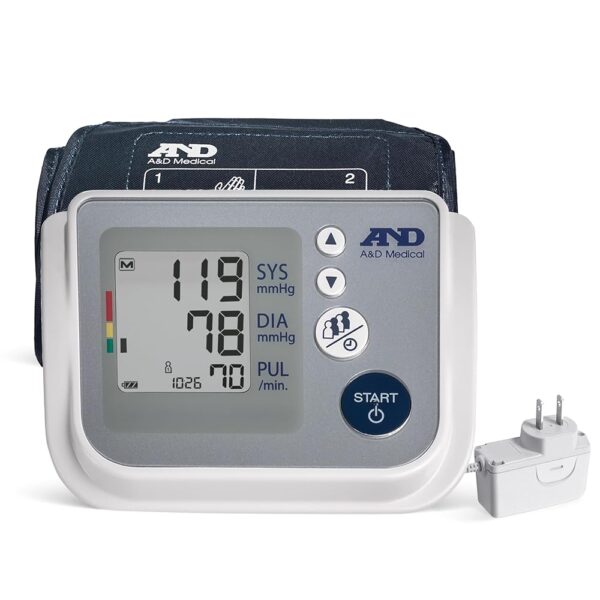
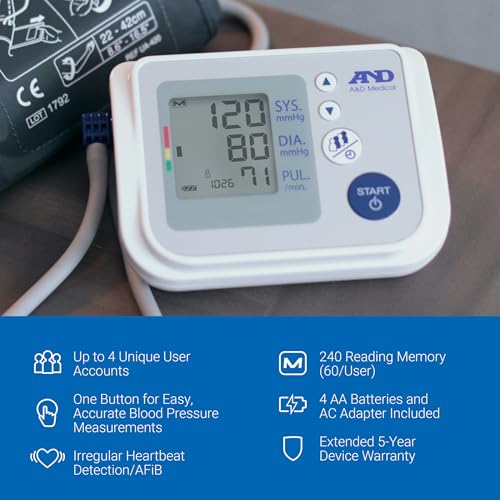
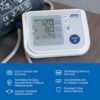
This is an upper arm automatic blood pressure monitor built around one specific idea: a household with several people who each need their own record. It stores 60 readings for each of four users, which is the widest multi user provision in this part of the catalog. It comes with an AC adapter as well as batteries, a carrying case and a wide range cuff, and the listing states that it is FSA and HSA eligible.
It records numbers for you to take to a clinician. It is not a diagnostic device and it does not replace professional medical care. The decision it settles is a household one: whether four people can share a single monitor without their readings running together, which is exactly where two user devices fail.
Cuff range, which is the specification that decides everything else
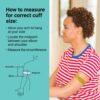
The listing states a cuff range of 8.6 to 16.5 inches, given as 22 to 42 cm. Note a discrepancy in our own stored data before you rely on it: the stored band size attribute records only 16.5 inches, dropping the lower bound entirely. The full range from the listing is the one to use, and it is set out above.
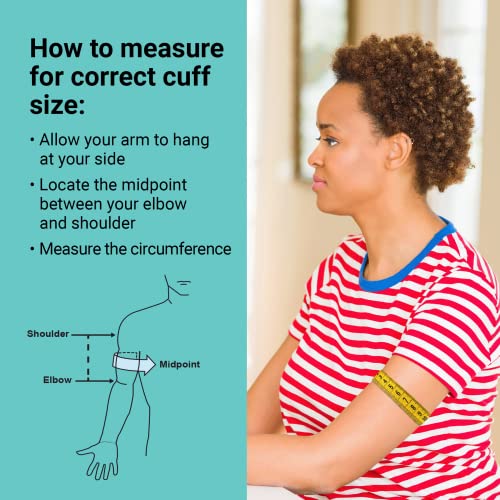
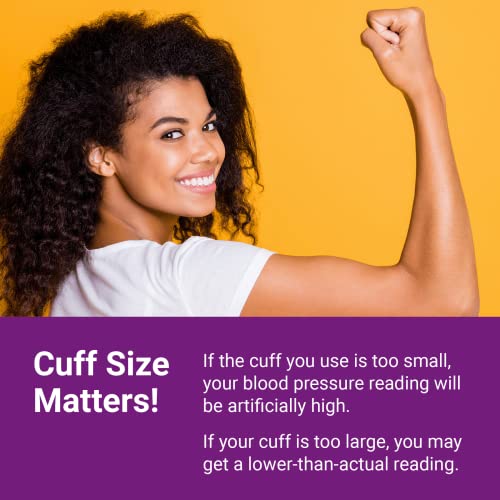
The listing is unusually direct about why this matters, stating that cuff size affects readings and that a cuff which is too tight or too loose can lead to false readings. That is correct and it is the single most consequential thing on this page. Measure your bare upper arm at the midpoint between shoulder and elbow with a tape measure and compare that number with the range before ordering. Two optional cuffs are stated as compatible: the UA-290A medium at 9.0 to 14.6 inches, which is 23 to 37 cm, and the UA-291A large at 12.2 to 17.7 inches. The large option extends the top of the range beyond what the supplied cuff covers, which is worth knowing if you measure close to 16.5 inches.
Memory and averaging
Each of the four users gets 60 stored readings. The listing describes a function it calls Snapshot Averaging, which automatically calculates the average of readings to establish a baseline. Averaging functions of this kind exist because single readings vary from minute to minute, and a short series carries more information than one number. Operation is a single button, and the display is described as a large LCD with oversized numbers showing systolic, diastolic and pulse rate. The unit weighs 1.67 pounds.
Using it correctly, and what the readings are for
Technique affects a home reading more than most people expect. Sit with your back supported and your feet flat on the floor, not crossed, and rest for several minutes before starting. Fit the cuff on a bare upper arm rather than over a sleeve, and support the arm so the cuff sits at about the height of your heart. Stay quiet during the measurement. Use the same arm and roughly the same time of day each time, so that the series you build is comparable with itself.
The purpose of all of this is a record, not an answer. What any reading means, whether a pattern in your readings matters, and what if anything should change about your care are questions for a clinician who knows your history. This device does not replace professional medical care, and readings from it should be discussed with a healthcare professional rather than acted on alone. Do not adjust any medication because of a home reading.
Claims, and what the listing does not tell you
The listing describes the monitor as offering accurate and reliable measurements and as providing quick and accurate readings. That is the manufacturer’s own description. We do not test products and we are not in a position to tell you that any monitor is accurate. No independent validation protocol is named anywhere in this listing, and where a home monitor has been through an independent validation process the protocol is normally identified by name. A reader for whom that matters should check the current validation status of this specific model through an independent listing rather than relying on the wording on a retail page.
The companion app is the other place where the listing needs reading carefully. The A and D Heart Track app is described as allowing you to manually log and track measurements. Manually is the operative word. Nothing in the listing describes a wireless transfer from this model to the app, so plan on typing readings in rather than having them arrive on their own. If automatic syncing is what you want, this is not the model for it.
Limits and gaps
Three gaps stand out. Battery life is not published, though the included AC adapter makes that less of an issue than usual. No irregular heartbeat detection is described anywhere in the listing, so if you want a device that flags an irregular rhythm for a clinician to look at, this listing does not claim to do that. And the display size is described in words rather than in a measurement, so if legibility is the deciding factor you are relying on the photographs.
The stored attribute set also contains the truncated cuff figure noted above, and records the power source as battery powered despite the AC adapter being listed as an included component. Both are import artifacts rather than product faults, but they are the sort of thing that misleads a reader skimming a specification table.
Alternatives worth comparing
Within the same brand, the A and D UA-651 is the simpler single user machine and the UA-651BLE, which adds a wireless connection is the one to look at if automatic transfer to a phone is what you were hoping for here. For a two user alternative with an averaging function, the Omron 5 Series BP742N covers a similar cuff range, and the Medline MDS4003 is another upper arm option. If your arm measures near the top of the range, compare a larger replacement cuff for fit before ruling a monitor out. Our index of home monitors and cuffs shows the published cuff ranges together.
Who should buy it and who should not
Buy it if three or four people in one household each need their own record, if your arm falls inside 8.6 to 16.5 inches, and if you want mains power and a case in the box. Do not buy it if you want readings to reach a phone without typing them in, or if you specifically want irregular heartbeat flagging, which this listing does not describe. Take whatever you record to a clinician rather than interpreting it yourself.