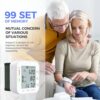

Description
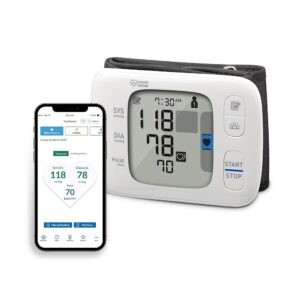
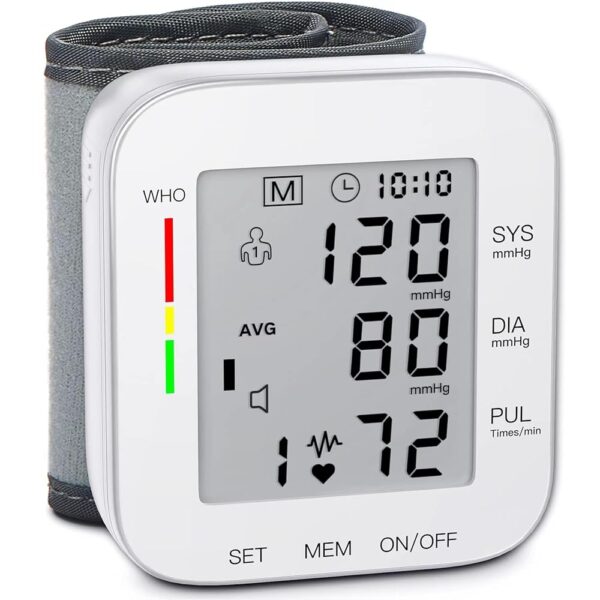
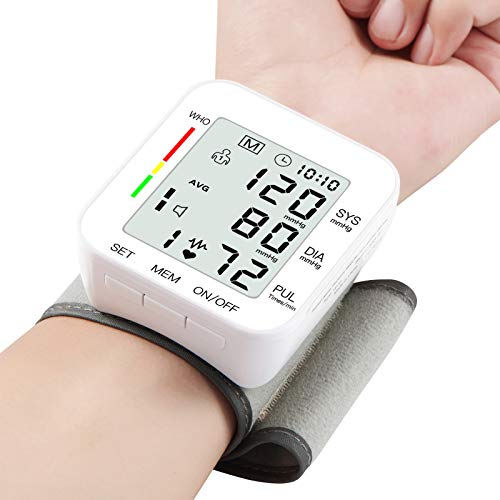
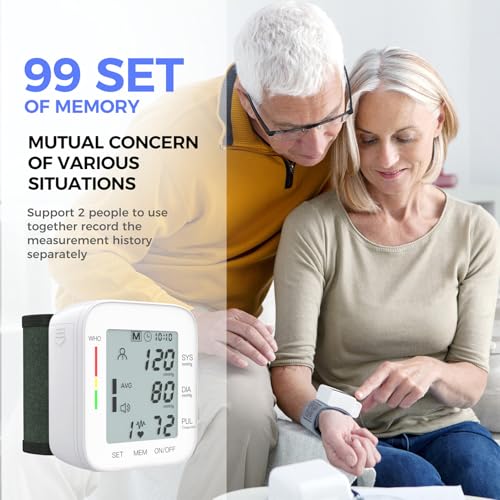
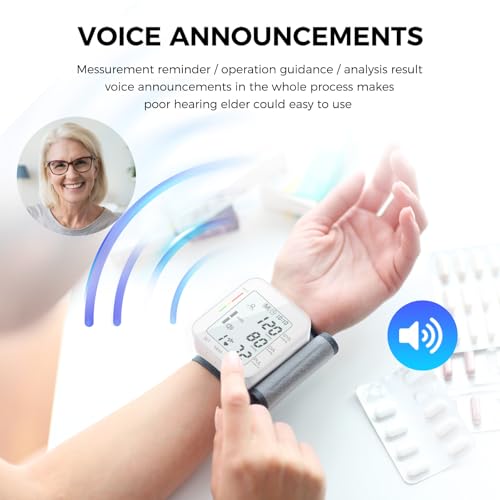
The MMIZOO W1681 is a wrist blood pressure monitor with a large LCD display, a voice broadcast function and storage for 99 readings each for two users. It carries one of the largest feedback histories of any device in this catalog. This review describes the device from its published listing data. It is not medical advice, it does not tell you what any reading means, and a home monitor does not replace professional medical care. Readings should be discussed with a clinician who knows your history.
Wrist monitors and upper arm monitors are not interchangeable
This is a wrist device, and that governs everything else.
Position matters far more on a wrist monitor than on an upper arm monitor. The wrist must be held at the correct height relative to the heart during the measurement, and small differences in how the arm is supported change the numbers. Upper arm devices are the usual recommendation for home blood pressure monitoring, and a wrist device should not be treated as a compact version of the same instrument.
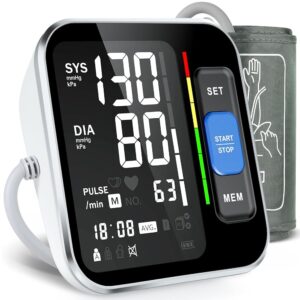
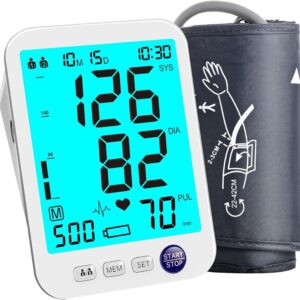
There are legitimate reasons to use one. A wrist monitor is easier to fit single handed, requires no sleeve to be rolled up, and may be the practical option for someone for whom an upper arm cuff is uncomfortable or does not fit. If you are choosing between the two formats, that is a question for your clinician rather than a matter of preference. Upper arm alternatives in the blood pressure monitor section include the OMRON Gold BP5350, which publishes a 9 to 17 inch cuff range and a five year warranty.
The cuff range and the specifications that matter
MMIZOO publishes an adjustable wrist cuff range of 5.31 to 7.68 inches, stated in both the product title and the structured band size field. That is a proper two ended range, and the consistency between the two fields is better than several listings in this catalog manage. Measure around your wrist just below the hand before ordering: a cuff outside its stated range produces wrong readings on a device that is working correctly.
Note that 7.68 inches is a relatively low upper bound even for a wrist cuff. If your wrist measures near or above that, this is not the device to start with.
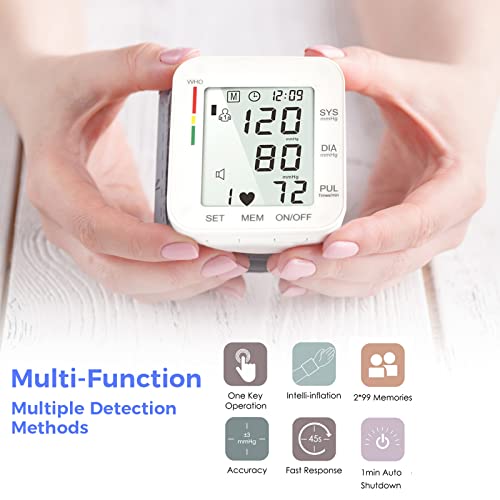
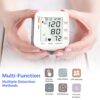
Other published items: a large LCD display, voice broadcast of results, a measurement MMIZOO states completes within 45 seconds, memory for 99 measurements each across two users, and a carrying case, quick guide and instruction manual in the box. The device weighs about 8 ounces. Feedback is recorded at 4.3 out of 5 across 58,584 ratings.
The batteries are not included
MMIZOO states this explicitly in the package contents bullet. Unlike most monitors in this catalog, which ship with AA or AAA cells, this one arrives without power. The listing does not state the battery type or count in the specification block either, so check the product page or the manual before ordering so you can buy the right cells at the same time.
Using it correctly
Technique carries more weight on a wrist device than on an upper arm one. Sit with your back supported and feet flat on the floor. Rest quietly for several minutes before starting. Fit the cuff against bare skin on the wrist, not over a sleeve or a watch strap. Support the arm so the device sits at roughly heart level, which usually means resting the elbow on a table and raising the wrist rather than letting the arm hang at your side. Stay still and silent while the measurement runs.
MMIZOO’s own guidance is worth repeating: take the measurement at the same time each day so that readings can be compared with one another. That is sound practice and it is the main thing that turns a set of home numbers into something a clinician can use. Follow the instruction manual for the exact positioning the device expects, and follow any protocol your clinician has given you in preference to a general routine.
The device shows a warning symbol when a reading falls outside a band the manufacturer has programmed into it. That is the device sorting a number, not assessing you. It takes no account of your history, your medication or the circumstances of the measurement, and it diagnoses nothing. Nothing on this page tells you what any number or symbol means for your health; if a symbol appears, record it and raise it with a clinician.
What the accuracy claims actually say
The listing states that each wrist cuff has been tested and verified to ensure accurate measurements professionally. That sentence names nobody. There is no validation protocol, no independent validation body, no test standard and no FDA clearance or registration statement anywhere on this listing. The previous description on this page went further still and claimed results comparable with professional medical devices, which nothing in the published data supports.
For contrast, some listings in this catalog do name something checkable. The iHealth Track cites ESH 2010 performance standards, and OMRON’s listings cite a Validated Device Listing process, imperfect as that wording is. Naming a protocol lets a reader verify. A claim of professional testing with no protocol attached does not.
If independent validation status matters to you, the device listings published by validation programs and the FDA’s own databases are the places to check rather than the product page. We do not test devices and we will not describe any monitor as accurate, clinically accurate or medical grade in our own voice. The rating of 4.3 across more than fifty eight thousand ratings is a measure of buyer satisfaction and tells you nothing about measurement performance.
One point for anyone comparing options: a separate device carrying the same W1681 model designation is listed in this catalog under the AMZ Vision brand, in our AMZ Vision W1681 review. Devices sold under different brand names may be the same hardware from the same factory, which is worth knowing when a comparison appears to offer more independent choices than it really does.
Alternatives in this catalog
Among wrist devices here, the Oklar W1101L adds a rechargeable battery and a wider stated cuff range, and the Medline MDS4003 comes from an established medical supply brand. If you want an upper arm device instead, the OMRON model linked above is the straightforward starting point. Several further monitors sit in the mixed shortlist section next to unrelated pressure products.
Who should buy it and who should not
Buy it if a wrist device suits your circumstances, your wrist measures between 5.31 and 7.68 inches, and the voice function and low price are what you need. Do not buy it as a convenient substitute for an upper arm monitor, do not buy it without batteries in the same order, and do not buy it expecting any published validation. Whatever you choose, the device collects information for your clinician; it does not replace one.