


Description
What this product is, and who needs one
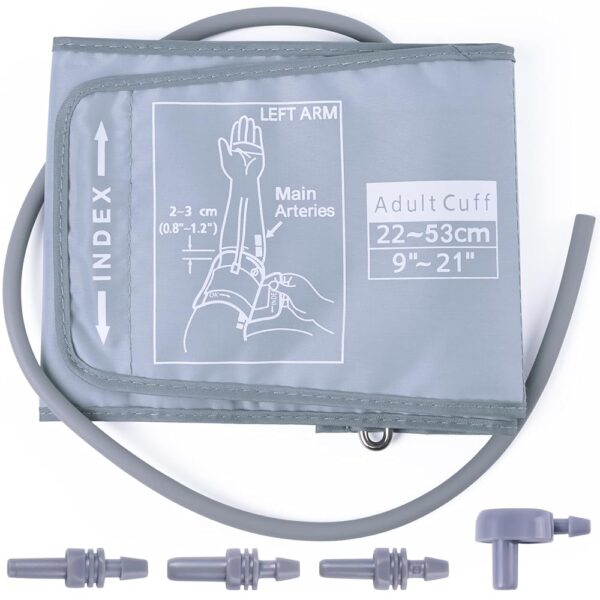
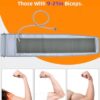
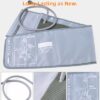
This is a replacement cuff, not a blood pressure monitor. There is no display, no pump and no electronics: it is the fabric sleeve that wraps around the arm, supplied with silicone tubing and a set of connectors, and it attaches to a monitor you already own.
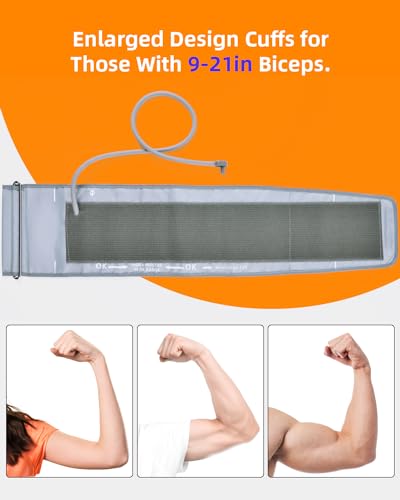
The reason to look at it is size. AILE states a range of 9 to 21 inches, given as 22 to 53 cm, which reaches well beyond the 16.5 or 17 inch upper limit of most cuffs supplied with home monitors. For someone whose arm is too large for the cuff in the box, the usual choice is to replace the whole monitor or to find a cuff that fits. This is aimed at the second option.
Compatibility, which is the thing to get right
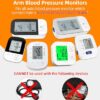
The listing states that the cuff suits most upper arm monitors on the market and supplies seven connectors for the purpose, with stated diameters of 0.16, 0.18, 0.2, 0.24, 0.27, 0.28 and 0.45 inches. That is a wide spread and it covers the common fittings. The tubing is silicone, described as soft and durable, and the listing says you can keep your original connector if it suits.
Before you order on the strength of that, there is a point about third party cuffs that the listing does not make and that a reader deserves. A blood pressure monitor is assessed as a system, meaning the device together with the cuff it was supplied with. Fitting a cuff from a different manufacturer produces a combination that has not been assessed as a pair, even when the connector fits perfectly and the cuff is the right size. That is not a reason never to do it, and a correctly sized third party cuff is better than a manufacturer’s cuff that is far too small. It is a reason to prefer the original manufacturer’s larger cuff where one exists, and to mention the substitution to your clinician if you are bringing readings to an appointment.
Establishing your size
Measure the circumference of your bare upper arm with a cloth tape, midway between elbow and shoulder. Use that number. Our stored band size attribute records only 21 inches, dropping the lower bound, so the working range is the 9 to 21 inches given in the listing. Two other stored fields on this product are junk and should be ignored: the power source field reads not need, and the display type field contains the words XL blood pressure cuff. Neither is a specification.
Using it correctly
Fit the cuff on a bare upper arm rather than over a sleeve. The lower edge should sit clear of the elbow crease and the tube should run down the inside of the arm toward the hand. Work a large cuff up the arm rather than sliding it down from the shoulder, because a big cuff wrapped unevenly is one of the most common reasons a monitor reports an error instead of a reading. Tighten to snug rather than tight.
Then sit with your back supported, feet flat on the floor and not crossed, with the arm supported so the cuff sits at about the height of your heart. Stay quiet and still during the measurement, and use the same arm at about the same time each day.
Whatever monitor this cuff is fitted to, the readings are a record rather than an answer. What a reading means, whether a pattern in your readings is significant, and whether anything about your care should change are questions for a healthcare professional who knows your history and your treatment. A home blood pressure monitor does not replace professional medical care, and no reading should be used to start, stop or alter medication on your own.
The claims, and what to make of them
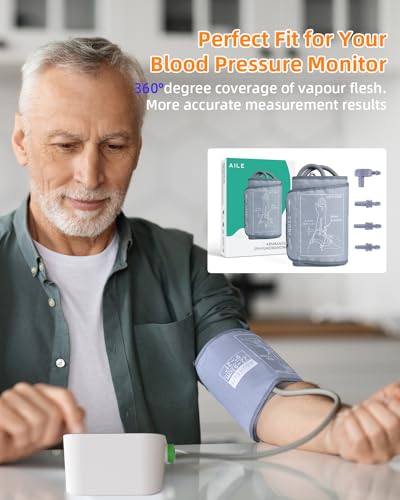
AILE states that the cuff uses 360 degree uniform inflation technology and that this provides more accurate measurements than ordinary cuffs. That is a comparative accuracy claim with nothing behind it in the listing: no test, no protocol, no independent assessor and no comparison method. We do not test products and we will not repeat it as a finding. Inflating around the whole circumference of the arm is a real design difference from a cuff that presses on one side, but a design description is not a measurement.
The listing also states the cuff is made of nylon with silicone tubing and strong hook and loop fastening, that it will withstand up to 10,000 cycles, and that five year support is offered. Those are the manufacturer’s figures. Nothing in the record names an independent standard for the cycle count.
Limits and gaps
The largest limit is the one described above: universal fit is a physical claim about connectors, not an assurance that your monitor and this cuff form an assessed pairing. Beyond that, the listing does not name a single specific monitor model it has been tested with, which is a weaker position than a cuff that publishes a compatibility list. No bladder length or width is published, which matters on very large cuffs because the inflatable portion needs to cover a sufficient proportion of the arm circumference. The stored dimensions of 4.8 by 6 by 1.1 inches describe the packed product rather than the cuff itself.
One hygiene point that cuff listings rarely address. A cuff is worn against bare skin, and in a household where more than one person uses the same device it is worth wiping the inner surface with a damp cloth periodically and letting it dry fully before storage. Do not soak a cuff or put it in a washing machine, since water inside the bladder is difficult to remove and will corrode the connector. If a cuff is being shared between people in a care setting rather than a family, ask about the manufacturer’s cleaning guidance before assuming a wipe is sufficient.
Alternatives worth comparing
If you own an AILE monitor, the matching machines are the AILE 111 and the AILE X5, and a same brand pairing removes the substitution question entirely. Among other large cuffs, the iHealth extra large cuff, which names the single monitor it fits is the opposite approach, and the Alcarefam XXXL cuff and the Maymocon XXXL cuff reach further again. Our index of home monitors and cuffs lists the sizes each one publishes.
Who should buy it and who should not
Buy it if your arm is too large for the cuff supplied with your monitor, your measurement falls between 9 and 21 inches, and one of the seven connectors matches your machine. Do not buy it if your monitor’s manufacturer sells a larger cuff of its own, since that is the better pairing, and do not read universal compatibility as an assurance that the resulting combination has been assessed.