

Description
Who the AILE 111 is for, and what it settles
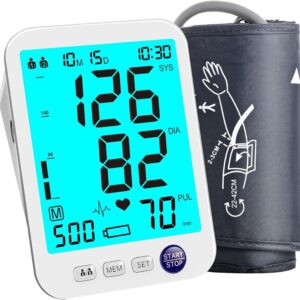
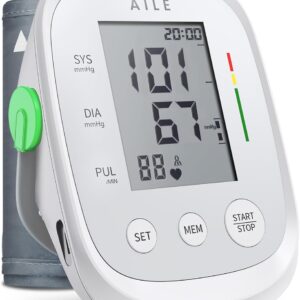
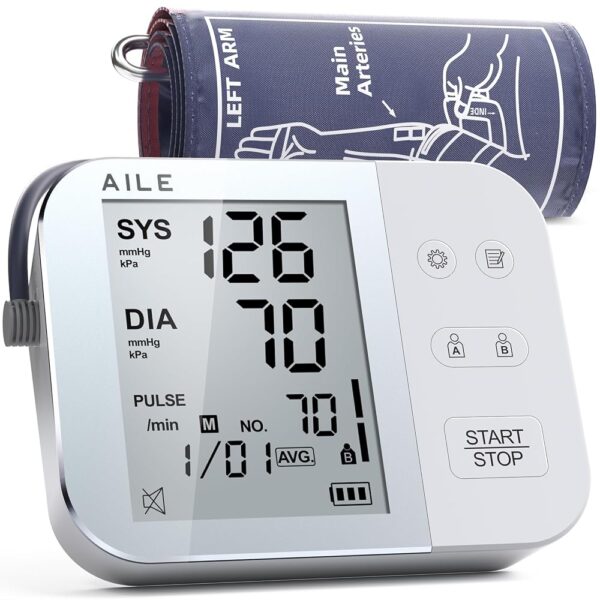
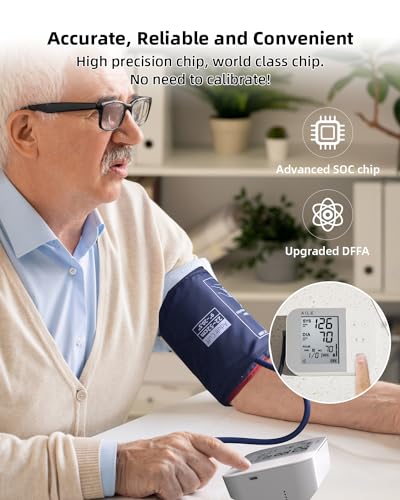
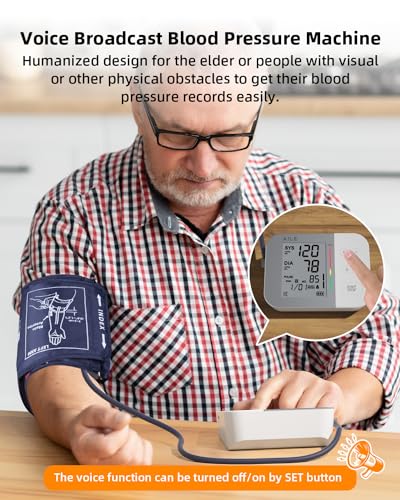
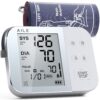
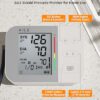
The AILE 111 is an upper arm monitor built for a household where somebody cannot read a small screen. It announces systolic, diastolic and pulse aloud after each measurement, the voice can be switched off from the settings, and two user profiles hold 99 timestamped records each. AILE also states that a second cuff size is available for the same machine, which matters more than it sounds.
It is not a connected device. There is no app and no export in the published data, so the record is the on device memory and whatever you write down. For a lot of buyers that is the right trade, particularly if the person using it is not the person managing the phone.
None of what follows is medical advice. This device measures and stores numbers. It does not diagnose, it does not replace professional medical care, and the readings it produces belong in a conversation with the clinician who knows your history.
The claim on the box that needs unpacking
The first feature bullet states that the product is registered in the United States, has obtained official 510K clearance, and has a doctor recommendation. Those are AILE’s words. We are quoting them rather than adopting them, and each part deserves separate treatment.
A 510(k) clearance is a specific regulatory status and cleared devices carry a clearance number. No number appears anywhere in this listing. Neither does a submission date, an establishment registration number, or the name of the entity holding the clearance, which for a device made by a contract manufacturer is not always the brand on the box. The manufacturer field here names Shenzhen Yuezhongxing Technology. If regulatory status is part of why you are buying, that status is checkable in the FDA’s public database, and looking it up against the manufacturer name is a better use of your time than reading a bullet point.
The phrase doctor recommendation is not a regulatory status at all. No doctor is named, no organization is named, and no basis is given. We will not describe this or any device as doctor recommended in our own voice, and no reader should treat the phrase as meaning anything specific.
AILE also states the monitor is calibrated in advance as required. No validation protocol is named, and no accuracy tolerance is published. A monitor whose listing names a public register, like the Medline MDS7001B, gives a buyer something checkable. This listing does not, and that is worth knowing before rather than after.
The specifications that matter
Cuff range, and the second cuff
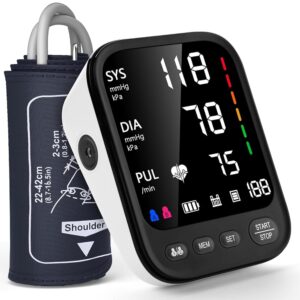
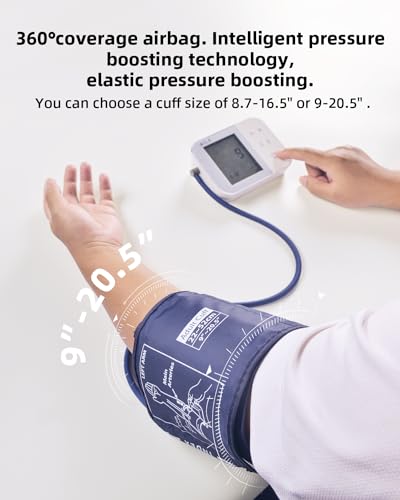
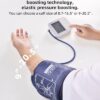
The supplied cuff is published as 8.7 to 16.5 inches, which appears in the title, in the size field and in the feature bullets consistently. That is a wide adult band. Measure the midpoint of your upper arm with a soft tape before ordering, because a cuff that has run out of adjustment produces wrong numbers on a machine that is working correctly.
AILE says two cuff sizes are offered and that you can choose according to your needs. Only one range survives in the imported text. The bullet describing the alternative is cut off mid sentence, so the second cuff’s range is simply not available to us. If your arm is outside 8.7 to 16.5 inches, ask AILE for the range of the other option in writing before assuming it will fit. Buyers who already own a monitor and need only a band should read our AILE CR009 cuff review for the replacement route.
Memory, voice and controls
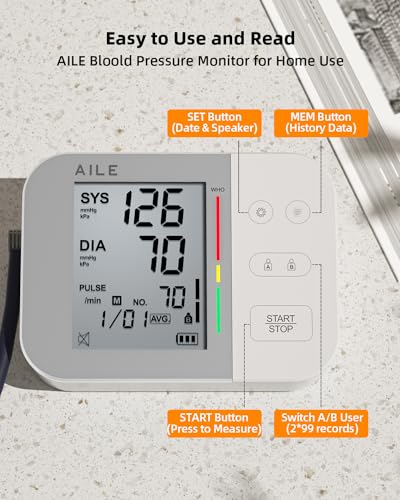
Two users, 99 records each, each stamped with the time and date, recallable with one press. The voice function reports the three values after each measurement and is described as switchable through the quick start guide. The listing does not name the language spoken. The display is an LCD with no published size.
Power, and a correction to what we used to say
The specification field states four AAA batteries are required, and unlike many listings in this catalog it does not say they are included. No AC adapter is named anywhere in the data. Our previous description of this product claimed it could be run either on batteries or from a wall outlet. Nothing in the listing supports that, so we have removed the claim rather than carry it forward. If mains power matters to you, confirm with the seller.
Listed dimensions are 3.3 by 6.3 by 4.3 inches and listed weight is 1.54 pounds, which is on the heavier side for a home unit. The included components field lists a cuff, a tube, a kit and a bag.
One more thing to check before ordering
This catalog carries two AILE 111 listings under two different item codes, and they are not obviously distinguishable from their titles. Our second AILE 111 review covers the other one. Before ordering, check which variant a seller is actually shipping and which cuff comes with it, because the two listings do not publish identical accessory sets. AILE also sells a differently specified machine, the X5, which is a separate product with its own cuff data.
Using it correctly
Rest for five minutes before measuring, sitting with your back supported, feet flat on the floor and legs uncrossed. Put the cuff on a bare upper arm, lower edge about an inch above the elbow crease, artery marker over the inside of the arm, snug enough that two fingers slide under the edge with mild resistance. Rest the arm so the cuff sits level with your heart. Stay quiet and stay still.
If you use the voice function with someone who has limited vision, run through the settings together once so they know how to change the volume or silence it, rather than leaving it as a surprise. Confirm the correct user profile before pressing start, because 99 records per person are only useful if they belong to one person.
Take readings at consistent times, and write them down with the time even though the device stamps them. A short handwritten log is the format a clinician can scan in seconds, and it survives a flat battery.
Alternatives worth comparing
For a similar voice equipped machine with a slightly different cuff and a reminder alarm, read our Alcedo ABP-2005-1 review. If you would rather buy from a manufacturer whose validation status is straightforward to look up, the Omron BP5100 is the conservative alternative at a similar level of features. Our home blood pressure monitor section lists these together with their published cuff ranges.
Who should buy it, and who should not
Buy the AILE 111 if a spoken result that can be turned off is the feature that will keep it in use, if your arm measures inside 8.7 to 16.5 inches, and if you are comfortable buying batteries separately. Skip it if you need the second cuff size and cannot get its range confirmed, if you need mains power, or if the regulatory language in the title is doing the persuading, because none of it carries a number you can check from the listing alone. Whatever the device announces, it is reporting a measurement, not delivering a verdict, and the verdict is a clinician’s to give.