



Description
Who this cuff is for, and what it settles
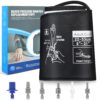
This is a replacement band covering 9 to 21 inches of upper arm circumference, built with a contoured fan shape rather than a flat rectangle and fitted with an integrated D-ring so it can be pulled snug one handed. It has no pump, no screen and no electronics, and it attaches to a monitor you already own.
Two design details are worth more than they look. An upper arm is a cone, not a cylinder, and a curved band sits flatter on it than a rectangle, which is why the shape matters. And a D-ring lets you tension the cuff with the same hand it is going on, which is the difference between measuring your own arm properly and asking somebody to help.
Cuff fit is the largest variable a home user controls. A band that has run out of adjustment, or one so oversized it cannot lie flat, changes the numbers on a monitor that is working exactly as designed. Changing a cuff does not change what a home monitor is, though: it does not diagnose anything, and it does not replace professional medical care.
The compatibility list you must read on the seller’s page
This listing does something almost no other universal cuff in this catalog does, and it deserves credit for it. The first feature bullet is not a compatibility claim but a compatibility exclusion: a list of specific monitor models the cuff will not work with, covering a run of Omron BP series and HEM series machines.
Unfortunately that list is unreadable in our imported copy. It arrived encoded in a decorative character set that the import could not handle, and what we hold is a string of escape sequences rather than model numbers. We are not going to transcribe model codes we cannot verify character by character, because publishing a wrong compatibility figure on a medical accessory is exactly the error this review exists to avoid.
So: go and read that bullet on the seller’s page before ordering, and check your own monitor’s model code against it. It is the first bullet on the listing and it begins with the words not compatible. That is a genuinely useful piece of information and it is the one part of this page you should not skip.
Connectors, and a count that changes between bullets
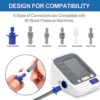
The title says six sizes of connectors. One bullet says six. Another bullet says five. The contents bullet says six, and adds a specific and useful detail: a 5 mm connector, which it also gives as 0.2 inches, is fitted to the cuff when it arrives.
Six against five is a small discrepancy but it sits in the one specification a buyer needs before ordering. Measure the outside diameter of the plug on your existing cuff where it enters the monitor, and confirm with AQESO which of the supplied connectors matches. The listing also states the connector part is removable and that you can fit the original connector from your own monitor onto this cuff, which is the most flexible arrangement any cuff in this catalog offers, and worth knowing if none of the supplied adapters is right.
Materials
AQESO specifies 210 denier nylon fabric and a high density TPU airbag described as hypoallergenic, non toxic and tasteless, with the material stated as latex free and explicitly not made with natural rubber latex. That last phrase is the useful one for anyone with a latex sensitivity, and it is a level of specificity most cuff listings here do not bother with. The closure is hook and loop, described as abrasion resistant and easy to clean. Listed weight is 5.82 ounces, given elsewhere as 0.17 kilograms, and the two agree.
The range, and fields that do not describe a cuff
The 9 to 21 inch figure appears in the title and twice in the bullets, consistently. No centimeter equivalent is published anywhere, which is unhelpful if you have measured with a metric tape. For reference against your own, 9 inches is about 23 centimeters and 21 inches is about 53, and if you are working near either end you should ask AQESO to confirm rather than rely on a conversion done in a review.
The structured band size field simply reads extra large, with no figures, and the display type field reads digital on a product that is a piece of fabric with a bladder in it. Both are inherited from a monitor listing rather than describing this cuff. AQESO also describes the wide range design as providing the best experience for family members of different sizes, a superlative we are not repeating, and describes the contoured build as helping ensure more reliable measurements, which is the manufacturer’s claim rather than a published figure. No protocol is named and no accuracy tolerance appears anywhere, so we make no accuracy claim about this product in our own voice.
Using it correctly
Wrap the cuff around the bare upper arm rather than over a sleeve, with the lower edge about an inch above the elbow crease and the artery marker over the inside of the arm. Feed the end through the D-ring and pull until two fingers slide under the edge with mild resistance, with the fabric lying flat and free of wrinkles.
Sit with your back supported and both feet flat on the floor, and rest the arm on a table so the cuff sits level with your heart. Stay quiet and still through the measurement.
After swapping a band, take several readings under exactly the conditions you were using before and compare the pattern with what you had been recording. If the results look meaningfully different, do not decide for yourself which cuff to believe. Raise it with your clinician or with a pharmacist who can compare against their own equipment.
Alternatives worth comparing
AQESO also sells a full size replacement band, covered in our AQESO full size cuff review, and builds complete machines around multiple cuffs in our AQESO U80B review, which is worth reading if your existing monitor is old enough that a new machine makes more sense than a new band. For a band reaching further at the top end, read our Pro Comfort XL cuff review or our RAXSEG extra large cuff review. If your monitor’s own manufacturer sells a band in your size, that is always the lower risk purchase, and our home blood pressure equipment section lists cuffs alongside the machines they fit.
Who should buy it, and who should not
Buy this cuff if your measured upper arm is between 9 and 21 inches, if you have checked your monitor’s model against the exclusion list on the seller’s page, and if a contoured band with a D-ring appeals for one handed use. Skip it if your machine appears on that exclusion list, if your arm falls outside the range, or if you would rather buy the band your monitor’s own maker sells. Measure first, check the exclusions second, then buy.