


Description
The Alcedo B21 is an upper arm blood pressure monitor with a talking function, automatic averaging, cuff position self checking and movement detection, storing 120 readings for each of two users. It has been on sale since 2019 and carries a substantial feedback record. This review describes the device from its published listing data. It is not medical advice, it does not tell you what any reading means, and a home monitor does not replace professional medical care. Readings belong in a conversation with a clinician who knows your history.
Who this monitor is for and what it settles
The B21 settles what a well featured basic monitor should include, and the answer turns out to be three things that have nothing to do with screen size.
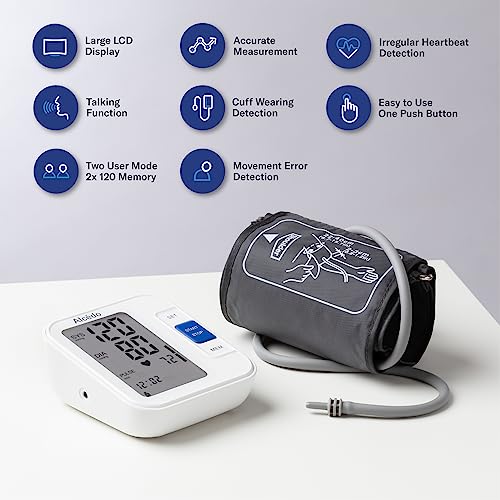
It averages three values automatically rather than reporting a single measurement. Repeated measurements averaged together are what most measurement routines are built around, and having the device do the arithmetic removes a common source of error.
It checks cuff positioning and displays a visual symbol on the device when something is wrong. A correctly sized cuff worn badly produces the same wrong reading as the wrong size, silently, and a device that tells you is doing something genuinely useful.
It detects body movement during the measurement, which is the other common way a reading is quietly corrupted. Between the two, the device is telling you when to discard a measurement rather than letting you record it as though it were sound.
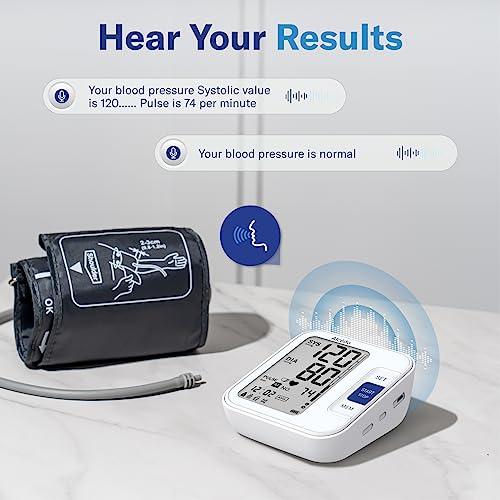
On top of that, the live voice broadcast announces readings with an adjustable volume setting, which makes this a reasonable candidate for someone whose eyesight makes a display difficult. Two users store 120 readings each. Nothing in the listing describes Bluetooth or an app, so the on device memory is your entire record. The device is FSA and HSA eligible.
The cuff range, and its ceiling
Cuff fit determines whether a reading is worth recording, because a cuff too small or too large produces wrong numbers on a device working perfectly. Technique does not compensate for it.
A feature bullet states the wide range cuff fits arms from 8.7 to 15.7 inches in circumference. The structured band size field reads only “15.7 inches”, giving the maximum with no minimum, so anyone comparing from the specification table sees half a specification.
The more important point is the ceiling itself. At 15.7 inches this cuff stops roughly an inch below the 16.5 and 17 inch cuffs supplied with devices such as the Rsorvia CK-A139, and that inch is exactly where a substantial number of adults sit. Measure your upper arm at the midpoint between shoulder and elbow before ordering. If you are near or above 15.7 inches, choose a monitor with a larger cuff rather than pulling this one tight, and if you are well above it, the two cuff devices in the blood pressure monitor section are where to look.
Using it correctly
Home readings become useful when the routine never changes. Sit with your back supported and feet flat on the floor, rest quietly for several minutes before starting, support the arm at roughly heart level, fit the cuff on bare skin rather than over a sleeve, and stay still and silent while the measurement runs. Take readings at the same times each day so they can be compared with one another. Follow the manual for the exact fitting the device expects, and follow any protocol your clinician has given you in preference to a general routine.
Pay attention to the cuff and movement symbols rather than ignoring them. A device that flags a bad measurement is only useful if you retake it. And with two profiles available, each person must select their own before measuring, or the record becomes a mixture of two people’s numbers.
What the accuracy claims actually say
Two gaps first. The listing publishes no warranty term, where established brands state two to six years, and it never mentions irregular heartbeat detection, which most competing devices at this price advertise. The movement and cuff position checks are quality controls on the measurement itself, not pulse rhythm features, and the two should not be confused. Assume no rhythm flagging unless Alcedo confirms otherwise.
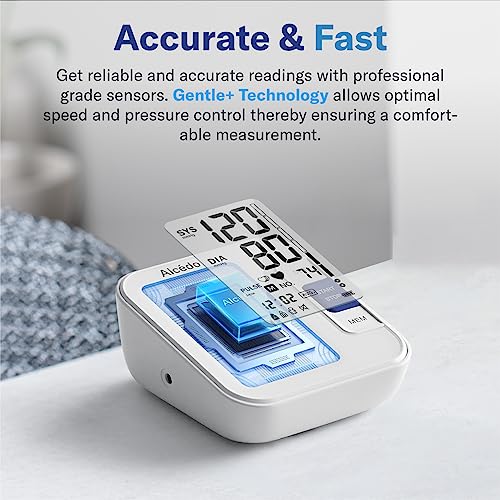
A feature bullet is headed “Easy To Use and Accurate” and states that the one push button design makes getting accurate readings fast and that averaging three values gives a more precise measurement. The previous description on this page went further and claimed highly accurate readings.
Averaging does reduce the influence of any single odd measurement, which is a real and sensible design choice. It is not, however, a statement about how close the device is to a reference standard. No validation protocol is named anywhere on this listing, no independent validation body is cited, and there is no statement about FDA clearance or registration.
Compare that with the iHealth Track, which names the ESH 2010 protocol. Naming a protocol gives a reader something to look up. If validation status matters to your decision, the device listings published by validation programs and the FDA’s own databases are the places to check rather than a product page. We do not test devices and we will not describe any monitor as accurate, clinically accurate or medical grade in our own voice.
Feedback is recorded at 4.5 out of 5 across 18,495 ratings. That is a large sample, and it measures buyer satisfaction rather than measurement performance.
What is in the box, and who makes it
The feature bullets describe an all in one kit with batteries and a carrying case included, and the batteries field specifies four AAA cells supplied. The structured included components field, however, reads “Cuff” and nothing else. Read the bullets rather than the field, and check the contents list on the product page before ordering.
The manufacturer field reads Shenzhen Jamr Technology Co Ltd rather than Alcedo. That manufacturer is behind several brands in this catalog, which is worth knowing when a shortlist of apparently independent devices may be the same hardware. Alcedo itself has other devices listed here, including the AE176 and the ABP-2005-1, both worth comparing field by field.
Who should buy it and who should not
Buy it if you want automatic averaging, cuff and movement checking and spoken results at a modest price, and your upper arm measures comfortably below 15.7 inches. Do not buy it if your arm is at the larger end of adult sizes, if you want app export, or if published validation is part of your decision. Further options sit in the mixed shortlist section alongside unrelated pressure products.