


Description
Who this gauge is for and what it settles
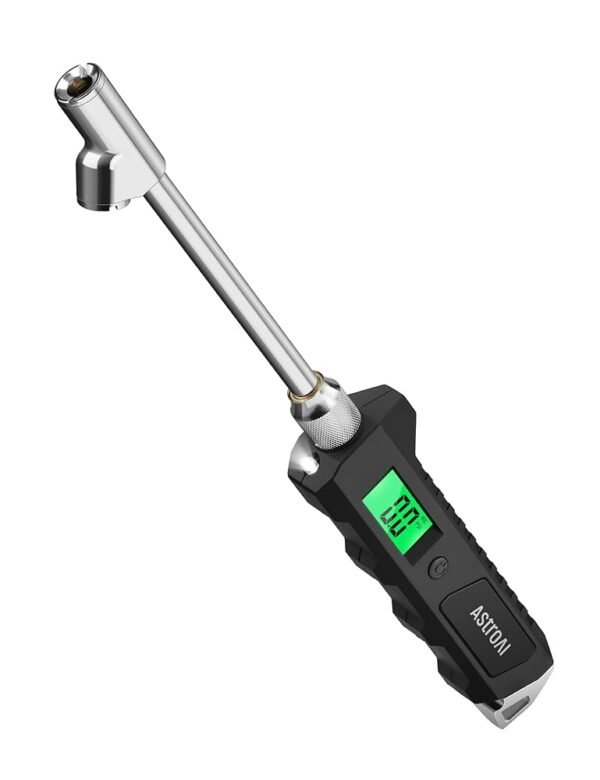
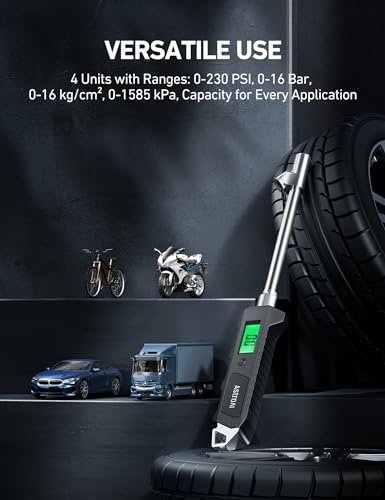
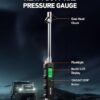
The AstroAI ATG180 is a digital tire pressure gauge built around two things a car gauge does not need: a very high ceiling and a dual head. The published range is 0 to 230 PSI, also expressed as 0 to 16 bar, 0 to 16 kg per square centimeter and 0 to 1585 kPa, and the reading is shown in 0.1 increments on a green backlit LCD. That range exists because light truck, trailer and recreational vehicle tires routinely call for pressures that ordinary gauges cannot reach.
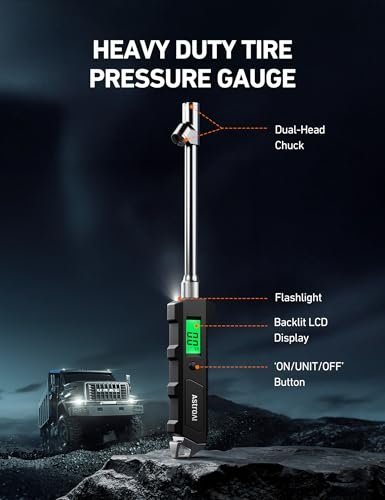
The dual head is the other half of the decision. On a dual rear wheel truck or a motorhome, the inner tire valve sits behind the outer wheel and cannot be reached straight on. A dual head chuck presents one angled fitting and one straight fitting so both valves can be worked without removing anything. If you drive a sedan, none of that applies and the simpler mechanical option in our AstroAI pencil gauge review covers the job with no battery to worry about.
The specifications that matter
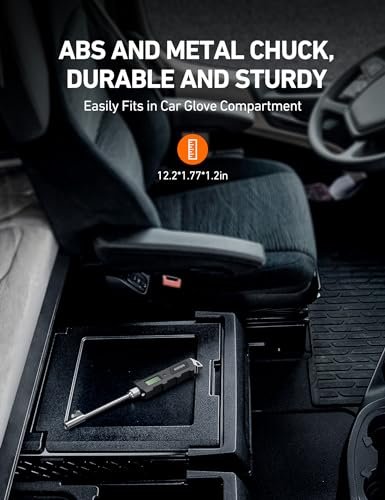
The body is stainless steel, and the listed dimensions are 12.6 by 2.2 by 1.4 inches at 4.8 ounces. That is a long tool by gauge standards, and the length is the point, since reaching an inner dual valve is a matter of geometry. The head is described as sealing on the valve stem quickly, and the grip carries a non slip texture.
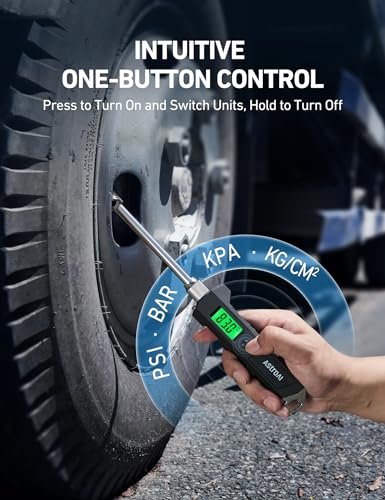
Power comes from one lithium metal battery, which AstroAI states is included. The unit turns on with a single ON, UNIT and OFF button that also cycles the four measurement scales, and it shuts itself off automatically after 30 to 40 seconds to preserve the cell. A built in flashlight is fitted alongside the backlit display, which is a practical inclusion for checking pressures at a campsite or a dark truck stop. AstroAI states a one year warranty on the imported listing. The model number is ATG180, the listing first appeared on February 6, 2017, and country of origin is given as China. Amazon showed a rating of 4.5 out of 5 across 12,572 ratings when the record was captured.
The specification the listing never publishes
There is no accuracy tolerance anywhere in this listing. AstroAI publishes a plus or minus 2 percent of span figure on its mechanical pencil gauge, but nothing equivalent appears here, and no calibration standard, certification or test protocol is named either. What the listing does publish is resolution, the 0.1 increment, and resolution is not accuracy. A display can show a tenth of a PSI while being several PSI away from true. On a gauge whose whole selling point is a wide range, the absence of a stated tolerance is the most significant gap in the data, and we are naming it rather than assuming a figure.
Using it correctly
Set pressures to the vehicle placard, not to the number molded on the tire sidewall. The placard is normally inside the driver door jamb, and on trucks and recreational vehicles it may list different front and rear figures, and different figures again for a loaded versus unloaded axle. The sidewall number is the maximum the tire is rated to hold, which is not the pressure the vehicle is designed to run on.
Check cold, before driving or several hours after stopping, because heat from rolling raises the reading. On dual rear wheels, do the inner tire first while the head is clean, and seat the chuck squarely so it stops hissing before you take the number. Because the unit powers down after 30 to 40 seconds, expect to press the button again between wheels rather than assuming the reading on screen is current. Keep a spare cell in the vehicle. A battery gauge that dies on a shoulder in the dark is no better than no gauge, which is the practical argument for keeping a mechanical backup in the same glove box.
Limits, contradictions and gaps in the listing data
Three fields in the imported record are simply wrong. The department field reads mens, which is meaningless for a tire gauge. The contents of the box are listed as a single entry reading RV, which is a vehicle type rather than an item. And the screen size is given as 2.2 inches while the entire tool is also listed as 2.2 inches wide, so a display cannot occupy the full width of the housing in both directions. We are naming all three rather than resolving them, because there is no way to tell from the record which value was intended.
The sales rank field is also incomplete, carrying only a reference to the top 100 in Automotive with no numeric position, so there is no usable rank to quote. The product dimensions field bundles the weight in with the measurements, which is a formatting artifact of the import rather than a spec problem. Nothing in the listing states the operating temperature range, which matters for a digital tool that may live in a cold vehicle, and nothing states whether the flashlight and the display share the same cell.
The honest overall picture is a wide range tool with a genuinely useful head design, sold without the one number a measuring instrument should publish. For household use against a placard figure that is a reasonable trade. For any use where a documented tolerance matters, it is not, and no rank or rating changes that.
Alternatives worth comparing
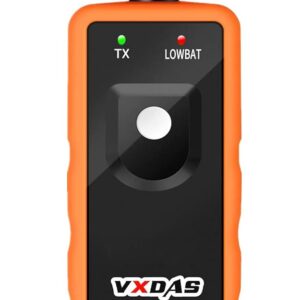
The pencil gauge linked above is the direct in house alternative, cheaper and battery free but capped at 75 PSI, which rules it out for the vehicles this model targets. If the actual problem is a tire pressure warning light that will not clear after a rotation, no gauge fixes that, and the VXDAS EL-50448 relearn tool review covers the device that resets the monitoring system itself.
Readers who came here from the cleaning half of the site will recognize the same pattern of headline numbers that do not survive a second look. The Westinghouse ePX3500 review covers a machine whose model name and published maximum PSI disagree, and the Twinkle Star adapter set review covers hardware where a one millimeter fitting difference decides whether it leaks. This gauge is filed with the mixed shelf of pressure rated gear we cover.
Who should buy it and who should not
Buy it if you run duals, a trailer or a recreational vehicle, need to reach an inner valve, and want a lit reading at night. Do not buy it if a documented accuracy tolerance is part of your requirement, because the listing does not publish one. Do not buy it as your only gauge if it will live in a cold vehicle without a spare cell, and do not treat the 0.1 PSI display as a statement of how close the reading is to true.