
Description
Who this cuff is for, and what it settles
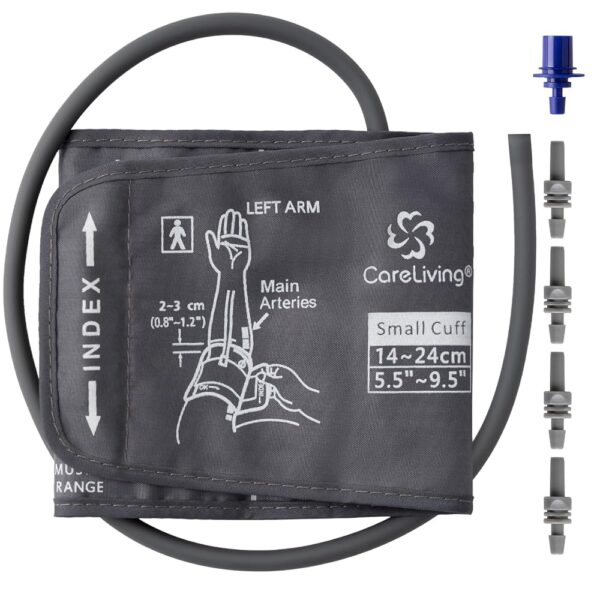
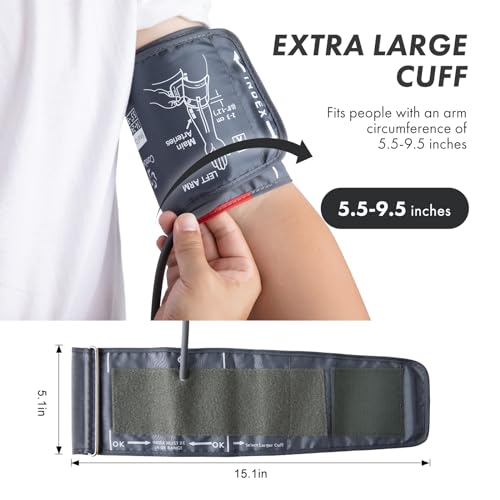
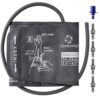
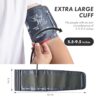
This is a replacement band for slim arms: nylon fabric, a hook and loop closure, five connectors and a user guide, with no pump, no screen and no electronics of any kind. It attaches to a monitor you already own. CareLiving publishes a range of 5.5 to 9.5 inches, given as 14 to 24 centimeters.
It solves a problem a lot of buyers do not realize they have. Most home monitors ship with a band starting around 8.6 or 8.7 inches, which is fine for an average adult arm and too large for a slim one. A cuff with far more length than the arm needs cannot be seated evenly, and the bladder inside it does not sit squarely over the artery, which changes the numbers on a monitor that is working exactly as designed. Cuff fit is the single largest variable a home user controls, and buying down a size is often a bigger improvement than buying a better machine.
Changing a band does not change what a home monitor is. It does not diagnose anything and it does not replace professional medical care.
The connectors, which this listing gets right
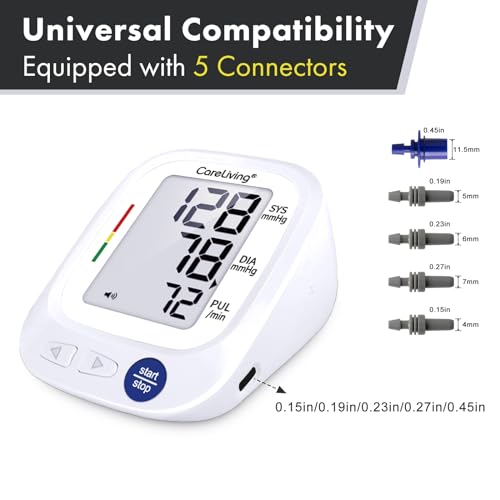
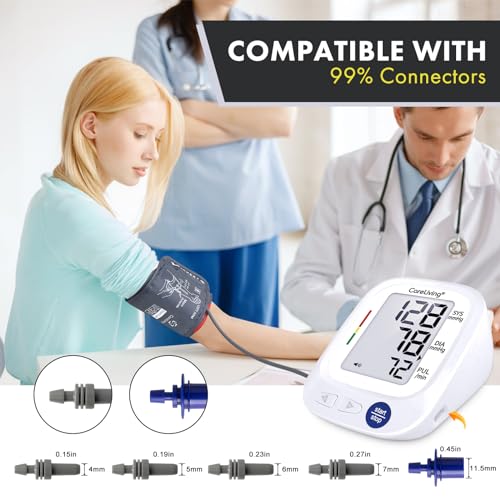
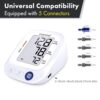
Most universal cuff listings in this catalog describe their adapters as multiple, various, or as a set of ambiguous decimals with the unit marks stripped out by the import. This one publishes them plainly: 4 mm, 5 mm, 6 mm, 7 mm and 11.5 mm, which is five connectors and matches the five claimed in the title.
That is genuinely useful, because it lets you check compatibility before you spend anything. Measure the outside diameter of the plug on your existing cuff where it enters the monitor, compare it against those five figures, and you have your answer. Compare that with the RAXSEG extra large cuff, whose listing never states how many connectors it supplies or what size any of them is.
The compatibility claim is still broad. Most brands is the seller’s phrasing, not a guarantee. Some monitors use proprietary fittings, some tubeless designs have no removable cuff at all, and some machines are calibrated around the band they shipped with. Where a manufacturer sells its own small band for your machine, that remains the lower risk option, for the reasons our Microlife replacement cuff review sets out.
The range, and errors in the copy
Measure the midpoint of your upper arm, halfway between shoulder and elbow, with the arm relaxed at your side and a soft tape held snug but not tight. Compare that against 14 to 24 centimeters. If your measurement falls between 22 and 24 centimeters you are at the top of this band and at the bottom of a standard one, and either could work, with the one that closes with a comfortable margin being the better choice.
Two errors in the listing text deserve naming. The first feature bullet states the cuff fits an arm circumference of 5.5.7 to 9.5 inches, with a stray extra figure that makes the lower bound unreadable as written. The title and the description both give 5.5 inches, so that is the figure to work from, but the typographical state of the listing is worth knowing before you rely on any number in it.
Second, the packing bullet begins by describing the contents as a large cuff. This is a small cuff. That is a copy and paste error from CareLiving’s other listing rather than a description of what arrives, but if you are ordering by reading bullets quickly, it is exactly the kind of line that leads to the wrong band turning up.
The structured band size field gives only 9.5 inches, a single figure with no lower bound, and the listed dimensions of 3 by 3 by 3 inches are three identical numbers and therefore a placeholder rather than a measurement.
Child use, and where the line is
The product title describes this as a small child cuff, while the age range field says adult. Both appear on the same page, so the intended user is not clear from the listing.
If you are considering this for a child, the important point is not the cuff. Blood pressure in children is interpreted against age, sex and height rather than against adult figures, and that comparison is a clinical task. Home monitors sold to adults are generally not validated for use on children, and fitting a smaller band does not make one suitable. Do not monitor a child at home unless a clinician has asked you to, and if they have, ask them what device and what cuff size they want used. For an adult with a slim arm, none of that applies and the band is simply the right size.
Materials and build
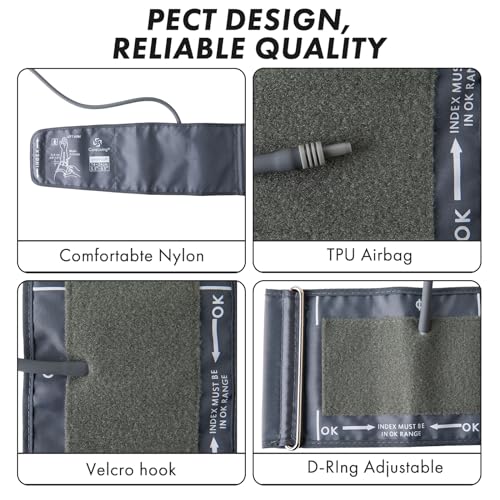
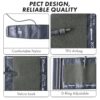
CareLiving describes nylon cuff fabric with a soft hook closure chosen so that it does not catch on arm hair, which is a small detail but a real one for anyone who has pulled a cheap band off an arm. Listed weight is 4.16 ounces, given elsewhere as 0.12 kilograms. No validation claim, protocol or accuracy figure appears anywhere, which is unremarkable for a cuff, and we make no accuracy claim about it in our own voice.
Using it correctly
Wrap the cuff around the bare upper arm rather than over a sleeve, with the lower edge about an inch above the elbow crease and the artery marker over the inside of the arm. Snug it until two fingers slide under the edge with mild resistance. Sit with the back supported, both feet flat, and rest the arm on a table so the cuff sits level with the heart. Stay quiet and still through the measurement.
After swapping a band, take several readings under exactly the conditions you were using before and compare the pattern with what you had been recording. A smaller cuff on a slim arm often produces a noticeably different result from the oversized one it replaced, which is the point, but it is still worth raising with your clinician or a pharmacist who can check against their own equipment rather than deciding for yourself which band to believe.
Alternatives worth comparing
The Medhome small cuff covers the identical 14 to 24 centimeter span with a larger connector set, and the AQESO small cuff is the other direct comparison. For a genuinely pediatric focused band, read our Pro Comfort pediatric cuff review. If your measurement lands just above this range, the Luanerl medium cuff picks up where this one stops. The full home blood pressure equipment section lists bands alongside the machines they attach to.
Who should buy it, and who should not
Buy this cuff if your measured upper arm is between 14 and 24 centimeters, if one of the five published connector sizes matches your monitor’s fitting, and if you would rather buy from a listing that states its adapter sizes than one that does not. Skip it if your arm is above 24 centimeters, and buy it for a child only on a clinician’s instruction. The band is the right size or it is not, and that question is settled with a tape measure before anything else.