Description
Who this Microlife cuff is for, and what it settles
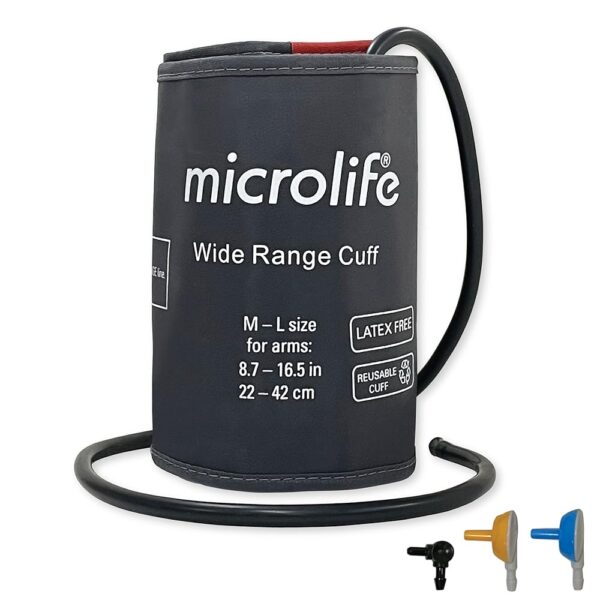
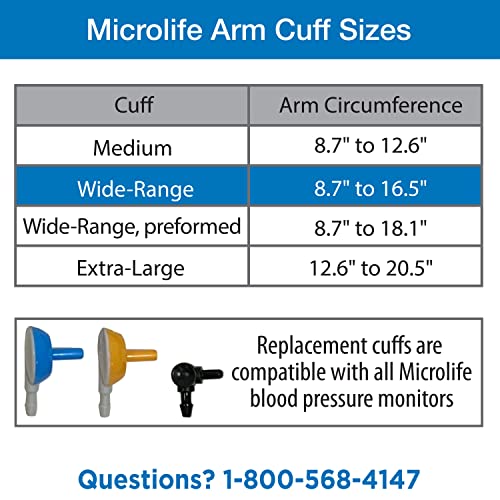
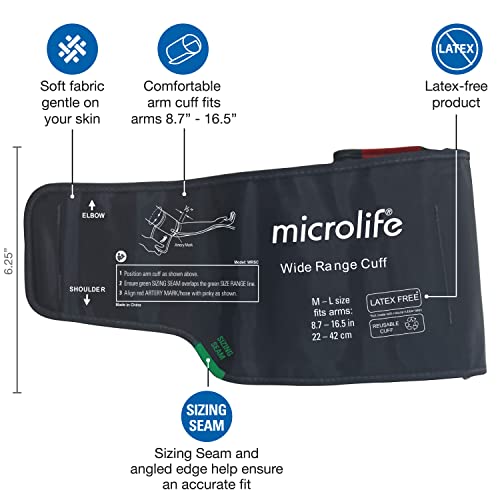
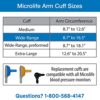
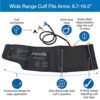
This is a replacement band, not a monitor. There is no pump, no screen and no electronics. It exists for one situation: you own a Microlife upper arm monitor, the cuff that came with it has stretched, split, stopped gripping or never fitted properly, and you would rather replace a band than a machine. Microlife publishes this standard size at 8.7 to 16.5 inches of upper arm circumference and states that three sizes are available.
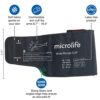
What it settles is compatibility, and it does so in an unusually specific way. Microlife states the cuff works with all Microlife produced automatic upper arm monitors, including retail brand monitors the company manufactured for others, and states plainly that it is not compatible with manual or aneroid units, professional upper arm units, or wrist units. That last sentence is worth more than any adjective, because it tells you when not to buy.
Replacing a cuff does not change what a home monitor is. The device does not diagnose anything, it does not replace professional medical care, and readings from it are for the clinician who manages your health to interpret.
The specification that matters most
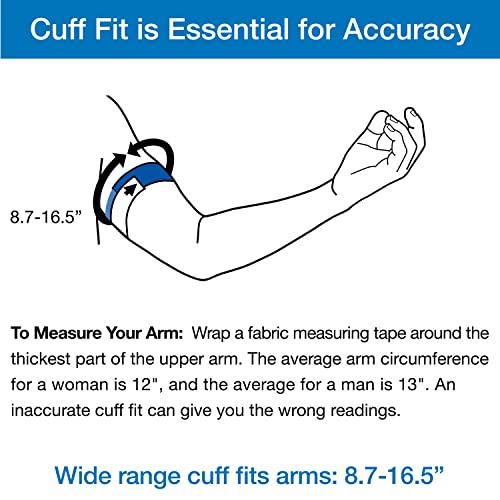
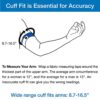
Fit. Microlife says so itself, twice, in the listing: fit is essential to getting an accurate reading, and you should measure your upper arm before choosing a size. That is correct and it is the most useful thing on the page.
Measure the midpoint of your upper arm, halfway between the shoulder and the elbow, with the arm relaxed at your side and a soft tape held snug but not tight. Compare that number against 8.7 to 16.5 inches. If it falls near either end, take the other size in the range rather than the one that only just closes, because a band at the limit of its adjustment and a band with a great deal of excess both cause the same problem: the bladder does not sit evenly over the artery, and the numbers change on a machine that is working exactly as it should.
Microlife says three sizes exist. This listing publishes the range for one of them. If your measurement is outside 8.7 to 16.5 inches, ask for the ranges of the other two before ordering rather than assuming they bracket yours.
Build and materials
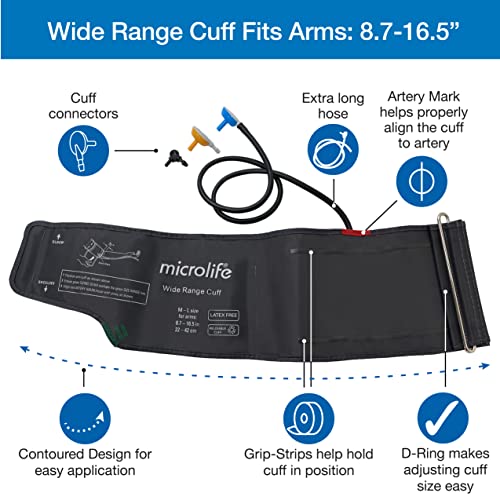
The band is contoured rather than a flat rectangle, which makes it easier to seat on a tapered upper arm and easier to put on one handed. Microlife describes grip strips that hold the cuff in position while you fasten it, which addresses the awkward moment when a band slides down the arm as you reach for the closure.
The fabric is described as durable, easy to clean and latex free, with the listing adding that it is not made with natural rubber latex. That is a specific and useful statement for anyone with a latex sensitivity, and it is the kind of detail most cuff listings in this catalog omit entirely.
Listed dimensions are 23.5 by 0.5 by 6.25 inches, which describes the band laid flat, and listed weight is 7.37 ounces.
The claims, and how to read them
Microlife states that this cuff is clinically tested to ensure accuracy, unlike imitations that say they are compatible, and describes it as the only replacement cuff clinically tested for accuracy with the monitors it produces. Those are the manufacturer’s claims and we are attributing rather than adopting them. No test protocol is named, no clearance number is quoted, and no accuracy figure is published, so there is nothing in the listing that can be checked. Being the only product with a property is also a claim about competitors rather than about this cuff.
What is genuinely defensible, and worth understanding, is the underlying logic. Oscillometric monitors infer blood pressure from pressure oscillations picked up through the cuff, and the algorithm is developed against the behavior of a particular bladder in a particular sleeve. A band from a different maker with the same connector may fit the hose and still change the numbers slightly. That is a good reason to prefer the manufacturer’s own cuff where one exists, independently of any accuracy claim. Buyers considering a universal band with adapters, such as the one in our AuQty XXL cuff review, should weigh that against the wider size range on offer.
One field in this listing reads Material Feature: durable medical grade construction. Medical grade is a marketing phrase with no fixed regulatory meaning, and we are not repeating it in our own voice. Another field lists the display type as analog, which is a leftover from a monitor listing, since a bare cuff has no display of any kind. The listing also gives an age range of 12 and over. Whether home monitoring is appropriate for a young person, and what cuff should be used, is a question for a clinician rather than a product page.
The compatibility point most buyers will miss
Microlife’s phrase about retail brand monitors it produced is doing real work. This manufacturer builds monitors sold under other names, and the effect is visible in our own catalog: the model code on the machine covered in our Microlife BP3MC1-PC review also appears on a device sold under a different brand entirely, reviewed as the Vaunn BP3MC1-PC.
If you own a monitor with a Microlife model code under a name that is not Microlife, this cuff may well be the correct part for it even though the brands differ. Check the model code printed on your machine rather than the badge on the front, and confirm with Microlife if there is any doubt. Our Microlife BP3GY1-2N review covers another machine this band is intended for.
Using it correctly
Put the cuff on a bare upper arm rather than over a sleeve, with the lower edge about an inch above the elbow crease and the artery marker over the inside of the arm. Use the grip strips to hold it in place while you close it, then tighten until two fingers slide under the edge with mild resistance. Sit with your back supported, feet flat, and rest the arm on a table so the cuff is level with your heart. Stay quiet and still through the measurement.
After changing a cuff, take a few readings under the same conditions you used before and compare the pattern with what you had been recording. If the new band gives results that look very different, raise it with your clinician or a pharmacist who can check against their own equipment, rather than deciding for yourself which band to believe.
Who should buy it, and who should not
Buy this cuff if you own a Microlife automatic upper arm monitor, or one built by Microlife under another name, and your measured arm falls inside 8.7 to 16.5 inches. Do not buy it for a wrist device, an aneroid set or a professional unit, because Microlife states it is not compatible with any of those. If your arm is outside the range, get the other two sizes confirmed first. Alternative bands for other machines are listed alongside the monitors they fit in our home blood pressure equipment section, including the Omron wide range cuff for buyers on that platform.