




Description
Who This Monitor Is For and What It Settles
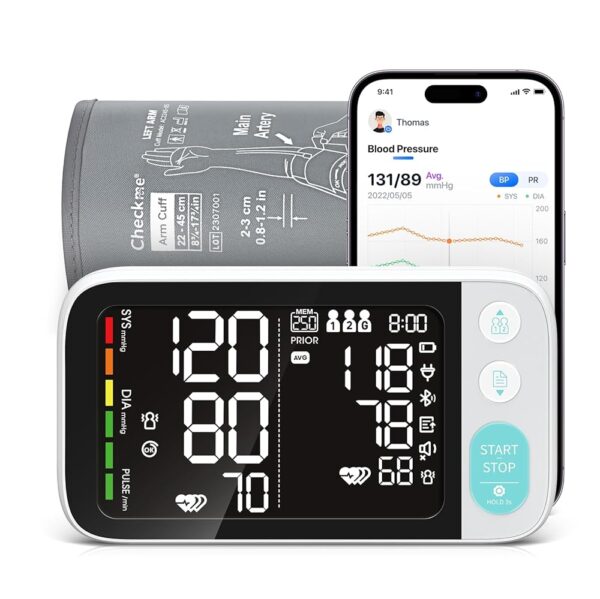
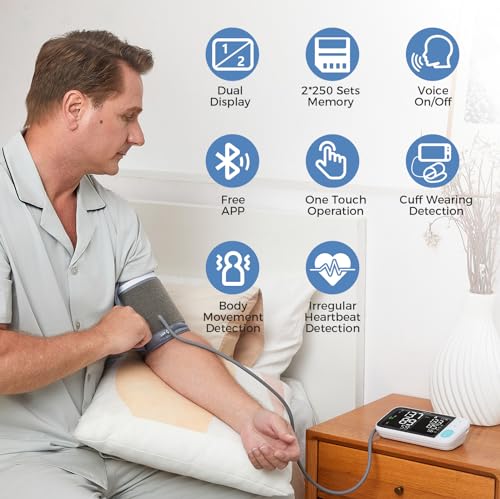
The Checkme TMB-2266 is an upper arm blood pressure monitor with an extra large cuff, a dual display that shows your previous reading beside the current one, a voice broadcast, 500 stored readings and Bluetooth to a companion app. It is the fullest specified Checkme device in this catalog, and unlike the brand’s compact BP2A it is a full-size desk monitor rather than something you pack.
Two features distinguish it. The cuff reaches 17.7 inches, further than the 16.5 inch ceiling most wide range cuffs stop at. And the dual display puts the last reading next to the new one without pressing a memory button, which is a small design decision that makes a home log easier to keep honestly. Before the specifications, the standing point: this review describes a device and its published data, it does not interpret readings, and a home blood pressure monitor does not replace professional medical care.
The Specifications That Matter
Cuff circumference is the specification that decides whether a monitor works for a given arm, because a cuff that is too small or too large produces wrong readings on hardware that is functioning perfectly, and nothing on the display warns you. Here a bullet gives 8.7 to 17.7 inches, or 22 to 45 cm, on a D-ring wide range cuff, and the structured band size field agrees on the 17.7 inch upper figure.
That extra 1.2 inches over a standard wide range cuff is the practical argument for this device. Measure the bare upper arm at the midpoint between shoulder and elbow before ordering. Buyers above 45 cm are still outside the range and should pair a dedicated oversized cuff with a compatible monitor rather than assuming an adjustable design stretches further than its stated figure.
Display, memory and connectivity
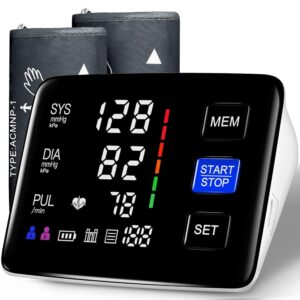
The screen is a 5.5 inch LCD arranged as a dual display, showing the previous measurement alongside the current one. No digit height is published, so character size has to be judged from photographs, but the layout is the more interesting part: seeing two readings together without navigating a menu removes a step most people skip.
Memory holds 250 readings for each of two users, 500 in total, with a guest mode for one-off measurements that are not recorded. Guest mode is a genuinely useful small feature, since a visitor taking a reading does not then pollute a household log.
Bluetooth connects to the ViHealth app on iOS 13.0 or later and Android 5.0 or above, with Bluetooth 4.0 or higher required on the phone, and the app stores unlimited readings and exports reports as PDF or CSV. The listing states plainly in its own closing line that the device can be used independently without connecting to the app, which is the sentence a buyer who does not want a phone in the loop needs to read.
Power is four AA batteries, included. The unit measures 5.2 by 3.86 by 7.56 inches at a listed 1.72 pounds, which places it firmly as a desk device.
What the Listing Claims, and Who Is Making the Claim
The lead bullet is headed with the word accurate and says the device helps you monitor blood pressure within 30 seconds so you can make sure your readings are in check. It then notes FSA and HSA eligibility, which is the seller’s statement about payment eligibility and worth confirming with your own plan rather than a product page.
What is absent is worth naming. No accuracy figure, no tolerance, no validation protocol and no regulatory clearance appears anywhere in the source data. That is notable because the brand’s BP2A listing uses an almost identical opening bullet and puts an FDA clearance claim where this one puts payment eligibility. Same brand, same sentence structure, different regulatory statement, which is a reason to check the status of this specific model rather than assuming a claim made about one Checkme device applies to another. Clearance can be looked up through the relevant regulator, and validation status through the registries medical bodies maintain.
The manufacturer of record here is Guangdong Transtek Medical Electronics, whereas the BP2A pages name Checkme itself and Shenzhen Viatom Technology. The brand sources from more than one factory, so the specifications on one Checkme page should not be read across to another. A second BP2A page and a Wellue BP2A in this catalog illustrate the same pattern from the other direction.
Using It Correctly
Fit the cuff to the bare upper arm rather than over a sleeve, with the tubing running down the inside of the arm toward the palm and the lower edge roughly an inch above the elbow crease, closed so one finger slides underneath with mild resistance. Sit with the back supported and both feet flat on the floor, rest the arm so the cuff sits level with the heart, and stay silent and still through inflation and release.
Rest for several quiet minutes before the first reading rather than measuring straight after activity, and use the same arm at the same times each day so the record compares with itself. Set the user slot before the first measurement, and use guest mode for anyone whose readings should stay out of the household log. If you intend to use the app, pair it at the start rather than after readings have accumulated.
Limits and Data Oddities
Nothing is published about the pressure or pulse measurement range, tolerance, averaging across readings, irregular heartbeat detection, digit height or battery life. The description field is empty, so six bullets and a specification table carry the case, and the product title misspells Bluetooth.
The short description that previously ran on this page stated that measurements are taken during inflation. Nothing in the listing title, bullets, specification block or stored attributes says anything about when in the cycle the measurement happens, so that claim is unsupported by the source data and has been removed rather than repeated. The stored product attributes on this site are also miscategorized, holding packaging and manufacturer entries rather than product characteristics.
For context rather than endorsement, the listing records 109 ratings averaging 4.4 out of 5, and places the product ranked 130th within automatic arm blood pressure monitors. Those are marketplace positions, not assessments of the hardware.
The point that outranks all of it: this device produces numbers, stores them, speaks them and syncs them. It does not diagnose, it does not replace professional medical care, and nothing in this review tells anyone what a reading means. Buyers comparing similar Transtek-built monitors can look at the Meraw TMB-2085-K, and the full selection sits in our blood pressure monitor category.
Who Should Buy It, Who Should Not
Buy it if your arm measures between 22 and 45 cm, you want a large desk monitor with a dual display, guest mode and an optional app, and 250 readings per user suits your household. Skip it if you need a compact or travel device, if you need a validation protocol or clearance reference before buying, if a household of three needs separate banks, or if you assumed a claim made on another Checkme model applies here, because the pages differ.