


Description
Who the Meraw TMB-2085-K is for, and the wrist question first
This is a connected wrist blood pressure monitor: Bluetooth to a phone app, unlimited stored history, data export, and a set of on device indicators that is unusually complete for a wrist device. It records numbers for a clinician to review. It is not a diagnostic device and it does not replace professional medical care.
The category needs stating first. Wrist devices and upper arm devices are not interchangeable. On the wrist, how you hold your arm relative to your heart changes the reading, and the site is smaller and more variable than the upper arm. Upper arm devices are the usual recommendation for home monitoring, and a wrist device is normally chosen for a specific reason, most often portability or an arm cuff that will not fit.
Where a wrist device is the right choice, this is one of the better specified ones in this catalog, and the reason is the indicator set described below rather than the app.
Wrist size and the specifications that matter
The listing states a soft adjustable wrist cuff with a circumference of 5.3 to 8.5 inches, which is the usual full span for a wrist device. Our stored band size attribute records only 8.5 inches, dropping the lower bound, so use the full range. Measure the bare wrist you intend to use, just above the wrist bone, before ordering.
One wording point: the listing says the cuff fits nearly all arms. It is a wrist cuff and it fits wrists. That is a sloppy sentence rather than a misleading specification, but it is the sort of thing that leads someone to buy a wrist device when they wanted an arm one.
The indicators, which are the reason to choose this
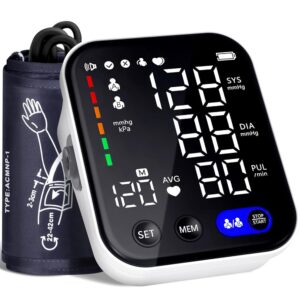
Four features on this device address the specific weaknesses of wrist measurement. There is an excessive body motion detector, which flags a measurement disturbed by movement. There is a cuff wrap indicator, which tells you whether the cuff was fitted properly. There is a blood pressure level indicator, which is a category display. And there is an irregular heartbeat indicator. The device can also display the average of your last three results.
The first two matter most, because movement and a loose cuff are the two commonest ways a home reading goes wrong, and neither announces itself otherwise. The averaging function matters because single readings vary for ordinary reasons and a short series is a steadier record.
The level indicator and the irregular heartbeat indicator need reading carefully. The irregular heartbeat symbol reports that the device noticed an irregularity during a measurement. It does not identify a rhythm, it does not diagnose any condition, and the correct response is to mention it at an appointment. The level indicator is a band driven by thresholds programmed into the device, and we are not reprinting those thresholds as targets, because what a number means for a particular person is a clinical judgment.
The app, and what is in the box
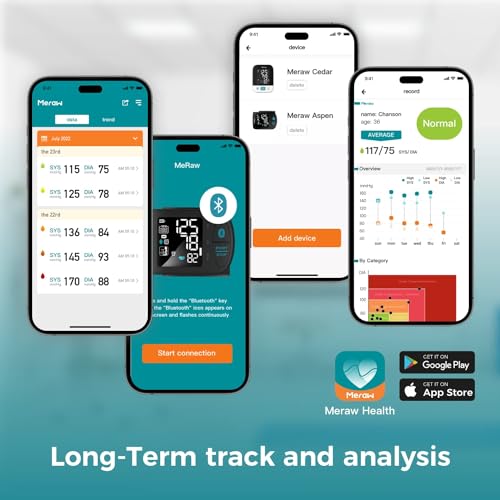
Bluetooth connects to the Meraw Health app, which stores an unlimited history, syncs to Apple Health and to the Android health platform, allows a note against each measurement and produces reports you can share. Data export is the genuinely useful part: a clean report is far easier for a clinician to read than a page of handwritten numbers. The screen is a backlit LCD and the listing states a measurement completes in about 35 seconds.
The box contains the monitor, two alkaline AAA batteries and a manual, with a stated twelve month warranty. Note that no carrying case is listed among the contents.
The certification claim, which names two bodies
This listing states FDA and ESH double certification. Both are worth unpacking because they are more specific than the usual language, and both are the manufacturer’s claims rather than findings of ours.
FDA involvement is a regulatory pathway for devices of this kind in the United States. The listing gives no clearance number and no date, so there is nothing in it that a reader can look up directly. ESH refers to the European Society of Hypertension, which does publish a protocol for assessing blood pressure monitors, and a device assessed under it would normally be identifiable by name in an independent listing. The listing here names the body but not the protocol version, the study, or where the result was published.
We do not test products and we will not describe any monitor as accurate in our own voice. What we can tell you is what to do with a claim like this: look up this model number on an independent validation listing and confirm the current status for yourself. That is a few minutes of work and it converts a marketing sentence into something you can rely on or discount.
The listing separately states that Meraw collected ten thousand items of clinical data from patients and upgraded its chip and filtering algorithm accordingly. That describes a development process. It is not a validation result.
Using it correctly, and what the readings are for
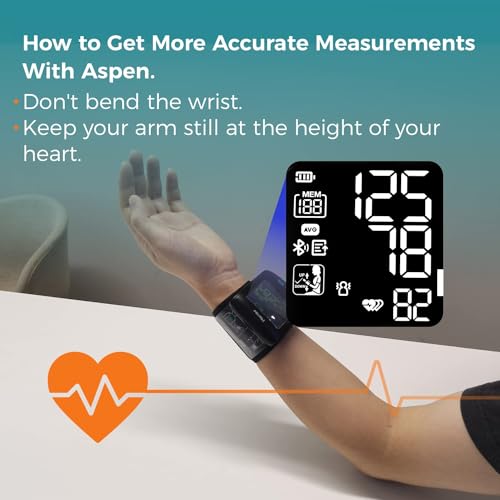
Sit with your back supported and your feet flat on the floor, and rest quietly for several minutes before starting. Fit the cuff on a bare wrist, snug rather than tight, and let the cuff wrap indicator confirm it rather than guessing. Then support your forearm with the other hand or on a cushion so the device sits at about the height of your heart, and hold still and silent while it inflates. Use the same wrist at about the same time each day.
What you produce is a record. What a reading means, whether a pattern across your readings is significant, and whether anything about your care should change are questions for a healthcare professional who knows your history and your medication. This device does not replace professional medical care, and no reading from it should be used to start, stop or alter treatment on your own.
Limits and gaps
Nothing in the listing describes a heart level positioning aid, which is the one wrist specific feature this device does not have and which some competitors do. Bluetooth carries the usual conditions: check your phone runs a supported version of iOS or Android, and remember that the unlimited history lives on a service the manufacturer maintains. No on device memory figure is published, which is an odd omission given how much is said about the app. No display dimension is given and no case is included.
Alternatives worth comparing
The TMB model prefix recurs across several brands in this catalog. The Meraw TMB-2084-T is the sibling model, while the Etekcity TMB-1583-BS and the Checkme TMB-2266 are related upper arm devices. For a wrist device with heart level guidance, the Omron BP6350 is the comparison, and the HoMedics BPW-O300 adds motion detection without an app. Our index of home monitors and cuffs separates wrist listings from arm listings.
Who should buy it and who should not
Buy it if a wrist device suits your situation, your wrist measures between 5.3 and 8.5 inches, and you want an app with export plus indicators for motion and cuff fit. Do not buy it as a first monitor if an upper arm cuff would fit you, do not read the certification claim as an independent validation you have seen, and check your phone before ordering.