




Description
Who This Monitor Is For and What It Settles
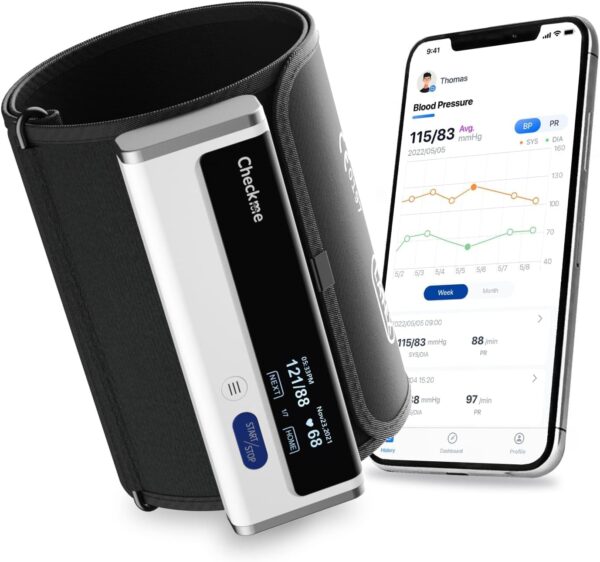
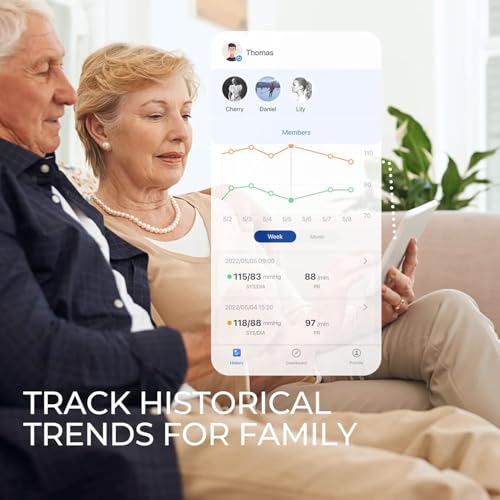
This is the white Checkme BP2A, a slim upper arm blood pressure monitor built around Bluetooth and an app rather than an on-device archive. It holds the last 50 readings itself and pushes an unlimited history into the ViHealth app, where records can be exported as PDF or CSV. The physical unit is deliberately small, described in the listing as close to a phone in size and weight, so it packs rather than sits on a shelf.
What it settles is whether you want your log to live on your phone. If you keep readings for your own reference or to hand to a clinician, the export path is the argument for this device. If you have no interest in an app, most of what you are paying for goes unused. Before going further: this review describes a device, it does not interpret readings, and a home blood pressure monitor does not replace professional medical care.
The Specifications That Matter
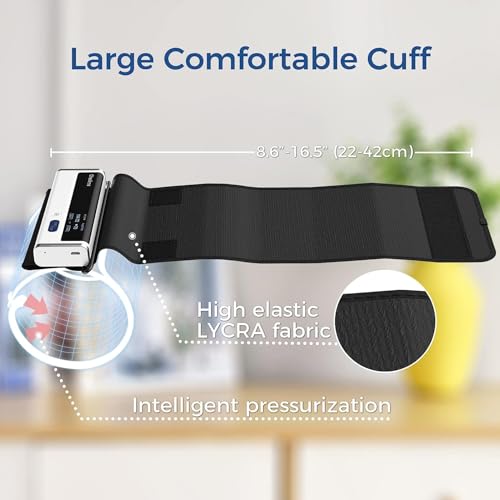
The cuff range is published properly here, and consistently, which is the best thing about this listing. The band size field gives 22 to 42 cm, the size field gives 8.6 to 16.5 inches, and a bullet repeats both. That covers standard to large adult arms. Measure the bare upper arm at the midpoint between shoulder and elbow before ordering, and if you land near either end of that span, treat the fit as the deciding factor rather than the feature list.
Everything else about the physical device is less settled. The display is described in a bullet as an OLED screen, while the structured display field says only Digital, and a sibling Checkme BP2A listing for the same model number calls it LED. OLED, LED and an unspecified digital panel are three different answers to one question, and no digit height is published on any of them.
Weight, power and storage
Weight is 7.68 ounces, or 0.48 pounds, against dimensions of 5.9 by 1.9 by 1.18 inches. The sibling listing gives nearly identical dimensions with a weight of 16 ounces, which is more than double. One of those figures is wrong, or one is describing a boxed kit, and neither page says which.
Power is an internal rechargeable cell, described in the specification block as one lithium polymer battery, included, with a charging cable in the box. A bullet puts a full charge at roughly three months of typical use, while the sibling listing quotes 300 measurements per charge, which is a different way of measuring the same thing and not obviously the same claim. The specification block also labels the power source simply as battery powered, which reads as replaceable cells rather than a rechargeable pack.
On-device storage is the last 50 readings, with the app taking everything beyond that. The ViHealth app supports multiple user records, so a household sharing one monitor can keep separate logs on the phone side.
The Claims That Need Naming
The lead bullet is headed with the phrase medically accurate and describes an FDA cleared digital monitor with high-end measurement accuracy, offering more convenient and professional care at home. Every part of that is the seller speaking, and two parts of it need direct comment.
First, accuracy. We do not test devices and we do not verify clearances. No accuracy figure, no tolerance and no validation protocol is named anywhere in the listing data. Regulatory clearance and independent clinical validation are different things, and a listing asserting one while naming neither a protocol nor a clearance number leaves a gap a buyer has to close themselves. Clearance can be checked through the relevant regulator and validation status through the registries medical bodies maintain.
Second, and more seriously, the phrase professional care at home. A home blood pressure monitor is a measuring instrument. It does not provide care, professional or otherwise, and it does not replace a clinician. Whatever the device measures, the interpretation belongs to a professional who knows the person being measured. We are naming that claim rather than repeating it.
Using It Correctly
Fit the cuff to the bare upper arm rather than over a sleeve, with the tubing running down the inside of the arm toward the palm and the lower edge roughly an inch above the elbow crease, closed so one finger slides underneath with mild resistance. Sit with the back supported and both feet flat on the floor, rest the arm so the cuff sits level with the heart, and stay silent and still through the inflation and the release. A measurement takes about 30 seconds according to the listing.
Rest for several quiet minutes before the first reading rather than measuring straight after activity, and use the same arm at the same times each day so the log compares with itself. Set the Bluetooth pairing up before you need it rather than after a week of readings has accumulated, because with only 50 slots on the device the transfer is the point of the design.
Limits and Gaps in the Published Data
The description field is empty, so five bullets and a specification table carry the case. Nothing is published about the pressure or pulse measurement range, tolerance, averaging across readings, irregular heartbeat detection, digit height, or charge time. The listing states FSA and HSA eligibility, which is the seller’s statement about payment eligibility and worth confirming with your own plan rather than a product page.
The BP2A model designation appears on more than one page in this catalog under more than one brand, including the sibling Checkme listing above and a Wellue BP2A. The manufacturer of record differs between them, given here simply as Checkme and elsewhere as Shenzhen Viatom Technology. Same model number, different published details, so compare the cuff ranges and included accessories rather than assuming the pages describe identical hardware. Checkme also appears with a different model, the Checkme TMB-2266, which is worth a look if the compact form factor is not what you need.
The point that outranks the rest: this device collects and stores numbers. It does not diagnose, it does not provide care, it does not replace professional medical care, and nothing in this review tells anyone what a reading means.
Alternatives Worth Comparing
If app export is the reason you are here, the Withings BPM Connect is built connection first and is the natural comparison. If you would rather the app were optional than essential, the A&D Medical UA-651BLE publishes more of its own accessory data and works fully standalone. The complete shelf sits in our blood pressure monitor category.
Who Should Buy It, Who Should Not
Buy it if your arm falls inside 22 to 42 cm, you genuinely want a phone-based log with PDF and CSV export, and a compact rechargeable unit suits how you travel. Skip it if you want deep on-device memory with no phone involved, if you need a documented accuracy or validation figure, if the display technology being described three different ways bothers you, or if the promise of professional care at home is the reason you were considering it, because that is not what this or any home monitor provides.