Description
Who This Monitor Is For and What It Settles
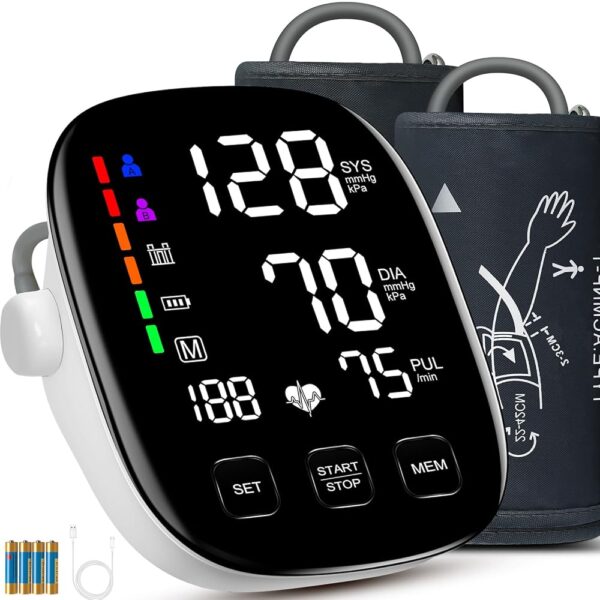
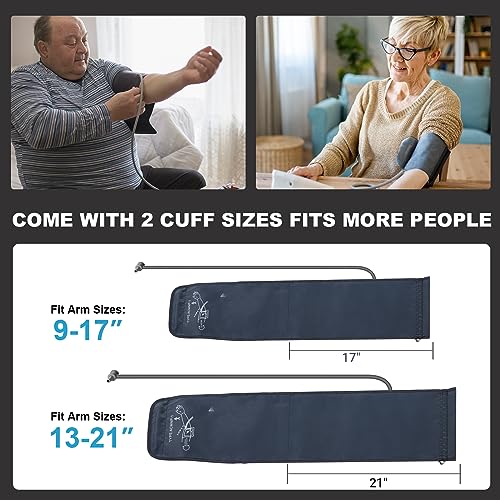
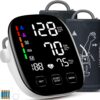
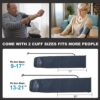
The COCACIS U80BH is an upper arm blood pressure monitor sold as a two cuff kit with a large backlit screen and deep two user memory. Its whole reason for existing is arm size. Where most monitors ship one cuff and hope it fits, this one ships a medium to large cuff for arms of 9 to 17 inches and an extra large cuff for arms of 13 to 21 inches, which between them reach further up the scale than almost anything else on this shelf.
That is a genuine problem worth solving. A cuff that is too small has to squeeze harder than it should and a cuff that is too large does not squeeze enough, and neither failure shows up as an error on the display. Silent failure is what makes cuff size the most consequential specification in the category.
Say the standing point plainly before going further: this review describes a device and its published specifications. It does not interpret readings, it does not tell anyone what their numbers mean, and a home blood pressure monitor does not replace professional medical care.
The Specifications That Matter
The two cuff ranges are published consistently in the title, the included components list and a bullet: 9 to 17 inches for the medium and large cuff, 13 to 21 inches for the extra large. That covers a very wide span, and the overlap between 13 and 17 inches is sensible rather than sloppy, because a buyer in that band can pick the cuff whose middle sits closer to their measurement. The structured band size field, by contrast, records only 21 inches, dropping every other number.
Measure the bare upper arm at the midpoint between shoulder and elbow, and choose the cuff whose range centers on that measurement rather than one whose extreme end merely reaches it. Buyers above 21 inches are outside this kit entirely and should look at a dedicated extra large cuff such as the Maymocon XXXL cuff paired with a compatible monitor.
Screen, memory and power
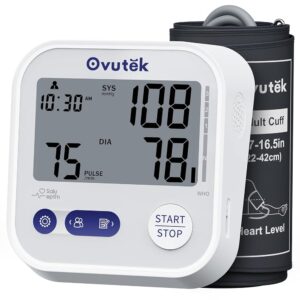
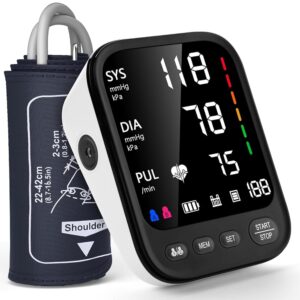
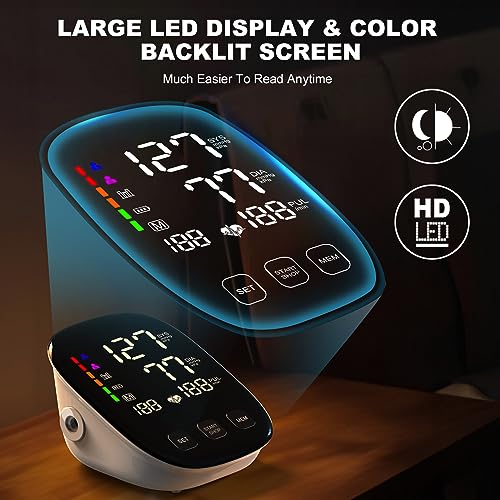
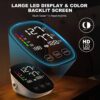
The screen is the other selling point: a 6 inch backlit display with oversized characters and large buttons, described in one bullet as a color screen and in the specification field simply as a large LED display. No digit height is published, so the actual character size has to be judged from photographs, but a 6 inch panel is unusually generous for a home monitor and is the strongest practical argument for this device.
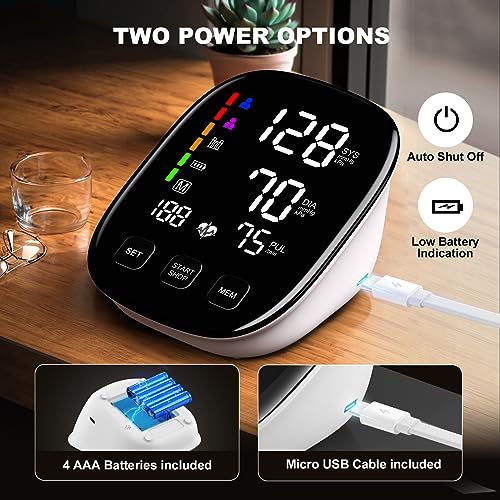
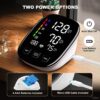
Memory is 199 readings for each of two users, which is deep. Power is dual: four AAA batteries, included, plus a USB Type-C cable, with the specification field recording the unit simply as battery powered. The box is listed as containing the monitor, both cuffs, a nylon carry bag, the Type-C cable, four AAA cells and a manual.
The Indicator Label Problem
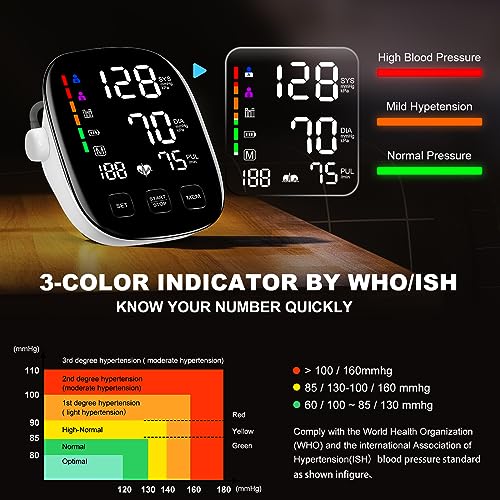
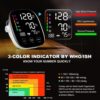
One bullet describes a three color reading indicator in the upper right corner of the display and labels the three bands, in order, as normal, mild hypotension, and high. Those labels do not form a coherent sequence. Hypotension and hypertension are different conditions, and a middle band carrying the hypotension label between a normal band and a high band does not fit the progression the rest of the sentence implies. Either the label is a translation error or the indicator is describing something other than what the color sequence suggests, and we are not going to resolve that on the seller’s behalf.
What can be said without ambiguity is this. A color band on a home monitor compares a measured value against a threshold stored in firmware. It does not diagnose, it does not screen for a condition, and the bullet’s promise that it helps you clearly know your health condition is the seller’s claim rather than a supportable one. Where a listing cannot label its own indicator consistently, the sensible response is to disregard the colors entirely, record the numbers, and let a clinician do the interpreting.
What Else the Listing Claims
The lead bullet states the monitor is based on clinical data tested in most hypertensive patients, with advanced intelligent chips and high sensitivity sensors delivering accurate readings. That is the manufacturer speaking. We do not test devices and we do not verify these claims. No accuracy figure, no tolerance, no validation protocol and no regulatory clearance appears anywhere in the data, and the phrase clinical data tested in most hypertensive patients does not describe a study anyone could look up. Validation status can be checked independently through the registries medical bodies maintain.
Using It Correctly
Choose the correct cuff first, then fit it to the bare upper arm rather than over a sleeve, with the tubing running down the inside of the arm toward the palm and the lower edge roughly an inch above the elbow crease. Close it so one finger slides underneath with mild resistance. Sit with the back supported and both feet flat, rest the arm so the cuff sits level with the heart, and stay silent and still through inflation and release.
Rest for several quiet minutes before the first reading rather than measuring straight after activity, and use the same arm and the same cuff at the same times each day. If two people in the household use different cuffs, note which cuff belongs to which log, because swapping cuffs mid record makes the entries hard to compare later. Assign the user slot before the first measurement.
Limits and Gaps in the Published Data
The description field is empty and the specification block is visibly damaged. The product dimensions field reads 1 by 2 by 2 inches at 1.54 pounds, which is physically impossible for a monitor with a 6 inch screen and cannot describe this product or its packaging. The included components field is worse: it contains raw JavaScript scraped from the retailer’s page alongside the actual component list, which is an import defect rather than anything to do with the hardware, but it means the field cannot be read as authoritative.
Nothing is published about the pressure or pulse measurement range, tolerance, averaging across readings, irregular heartbeat detection, battery life, or digit height. The manufacturer of record is Shenzhen Urion Technology, which supplies several brands in this catalog under the U80 model family, including the closely related AQESO U80BH and the two cuff AQESO U80B. Same factory, different brand names, overlapping specifications.
To restate the part that matters most: this device produces numbers. It does not diagnose anything, it does not replace professional medical care, and nothing in this review is advice about anyone’s condition or treatment.
Alternatives Worth Comparing
Buyers whose arms fall at the very top of the range should compare a dedicated large cuff such as the CareLiving XL cuff, which can be paired with a monitor whose performance data is better published. Those who want a single documented monitor and no kit should look at the Omron BP5100 Bronze. The full selection of monitors and cuffs sits in our blood pressure monitor category.
Who Should Buy It, Who Should Not
Buy it if your arm measures between 9 and 21 inches, a large screen and 199 readings per user matter to you, and you can treat the color indicator as decoration. Skip it if you need documented accuracy or validation, if a specification block containing impossible dimensions and stray page code undermines your confidence in the rest of it, or if you were relying on that three color indicator to mean something specific, because on this listing it does not even label itself consistently.