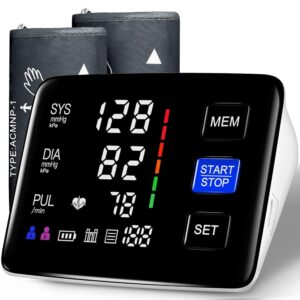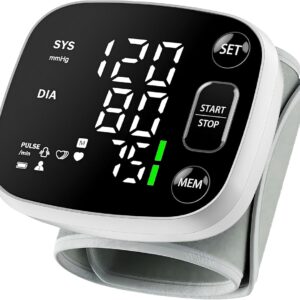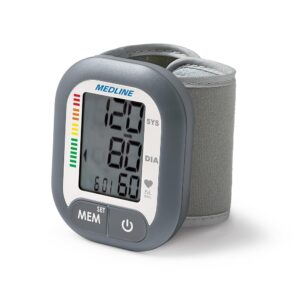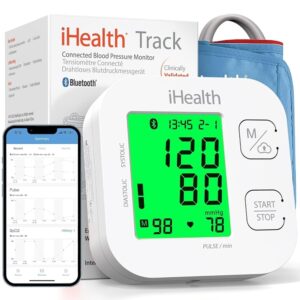

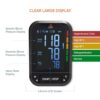
Description
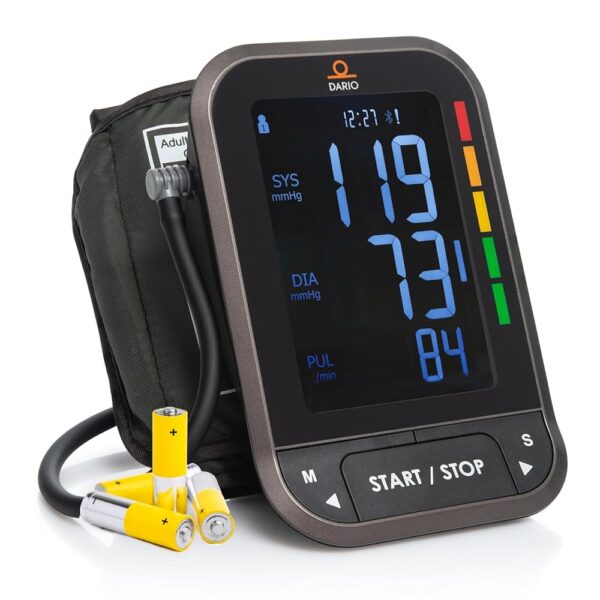
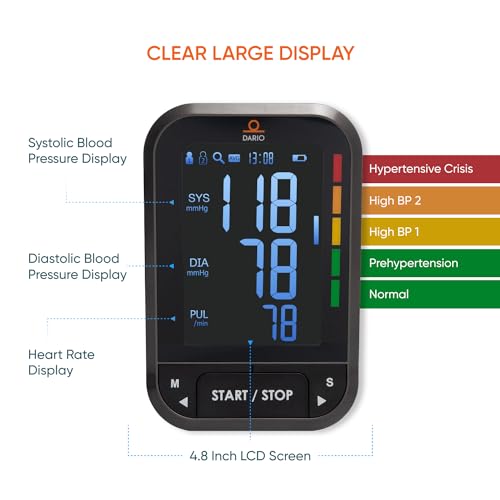
The Dario Gen2 blood pressure monitor, model DH-1217-05, is an upper arm device with Bluetooth to the Dario app and 400 timestamped readings in on device memory. That memory figure is the largest of any connected monitor in this catalog. This review describes it from the published listing data. It is not medical advice, it does not tell you what any reading means, and a home monitor does not replace professional medical care. Readings belong in a conversation with a clinician who knows your history.
Who this monitor is for and what it settles
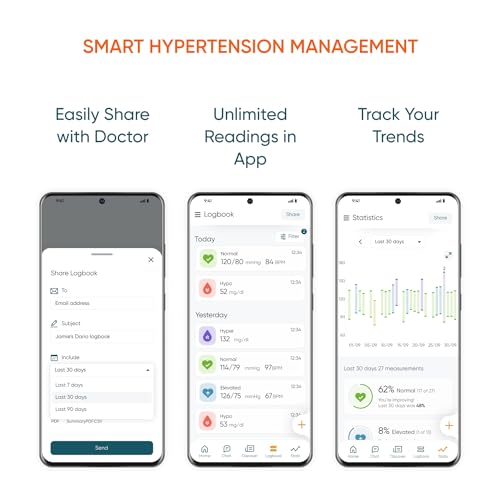
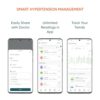
The Gen2 settles the usual trade between connected devices and standalone ones. Most Bluetooth monitors keep a small buffer on the device and push everything to the phone, which is fine until the phone is not there. Dario publishes 400 memory records with dates and times on the monitor itself, plus unlimited readings in the app, and a dual user mode that works on the device.
Four hundred dated readings is more than a year of once daily measurement. If the app is a convenience rather than a requirement for you, that is the specification that matters, and it puts this ahead of the OMRON Evolv BP7000, whose listing publishes no on device figure at all.
Note one limitation Dario states twice: there is no AC adapter and none is needed, so the device runs on batteries only. Published weight is 282 grams and dimensions are 7.63 by 5.13 by 3.13 inches.
The cuff range is published with a conversion error
Cuff fit determines whether a reading is worth recording, because a cuff too small or too large produces wrong numbers on a device that is working perfectly. Technique does not compensate for it.
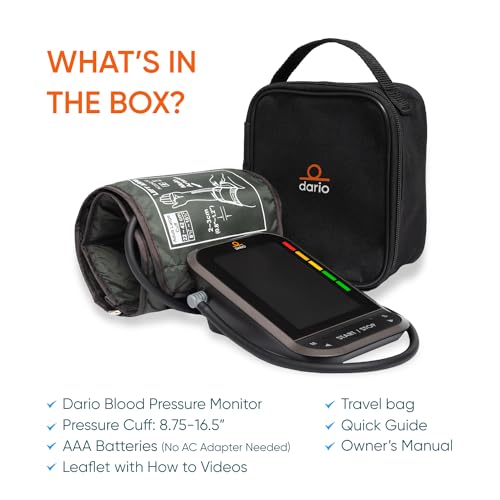
The product title gives the range as 8.75 to 16.5 inches, which is a sensible adult range covering standard and large upper arms. The structured band size field repeats that and then adds a metric equivalent of 22 to 24 centimeters, and the included components field repeats the same pairing.
That conversion is wrong. 8.75 to 16.5 inches is roughly 22 to 42 centimeters, not 22 to 24. Twenty four centimeters is about 9.4 inches, so as written the metric figure describes a cuff that would fit almost nobody the inch figure covers. Anyone shopping in centimeters, which includes most buyers outside the United States, would look at this listing and conclude the cuff is far too small for them.
Read the inch range as correct and the metric range as a typing error, and measure your upper arm at the midpoint between shoulder and elbow before ordering. If you want a listing where both units are published correctly in one field, the Greater Goods complete kit does exactly that.
Where it sits against other connected monitors
Among the connected devices in this catalog, the trade is usually between app features and standalone capability. The Garmin Index BPM offers separate accounts for up to sixteen people and PDF report export, but the device itself is a front end for those accounts. Dario goes the other way: a smaller app ecosystem and a monitor that keeps a year of dated readings whether or not you ever pair it. Which matters more depends entirely on whether you would use the app every day or forget it after a fortnight.
Using it correctly
Home readings are useful when the routine never changes. Sit with your back supported and feet flat on the floor, rest quietly for several minutes before starting, support the arm at roughly heart level, fit the cuff on bare skin rather than over a sleeve, and stay still and silent while the measurement runs. Take readings at the same times each day so they can be compared with one another. Follow the manual for the exact fitting the device expects, and follow any protocol your clinician has given you in preference to a general routine.
The device has a color coded blood pressure level indicator on the backlit screen. That is the device sorting a single reading into a fixed band. It knows nothing about your history, your medication, the time of day or how you were sitting, and it diagnoses nothing. This page will not tell you what any color or number means; if one concerns you, record it and take the record to a clinician.
The irregular heartbeat disclosure is the best in this catalog
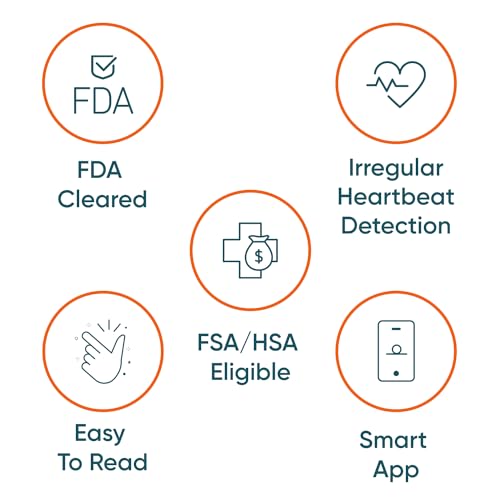
Most listings that advertise irregular heartbeat detection say so and stop, leaving the reader to decide how much weight to give it. Dario does something better. Its own bullet states that the device detects irregular heartbeat, and then adds, in the listing’s own words, that the device does not replace a cardiac examination but serves to detect pulse irregularities at an early stage.
That is exactly the right framing and it is the manufacturer’s own. A flag is not a finding. The device noticed something irregular in the pulse while measuring; it does not identify what, does not say whether it matters, and does not diagnose. If it appears, note it and raise it at an appointment. Several listings in the blood pressure monitor section would be improved by copying that sentence.
What the regulatory and accuracy claims say
The first bullet describes the device as highly accurate and states that it is FDA cleared and FSA and HSA eligible. Clearance means the agency reviewed a specific device before it was marketed, which is a real regulatory status rather than the registration wording used on several competing listings. It remains a manufacturer statement on a product page, and the FDA maintains its own databases where a reader can check it directly.
What the listing does not do is name a validation protocol or cite an independent validation body. Independent validation programs publish their own device listings and a reader can look the model up there. We do not test devices and we will not describe any monitor as accurate, clinically accurate or medical grade in our own voice.
Feedback is recorded at 4.3 out of 5 across 860 ratings, which measures buyer satisfaction rather than measurement performance. The manufacturer field reads Guangdong Transtek Medical Electronics rather than Dario; Transtek builds monitors for a number of brands, so the hardware may appear elsewhere under other names. Country of origin is given as China. No warranty term is published, though a warranty card is listed among the box contents.
The battery fields do not agree
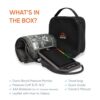
The structured batteries field reads “4 AA batteries required, included”. The included components field on the same listing reads “4 Alkaline AAA Batteries”. AA and AAA are different sizes and one of those is wrong. On a device with no mains option, batteries are the only power source and you will be replacing them, so check the compartment before buying a pack.
Who should buy it and who should not
Buy it if you want a very large dated history on the device itself as well as in an app, two profiles, and a manufacturer that describes its own irregular heartbeat feature honestly. Do not buy it if you need mains power, if you shop in centimeters and cannot get the cuff range confirmed, or if you need a named validation protocol. Further options sit in the mixed shortlist section alongside unrelated pressure products.