


Description
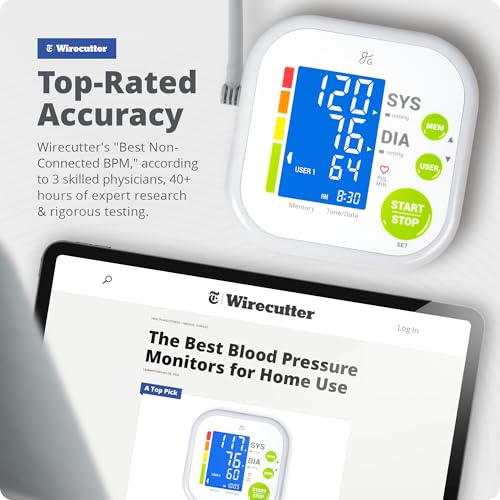
The Greater Goods blood pressure monitor complete kit is an upper arm device sold with a wall adapter, batteries, a comfort cuff and a travel case. It publishes its cuff range better than any other listing in this catalog, and it tells buyers something about fit that most sellers leave out. This review describes it from the published listing data. It is not medical advice, it does not tell you what any reading means, and a home monitor does not replace professional medical care. Readings belong in a conversation with a clinician who knows your history.
The cuff information here is the best in this catalog
Cuff fit determines whether a reading is worth recording, because a cuff too small or too large produces wrong numbers on a device that is working perfectly. It is a measurement problem, not a comfort problem, and most listings treat it as an afterthought.
Greater Goods does not. The structured band size field reads “8.75-16.5 in, 22-42cm”, giving both ends in both units in a single field, which no other listing in the blood pressure monitor section manages. And a whole feature bullet is given over to the question, headed “Will the cuff fit you?”, asking the buyer to measure their arm circumference, repeating the range, and adding a sentence that deserves quoting: the fit will affect the accuracy of this product.
That is a manufacturer telling prospective buyers, on the sales page, that a badly fitting cuff produces bad readings. It is the single most useful sentence any seller in this catalog has written, and it is the reason this device is worth taking seriously regardless of what else it does. Measure your upper arm at the midpoint between shoulder and elbow before ordering.
Who this monitor is for and what it settles
The kit settles the question of what else you will need to buy, by including it. The stated contents are the monitor, the automated cuff, batteries, a wall plug and a travel case. A mains adapter in the box is unusual at this price and means the device can live plugged in beside a chair rather than eating batteries.
Greater Goods also states plainly that this model does not have Bluetooth, in capital letters in its own feature bullet. That is honest labeling rather than a limitation buried in a specification table, and it makes the choice easy: if you want app syncing, the brand’s Bluetooth model is a separate product listed here.
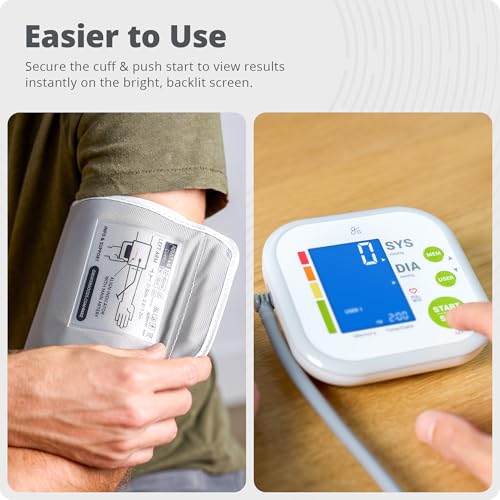
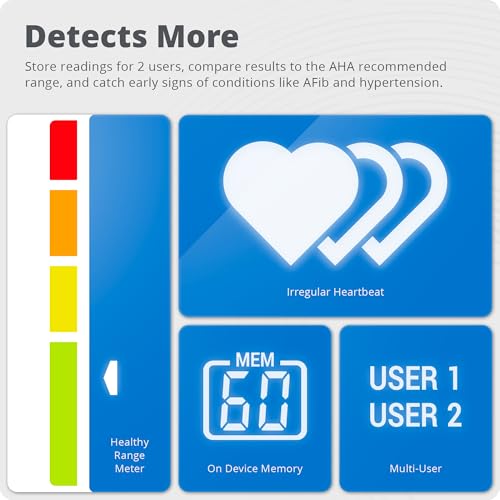
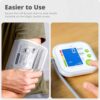
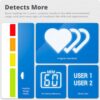
The published features are an irregular heartbeat sensor, a healthy range indicator, multi user memory, a bright backlit screen and a large start and stop button. Published weight is 11.2 ounces and dimensions are 7.25 by 5.25 by 3.25 inches. The company describes the product as designed in St. Louis. Feedback is recorded at 4.4 out of 5 across 28,063 ratings, one of the largest samples here, which measures buyer satisfaction rather than measurement performance.
What the memory specification does not say
The listing describes multi user memory without stating how many users it supports or how many readings it holds for each. On a device with no Bluetooth and no app, the on device memory is your entire record, so this is a real gap rather than a detail. Ask Greater Goods before buying if you intend to keep a history rather than write readings down. For comparison, the Greater Goods 0663 is another device from the same brand worth checking field by field.
Using it correctly
Home readings are useful when the routine never changes. Sit with your back supported and feet flat on the floor, rest quietly for several minutes before starting, support the arm at roughly heart level, fit the cuff on bare skin rather than over a sleeve, and stay still and silent while the measurement runs. Take readings at the same times each day so they can be compared with one another. Follow the manual for the exact fitting the device expects, and follow any protocol your clinician has given you in preference to a general routine.
Two features report rather than interpret. The irregular heartbeat sensor flags that the device detected an irregularity in the pulse while measuring; it does not identify what it was, whether it matters, or what to do, and it diagnoses nothing. The healthy range indicator sorts a single reading into a fixed band, knowing nothing about your history, your medication, the time of day or how you were sitting. Neither is a diagnosis and neither is a reason to change what you are doing. This page will not tell you what any indicator or number means; if a reading concerns you, record it and take the record to a clinician.
What the accuracy claims actually say
The listing’s own accuracy language is marketing rather than evidence. It describes the product as a top choice among top rated machines, as setting the standard for blood pressure monitors, and as one of the best electric monitors for home use. Those are unverifiable superlatives and they should carry no weight in your decision.
What the listing does not contain is any validation claim at all: no protocol is named, no independent validation body is cited, and there is no statement about FDA clearance or registration. No warranty term is published either. Compare that with the iHealth Track, which names the ESH 2010 protocol. Naming a protocol lets a reader check the claim.
There is a slight irony here. The same listing that gives the most responsible advice in this catalog about cuff fit affecting accuracy publishes nothing at all about how the device’s accuracy was assessed. If validation status matters to your decision, the device listings published by validation programs and the FDA’s own databases are the places to look rather than a product page. We do not test devices and we will not describe any monitor as accurate, clinically accurate or medical grade in our own voice.
One further gap: the “use for” field, which on most listings here records arm or wrist, is missing entirely. The product is an upper arm device on the evidence of its cuff range and its own description, but a shopper filtering the specification table would not see it.
Who should buy it and who should not
Buy it if you want a complete kit with a mains adapter and a case, a well documented cuff range, and a very large feedback history, and if you have measured your arm as the listing asks. Do not buy it if you want Bluetooth, which Greater Goods says plainly it does not have, or if you need a published memory capacity or validation protocol before purchase. Further options sit in the mixed shortlist section alongside unrelated pressure products.