Description
Who This Monitor Is For and What It Settles
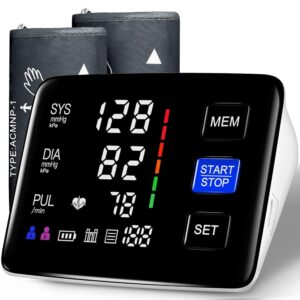
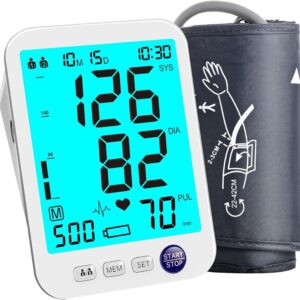
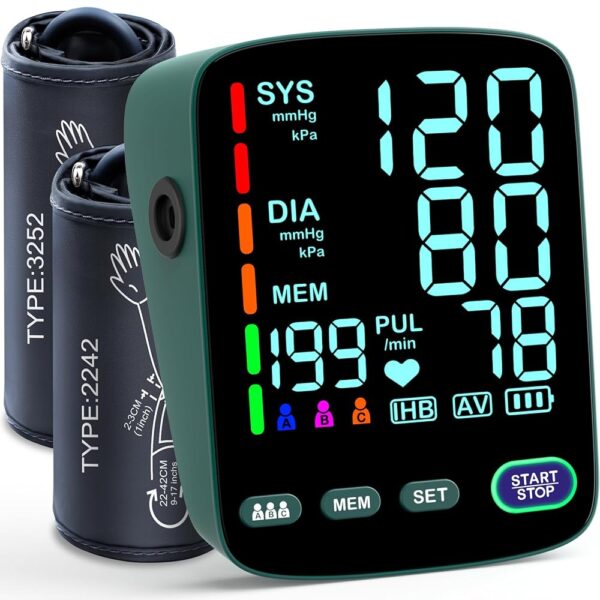
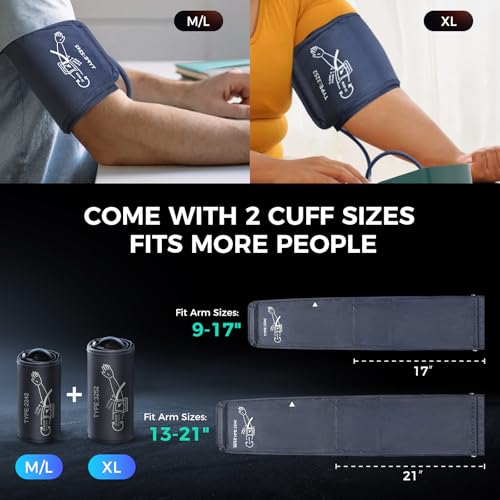
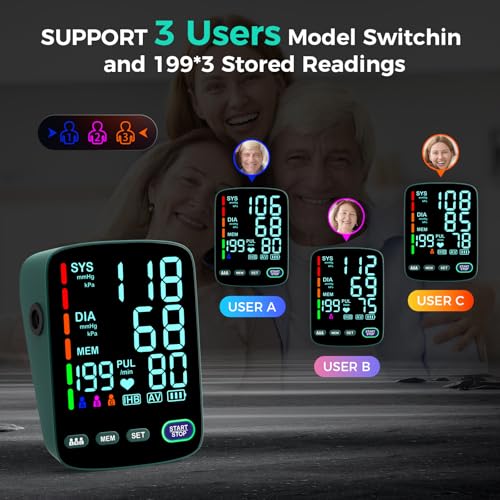
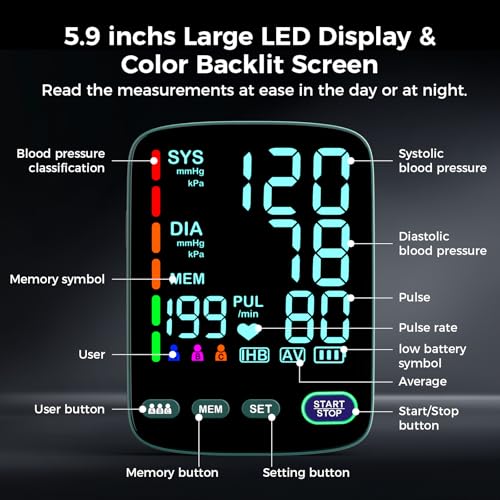
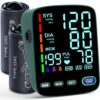
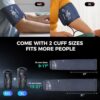
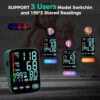
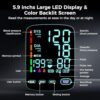
The FIYES A02-E is an upper arm blood pressure monitor sold as a two cuff kit with a very large screen and three user banks. The standard cuff covers arms of 9 to 17 inches and the extra large covers 13 to 21 inches, the display is described as a 5.9 inch backlit LED panel, and memory holds 199 readings for each of three users.
That combination is aimed at a multi-generation household where arm sizes differ and eyesight differs too. Cuff coverage is the part that matters most: a cuff that is too small squeezes harder than it should, one that is too large does not squeeze enough, and neither failure shows on the display as an error. Silent failure is why cuff size outranks everything else here, and the listing itself says as much in its closing note. Before going further: this review describes a device and its published specifications, it does not interpret readings, and a home blood pressure monitor does not replace professional medical care.
The Specifications That Matter
Both cuff ranges are published consistently in the product title, the bullets and the included components list. The overlap between 13 and 17 inches is useful rather than careless, because a buyer in that band can pick the cuff whose middle sits closer to their measurement rather than one whose extreme end merely reaches it. There is no structured band size field at all, so the bullets and the title are doing all the work.
Measure the bare upper arm at the midpoint between shoulder and elbow before ordering and choose on that figure. Buyers above 21 inches fall outside the kit and should pair a documented oversized cuff such as the CareLiving XL cuff with a compatible monitor.
The listing closes with a note that deserves credit: it states plainly that incorrect measurement technique and a cuff that is the wrong size for your arm circumference can affect results, and asks the buyer to read the manual before first use. That is a more honest sentence than most listings in this category manage anywhere on the page.
Screen, memory and power
The 5.9 inch backlit LED display with oversized numbers and large buttons is the standout feature. No digit height is published, so the character size has to be judged from photographs, but a panel that size is well beyond the norm for a home monitor.
Memory is 199 readings for each of three users, recalled with a dedicated button, and the device also calculates an average of the last three measurements. Three banks plus averaging is a genuinely strong combination for a shared household, since averaging smooths the scatter that single readings always show.
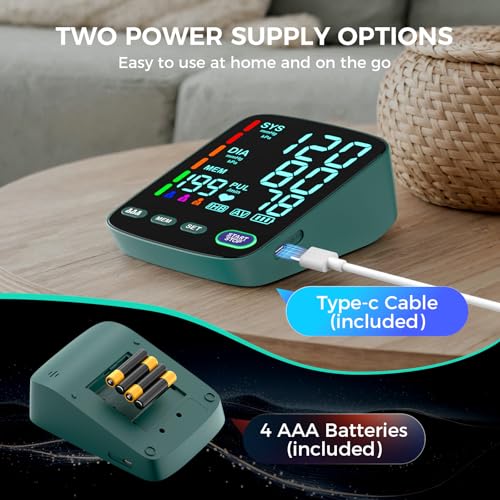
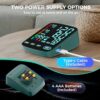
Power is four AAA batteries or a Type-C cable, with the listing noting that an AC adapter is not included. The power source field records the device simply as battery powered. The box includes the monitor, both cuffs, four AAA cells, the USB cable, a nylon carry bag and a manual.
The Six Color Scale and the Accuracy Claim
The lead bullet says the monitor is built with the maker’s latest smart chip and advanced algorithms, that each unit is individually calibrated to ensure accuracy the seller calls unparalleled, and that six colors of pressure levels make the user’s measurement status clear.
All of that is the manufacturer speaking and none of it is ours. We do not test devices and we do not verify manufacturer claims. No accuracy figure, no tolerance, no validation protocol and no regulatory clearance appears anywhere in the data, and a claim of individual calibration implies a per-unit process that a bullet point cannot demonstrate. A superlative about accuracy with nothing behind it is a selling phrase rather than a specification.
The color scale needs separating out, and the number of bands makes it worth naming: six colors is more granularity than most competing devices offer, which makes it look more informative than it is. A color scale on a home monitor compares a measured value against thresholds stored in firmware. It does not diagnose, it knows nothing about the person being measured, and this review does not tell anyone what any band means. Record the numbers, disregard the colors, and take the log to a clinician.
Using It Correctly
Choose the correct cuff first, then fit it to the bare upper arm rather than over a sleeve, with the tubing running down the inside of the arm toward the palm and the lower edge roughly an inch above the elbow crease, closed so one finger slides underneath with mild resistance. Sit with the back supported and both feet flat on the floor, rest the arm so the cuff sits level with the heart, and stay silent and still through inflation and release.
Rest for several quiet minutes before the first reading rather than measuring straight after activity, and use the same arm and the same cuff at the same times each day. Assign the user slot before the first measurement, and if three people are using two cuffs between them, note which cuff belongs to which log so the record stays comparable later.
Limits and Data Quality
The description field is empty, so seven bullets and a specification table carry everything. Nothing is published about the pressure or pulse measurement range, tolerance, irregular heartbeat detection, digit height or battery life.
Two fields are unusable. The product dimensions read 1 by 2 by 1 inch at 1.39 pounds, which cannot describe a device carrying a 5.9 inch screen, its packaging, or anything else on this page. The included components field is corrupted with raw JavaScript scraped from the retailer’s page ahead of the actual list. Both are import defects rather than hardware faults, but they mean neither field can be treated as authoritative.
The manufacturer of record is ShenZhen GoodlyMed Technology, which is not the brand on the box. Buyers comparing two cuff and three cuff kits should look at the COCACIS U80BH, which pairs the same 9 to 21 inch coverage with a six inch screen, and the AQESO U87E and AQESO U80B three cuff kit, both of which add a small cuff below 9 inches.
The point that outranks the rest: this device produces numbers and colors them. It does not diagnose, it does not replace professional medical care, and nothing in this review is guidance about anyone’s health. The full selection sits in our blood pressure monitor category.
Who Should Buy It, Who Should Not
Buy it if arms in the household run from 9 to 21 inches, three separate user banks with 199 readings each is what you need, and a very large screen is the deciding feature. Skip it if anyone needs a cuff below 9 inches, if you need documented accuracy or validation, if you were persuaded by the claim of unparalleled accuracy, or if you expected the six color scale to tell you something it cannot.