



Description
Who This Monitor Is For and What It Settles
The HOLFENRY U80B is an upper arm blood pressure monitor with a backlit display, 198 stored readings across two users and a one handed cuff that inflates automatically. It is aimed at someone measuring alone, and the listing makes a fair point about that: a cuff you can fit and start without help is the difference between a device that gets used daily and one that sits in a drawer.
Before the specifications, the standing statement. This review describes a device and its published data. It does not interpret readings, it does not tell anyone what their numbers mean, and a home blood pressure monitor does not replace professional medical care.
The Cuff Figure Is Ambiguous, and That Matters
Cuff sizing is the single most consequential thing on a blood pressure monitor page, because a cuff that is too small or too large produces wrong readings on hardware that is working perfectly, and nothing on the display warns you. On this listing the figure is genuinely ambiguous, and it is worth setting out exactly why.
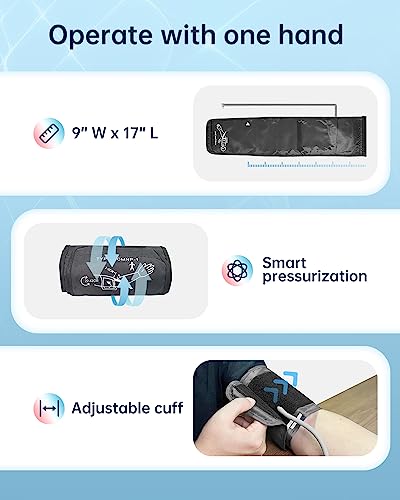
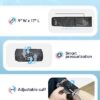
The product title advertises a 9 to 17 inch blood pressure cuff, which reads as an arm circumference range. The relevant bullet, however, describes the cuff as 9 inches wide by 17 inches long, which is a physical measurement of the sleeve rather than a range of arms it fits. The structured band size field then records simply 17 inches, a single number. A 9 to 17 inch circumference range and a 9 by 17 inch piece of fabric are different claims, and a cuff 17 inches long does not wrap a 17 inch arm.
Do not buy this on the title alone. Measure the bare upper arm at the midpoint between shoulder and elbow, then ask the seller for the arm circumference range in centimeters, in writing. If that answer does not come, buy a monitor that publishes the figure unambiguously, or start from a documented cuff and work back to a compatible unit.
What Is Actually Documented
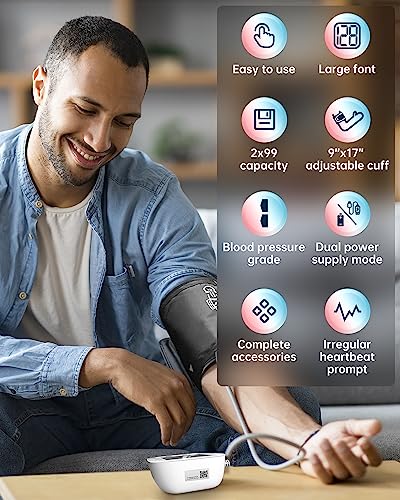
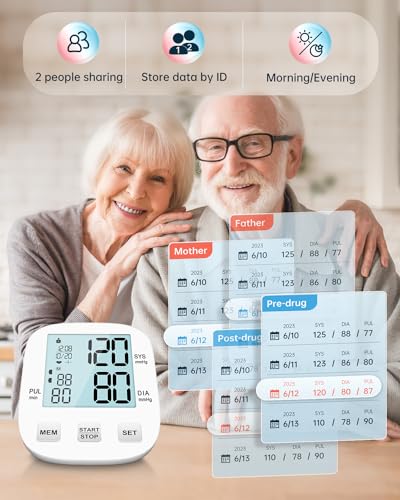
Memory is 99 readings for each of two users, 198 in total, and the listing makes a practical suggestion about it: rather than two people, one person can use the two banks to separate morning from evening, or before and after taking medication. That is a sensible use of the hardware. What any resulting comparison means is a question for a clinician and not for this page.
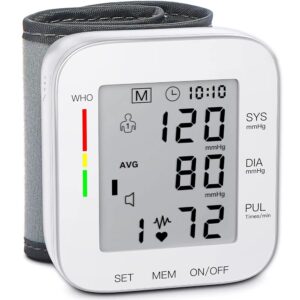
The display is backlit and described as large character with an HD panel, with an unusual specification attached: the listing states the best viewing angle is 25 degrees, and claims the font stays visible under light without reflecting. A 25 degree optimum is narrow, so screen position on a table will matter more than on a monitor with a wider viewing cone. No digit height is published.
The cuff inflates automatically and can be operated one handed, which is the feature most relevant to anyone measuring without help. The unit measures 6.5 by 4.53 by 3.35 inches at 15.87 ounces, matching the 0.45 kilogram figure elsewhere in the record, so at least the weight fields agree.
The battery contradiction
The specification block says two AAA batteries are required and included. The packing bullet says four AAA batteries are in the box. Two cells and four cells are not the same device, and nothing reconciles them. No battery life is published either. Confirm before ordering, particularly if you plan to keep spares.
The 1 to 6 Grade Scale
One bullet needs naming directly rather than summarizing. The listing says the monitor divides values into six grades, that a lower grade is better, and that this removes the need to laboriously check the range of a blood pressure reading after measuring it.
That is the seller’s framing and we do not adopt it. A grading scale on a home monitor compares a measured value against thresholds stored in firmware. It does not diagnose, it does not know anything about the person being measured, and it is not a substitute for checking anything with a clinician. The claim that it removes the need to check is the part that goes furthest, because the whole value of a home log is that someone qualified looks at it. This review does not tell anyone what any grade means, and nobody should treat a number on a screen as a verdict.
The practical response is straightforward. Record the systolic figure, the diastolic figure and the pulse. Ignore the grade. Take the log to a clinician.
What the Listing Claims About Accuracy
The product title describes this as an accurate upper arm automatic digital machine. That is the seller’s word and not ours. We do not test devices. No accuracy figure, no tolerance, no validation protocol and no regulatory clearance appears anywhere in the listing data. Validation status for home monitors can be checked independently through the registries medical bodies maintain, and that check is worth doing before purchase rather than after.
Using It Correctly
Fit the cuff to the bare upper arm rather than over a sleeve, with the tubing running down the inside of the arm toward the palm and the lower edge roughly an inch above the elbow crease, closed so one finger slides underneath with mild resistance. Sit with the back supported and both feet flat on the floor, rest the arm so the cuff sits level with the heart, and stay silent and still through inflation and release.
Rest for several quiet minutes before the first reading rather than measuring straight after activity, and use the same arm at the same times each day. Decide up front how the two memory banks are being used, whether as two people or as two times of day, and stick to it, because a log that mixes both is a log nobody can read later.
Limits and the Wider Model Family
The description field is empty, so five bullets and a specification table carry everything. Nothing is published about the pressure or pulse measurement range, tolerance, irregular heartbeat detection, averaging across readings, or digit height.
The manufacturer of record is Shenzhen Urion Technology, and the U80B model designation appears on a number of pages in this catalog under different brand names, including the two cuff AQESO U80B, the Elera U80B, the Livaroci U80B and the HealthTree U80B. One factory serving many brands means the specifications on one page should never be assumed to hold on another, and in this family they frequently do not.
The point that outranks all of it: this device produces numbers and grades them. It does not diagnose, it does not replace professional medical care, and nothing in this review is guidance about anyone’s health or treatment.
Alternatives Worth Comparing
Anyone who values the one handed cuff should compare monitors that publish an unambiguous circumference range alongside it, because ease of fitting is worth nothing if the cuff is the wrong size. The wider selection of upper arm monitors and replacement cuffs sits in our blood pressure monitor category.
Who Should Buy It, Who Should Not
Buy it only after the seller has confirmed the arm circumference range in plain terms, and if a one handed cuff and 198 stored readings across two banks are what you need. Skip it if you are buying on a figure that could describe either an arm range or a piece of fabric, if the two versus four battery question needs settling first, if you need documented accuracy or validation, or if you were counting on the grading scale to tell you something, because it cannot.