

Description
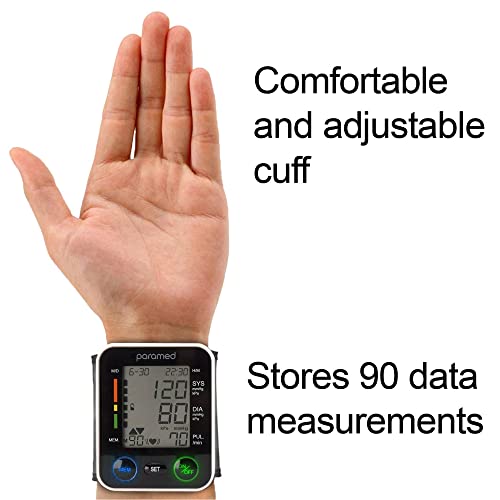
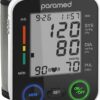
The PARAMED automatic wrist blood pressure monitor is a compact device with a large LCD, an irregular heartbeat detector and 90 readings in memory. Its listing contains the best measurement guidance of any product on this site and some of the worst specification data. This review describes it from the published listing. It is not medical advice, it does not tell you what any reading means, and a home monitor does not replace professional medical care. Readings belong in a conversation with a clinician who knows your history.
Wrist monitors and upper arm monitors are not interchangeable
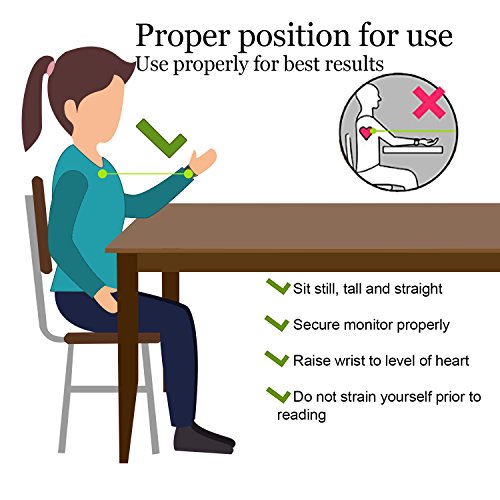
This is a wrist device and that governs the rest of the decision. Positioning matters far more on the wrist than on the upper arm: the wrist must be held at the correct height relative to the heart during the measurement, and small differences in how the arm is supported change the numbers. Upper arm devices are the usual recommendation for home blood pressure monitoring, and a wrist device is not a compact version of the same instrument.
There are real reasons to choose one, including easier one handed fitting and no sleeve to roll up. That choice is one to make with your clinician rather than on convenience alone. If an upper arm device suits you, Paramed’s own automatic upper arm monitor is listed here, and the wider blood pressure monitor section covers the alternatives.
The measurement guidance on this listing is worth reading twice
Three of the five feature bullets on this page are not features at all. They are instructions, and they are better instructions than any other seller in this catalog provides.
Paramed tells you not to take measurements after bathing, drinking alcohol, smoking, exercising or eating, and to empty your bladder first. It tells you to sit in a chair with your back supported. It tells you not to use devices that emit electromagnetic fields near the unit. It tells you to leave at least two minutes between repeated measurements. And it closes by telling you to follow the instructions carefully in order to get accurate measurements.
Every one of those affects the number the device produces. A seller who puts them on the sales page, in place of marketing copy, is telling you something true about home monitoring: the technique is not a minor variable, it is the main one. Add the wrist specific points to that list, namely fitting the cuff against bare skin rather than over a sleeve or watch strap, and supporting the arm so the device sits at roughly heart level rather than letting it hang. And measure at the same times each day so the readings can be compared with one another.
The cuff range, and where the listing publishes it
Cuff fit determines whether a reading is worth recording, because a cuff outside its intended range produces wrong numbers on a device that is working perfectly.
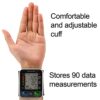
A feature bullet states the cuff comes in a universal size of 5.3 to 7.6 inches. The structured band size field reads only “7.6 inches”, giving the maximum with no minimum. Work from the bullet and measure around your wrist just below the hand before ordering. Note that 7.6 inches is a low upper bound even for a wrist cuff; several competing devices reach 8.5 inches.
The specification block on this listing is unreliable
Three problems, in ascending order of seriousness.
The specification keys have been corrupted during import. Field names arrive with stray text direction control characters embedded in them, which is a scraping artifact rather than anything Paramed wrote.
The product dimensions field reads 3.94 by 3.94 by 3.94 inches, a perfect cube. No wrist monitor is a cube. The same value appears on unrelated listings in this catalog, so it is an unpopulated default.
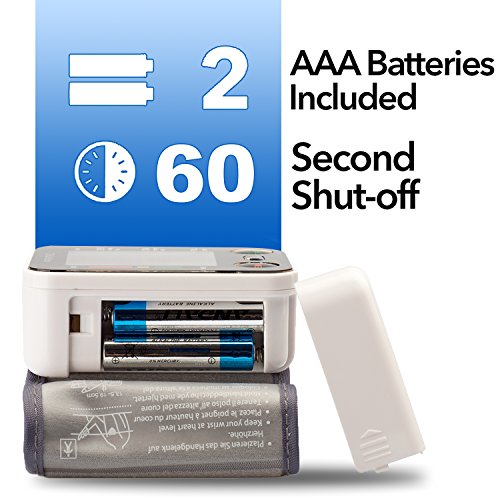
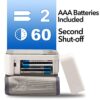
The battery information is wrong in two directions at once. The structured batteries field says one AA battery is required. The product title says two AAA, and a feature bullet says two AAA batteries are included. AA and AAA are different sizes and one battery is not two. Go by the title and the bullet, and check the compartment on arrival.
The model number field also contains a string that is plainly not a model number and has nothing to do with this product or any medical device. It appears to be contamination from an unrelated listing. Ignore that field entirely; there is no usable model number for this device, so identify it by its title if you need to contact the seller.
Using it correctly, and what the alerts mean
Follow the guidance the seller published, summarized above, and follow any protocol your clinician has given you in preference to a general routine.
The irregular heartbeat detector alerts you when the device detects an irregularity in the pulse while measuring. That is a flag for a clinician to assess. It does not identify what the irregularity is, whether it matters, or what to do about it, and it diagnoses nothing. If it appears, note it and raise it at an appointment. This page will not tell you what any reading or alert means.
What the accuracy claims actually say
The listing describes the large display as allowing for the most accurate readings, which is a claim about legibility dressed up as a claim about accuracy. Beyond that, no validation protocol is named, no independent validation body is cited, and there is no statement about FDA clearance or registration. No warranty term is published.
Compare that with the iHealth Track, which names the ESH 2010 protocol. Naming a protocol lets a reader check the claim. If validation status matters to your decision, the device listings published by validation programs and the FDA’s own databases are the places to look rather than a product page. We do not test devices and we will not describe any monitor as accurate, clinically accurate or medical grade in our own voice.
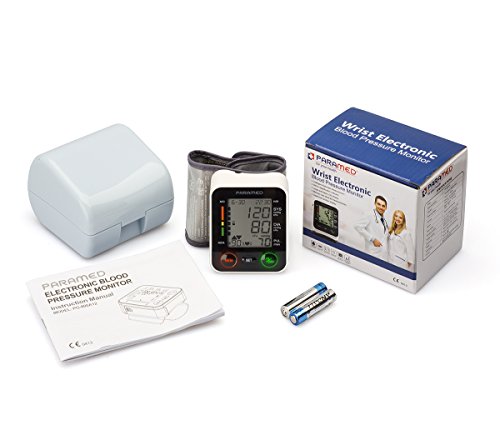
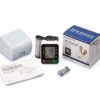
Feedback is recorded at 4.2 out of 5 across 24,823 ratings, a large sample that measures buyer satisfaction rather than measurement performance. A carrying case, manual and quick start guide are included, and published weight is eight ounces.
Who should buy it and who should not
Buy it if a wrist device is right for your circumstances, your wrist measures between 5.3 and 7.6 inches, and you will actually follow the measurement guidance the seller took the trouble to publish. Do not buy it as a substitute for an upper arm monitor, do not rely on the specification block for anything, and do not buy it if a published validation protocol matters to you. It sits in the mixed shortlist section rather than the main monitor listing, alongside Paramed’s manual aneroid cuff.