Description
Who This Monitor Is For and What It Settles
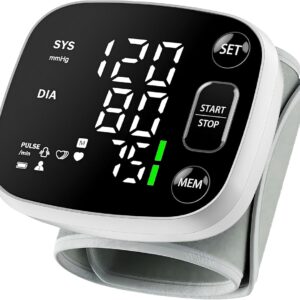
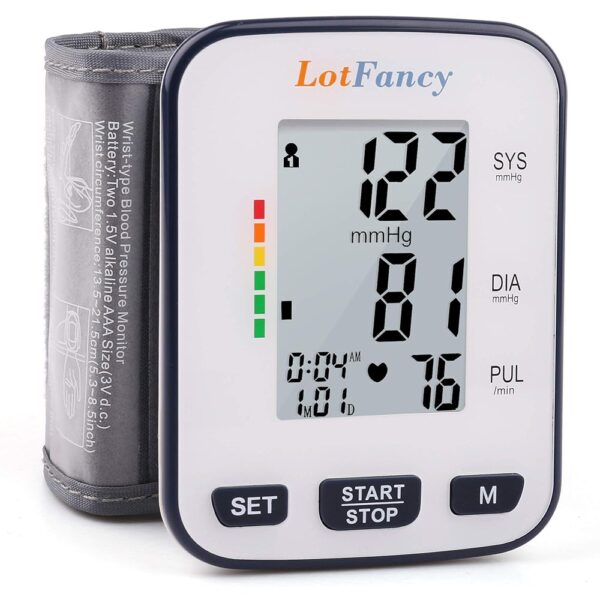
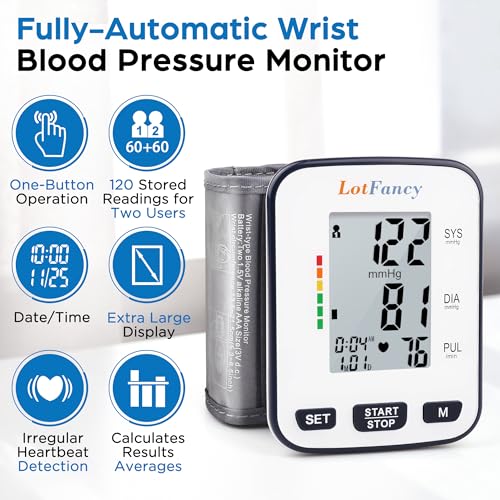
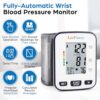
The LotFancy DBP-2141 is a wrist blood pressure monitor with a large LCD, 120 stored readings with date and time stamps, an automatic average of the last three records, and a hard case. It is compact at 4.23 ounces and it is sold on portability.
The form factor is the first thing to settle, and it deserves to be said plainly. Wrist monitors are not equivalent to upper arm monitors. On the wrist, the angle of the joint and the height of the device relative to the heart both change the result, so positioning carries far more weight than it does on the arm, and upper arm devices remain the usual recommendation for home monitoring. A documented arm unit is the honest comparison before choosing a wrist device for convenience alone. This review describes a device and its published data; it does not interpret readings, and a home monitor does not replace professional medical care.
The Specifications That Matter
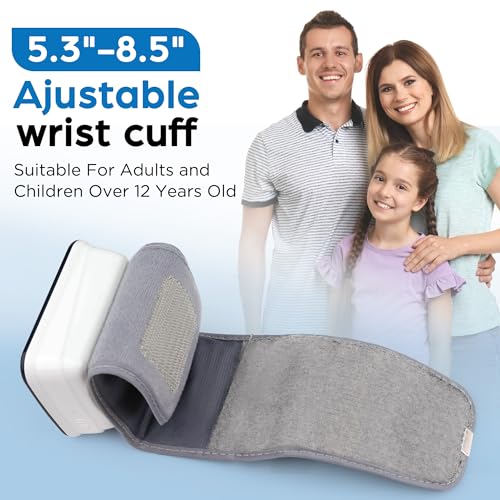
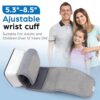
The wrist range is published clearly and consistently, in the product title, in the band size field and in a bullet: 5.3 to 8.5 inches, given as 13.5 to 21.5 cm. That upper figure is generous for a wrist device, where most competitors stop around 7.6 or 7.7 inches, so if a standard wrist monitor has not closed comfortably for you this one reaches further.
Measure around the bare wrist just above the wrist bone before ordering. The cuff is described as pre-formed, meaning it holds its shape rather than lying flat, which is what makes it manageable one handed. A wrist strap that closes loosely will not seal against the skin, and the display gives no warning when that happens.
Memory, averaging and timing
Memory holds 120 readings with date and time stamps, and the device automatically displays an average of the last three consecutive records. Averaging is the most useful feature on any home monitor, because single readings scatter and a short series is a steadier record than any one measurement in it. A reading completes in under 45 seconds with one button, and inflation and deflation are both automatic.
The listing describes a single memory set rather than separate user banks, so treat this as a one person device. If two people need separate records, this is the wrong purchase.
The battery question
The power source field says battery powered, but the first bullet ends with the words no battery included, and the package contents bullet lists only the monitor, a plastic carrying case and a user manual. So the device runs on cells you have to supply, and the listing never says what type or how many. Buy the batteries at the same time, and confirm the type with the seller, because arriving with a monitor you cannot switch on is an avoidable annoyance.
The Claims That Need Naming
Two statements in the bullets go further than the data behind them.
The first says the kit is validated to detect high blood pressure and irregular heartbeat at home. Validated is a specific word in this category and it carries a specific meaning: an independent assessment against a named protocol. No protocol is named here, no test body is identified, no accuracy figure or tolerance is given, and no clearance reference appears anywhere in the listing data. We do not test devices and we do not verify manufacturer claims. Validation status for home monitors can be checked through the independent registries medical bodies maintain, and on a wrist device that check matters more, not less, because the wrist adds a positioning variable on top of whatever the hardware does.
The second says the memory function is ideal for someone with hypertension or arrhythmia to track their health status. That is a condition-specific claim and it is the manufacturer’s, not ours. Nothing in the listing cites an indication document or any evidence for it. Whether to monitor at home, how often, and with what device, are questions for a person’s clinician. An irregular heartbeat indicator, where present, flags that the device saw an irregularity during a measurement; it does not identify what the irregularity is and it does not diagnose anything.
Using It Correctly
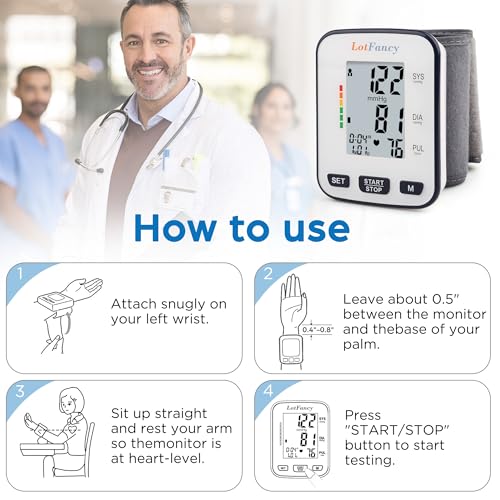
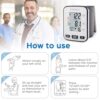
Rest the forearm on a table, sit with the back supported and both feet flat on the floor, and raise the wrist so the device sits level with the heart, supporting the elbow as the manual directs. Keep the wrist straight rather than bent, keep the device against bare skin with the sleeve pushed clear, and stay silent and still through the measurement.
Rest for several quiet minutes before the first reading rather than measuring straight after moving around, and use the same wrist at the same times each day so the record compares with itself. Because the device averages the last three readings, taking three in a short sitting and letting it compute is more useful than reading a single figure and stopping.
Limits and Data Oddities
Two fields contradict the rest of the listing. The use-for field says arm, on a device that every other part of the page describes as a wrist monitor. And the item model number is given as DBP-2141 while the model name field says BSP-21. Two different designations on one product make the device harder to research independently or match to a manual, and the use-for error is the kind that leads someone to buy the wrong form factor.
Nothing is published about the pressure or pulse measurement range, tolerance, digit height, or battery life. The description field is empty, so five bullets and a specification table carry everything. The manufacturer of record is JOYTECH Healthcare, which also stands behind the VOLUETH JPD-HA210 in this catalog under a different brand name. LotFancy itself appears here with an upper arm model, the LotFancy BD25366, if the wrist is not the form factor you want.
The point that outranks the rest: this device produces numbers and averages them. It does not diagnose, it does not replace professional medical care, and nothing in this review is guidance about anyone’s health.
Alternatives Worth Comparing
Among wrist options here, the Care Touch digital wrist monitor and the SureLife WRS-35H are worth weighing on wrist range and memory depth. The full shelf, arm and wrist together, sits in our blood pressure monitor category.
Who Should Buy It, Who Should Not
Buy it if your wrist measures inside 5.3 to 8.5 inches, one person will use it, and an automatic three reading average with 120 stored records suits your record keeping. Skip it if you can use an upper arm cuff, if two people need separate banks, if you need a validation protocol rather than the word validated, or if arriving without batteries and without a stated battery type is a poor start to a purchase.