Description
What this product is, and a labeling problem that has to come first
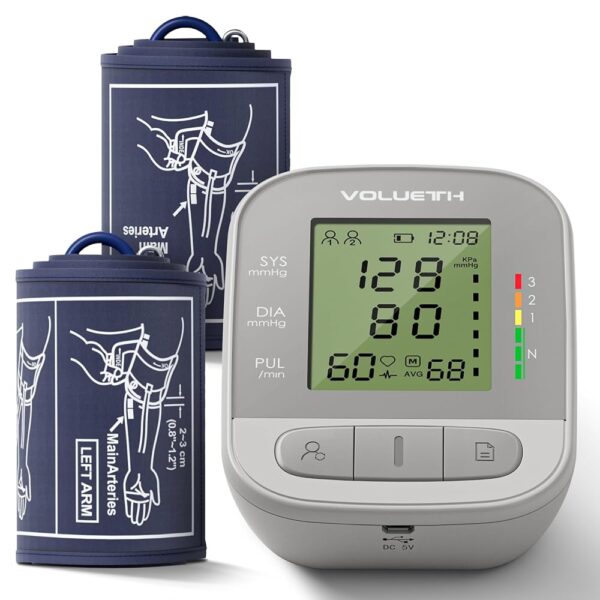
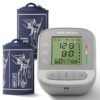
This is an upper arm automatic blood pressure monitor supplied with two cuffs, marketed for use on both children and adults. It records numbers for a clinician to review. It is not a diagnostic device and it does not replace professional medical care.
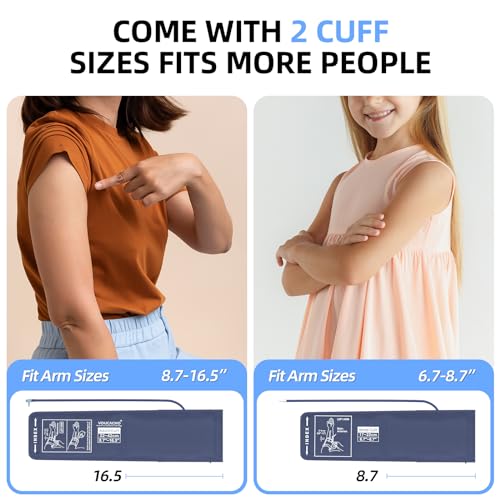
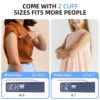
The cuff labeling on this listing is contradictory, and on a product sold for use on children that is not a small problem. The product title states a small cuff of 7 to 9 inches and a medium to large cuff of 9 to 17 inches. A feature bullet then states the same two ranges with the labels reversed, calling 7 to 9 inches the adult cuff and 9 to 17 inches the child cuff, which is the wrong way round on any reading. A later bullet describes the box as containing a medium to large cuff and a large to extra large cuff, which is a third set of labels again. Our stored band size attribute records 16.5 inches, matching none of them.
We are not going to resolve that. The two numerical ranges, 7 to 9 inches and 9 to 17 inches, appear consistently even where the labels do not, so those are the figures to work from. Which cuff is physically which will be marked on the cuffs themselves, and every cuff of this type carries index markings showing whether the arm falls inside its range when wrapped. Use the markings on the cuff, not the words on the listing.
A caution about the pediatric use this listing markets
Measuring a child’s blood pressure is a clinical activity, not a household one. Cuff selection for a child is worked out against the child’s arm dimensions by someone trained to do it, the technique differs from adult measurement, and what a reading means in a child depends on factors including age and height in a way that has no equivalent in adult home monitoring.
Nothing on this page is instruction for measuring a child’s blood pressure, and nothing here should be used to decide anything about a child’s health. If a clinician has asked you to take readings for a child at home, follow the instructions and the equipment they specified. If nobody has asked you to, the right first step is to ask, not to buy a monitor. A listing with three conflicting descriptions of its own cuff sizes is a particularly poor place to start.
The rest of the specification
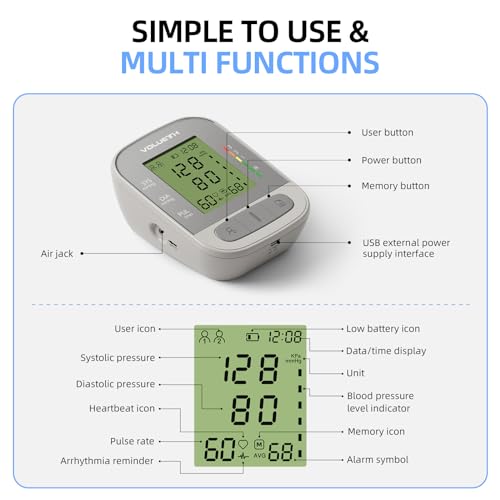
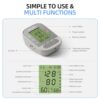
The device stores up to 198 readings across two users, each stamped with date and time, and it displays the average of the last three measurements, which is a useful function because single readings vary for ordinary reasons. The listing states a measurement completes in about 30 seconds and describes cuff detection and wrong operation reminder icons, which flag a cuff that has been fitted badly.
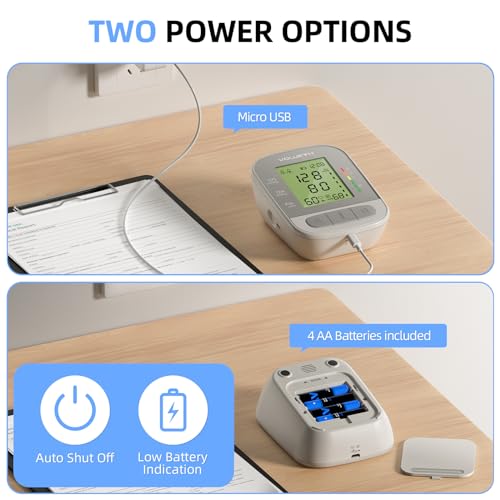
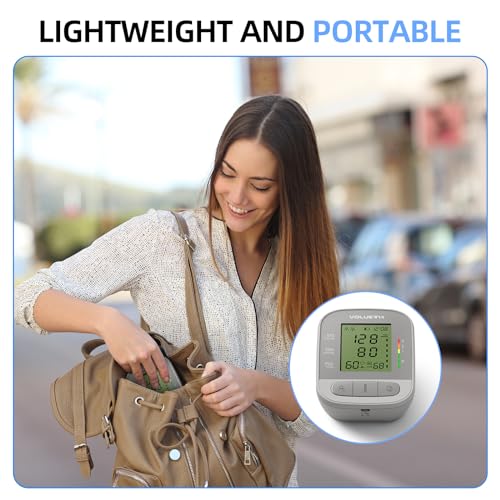
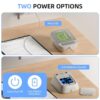
Power is offered two ways: two AAA batteries, stated as included, and a Micro USB cable, also included. Note that the listing states the 5 volt 1 amp USB adapter is not supplied, so the cable needs something to plug into. A cloth carry bag and a manual complete the package, and the unit weighs about 0.55 kilograms.
Using it correctly, and what the readings are for
Sit with the back supported and the feet flat on the floor rather than crossed, and rest quietly for several minutes before measuring. Fit the correct cuff on a bare upper arm rather than over a sleeve, with the lower edge clear of the elbow crease and the tube running down the inside of the arm. Support the arm so the cuff sits at about the height of the heart. Do not talk during the measurement, and if the three reading average is running, stay seated and still through the whole sequence. Use the same arm and the same cuff each time, since switching cuffs partway through a series makes the readings hard to compare with one another.
What you collect is a record for someone else to read. What a reading means, whether a pattern across readings is significant, and whether anything about care should change are questions for a healthcare professional who knows the person’s history. This device does not replace professional medical care, and no reading from it should be used to start, stop or alter treatment.
The claims, including one we will not repeat
The listing describes the monitor as clinically accurate, refers to accurate signal processing technology, and states that more than a hundred thousand items of data were tested for reliability and that the device is calibrated to best performance. Those are the seller’s own descriptions. No protocol is named, no assessing body is named and no study is identified. We do not test products and we will not describe any monitor as clinically accurate in our own voice. Check whether this model number appears on an independent validation listing if that matters to you.
One sentence goes further than the rest and we are not repeating it. The listing tells the reader to rest assured about detecting a hypertension issue by means of the classification bar on the display. A category bar on a consumer device is driven by thresholds the manufacturer programmed in. It does not detect a condition, it does not know your history or your medication, and it is not a substitute for a diagnosis by someone who does. We are also not reprinting the thresholds, because interpreting a number for a particular person is clinical work. Treat the bar as a prompt to write the reading down and raise it at an appointment.
Limits and gaps
No irregular heartbeat detection is described. There is no app and no wireless connection, so 198 readings is the whole history unless you write them down. No display dimension is published, no warranty term appears in the record we hold, and the USB adapter is not in the box. The cuff labeling problem described at the top remains unresolved and is the strongest reason to check the physical cuffs on arrival against your own tape measurement.
Alternatives worth comparing
If a smaller cuff is what you actually need, the ELERA small replacement cuff covering 5.9 to 9.5 inches and the Pro Comfort pediatric cuff are sold separately, with the same cautions, as is the CareLiving small cuff. For a device supplied with more than one adult cuff and clearer labeling, the ALPHAGOMED U80AH with 9 to 17 inch and 13 to 21 inch cuffs is the comparison. The CONTEC08A, supplied with three cuffs sits in a different, more clinical category with its own cautions. Our index of home monitors and cuffs lists what each publishes.
Who should buy it and who should not
Buy it only if you want a two cuff adult device, you accept that you will verify the sizes against the markings on the cuffs themselves, and you have a USB adapter already. Do not buy it to begin measuring a child’s blood pressure on your own initiative, do not rely on the listing’s cuff labels, and do not read the classification bar as detecting anything. Take your readings to a clinician.