



Description
Who the SureLife WRS-35H is for, and what it settles
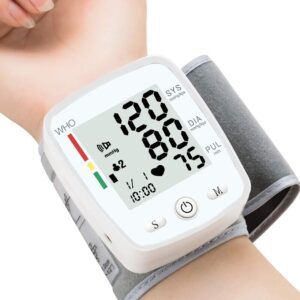
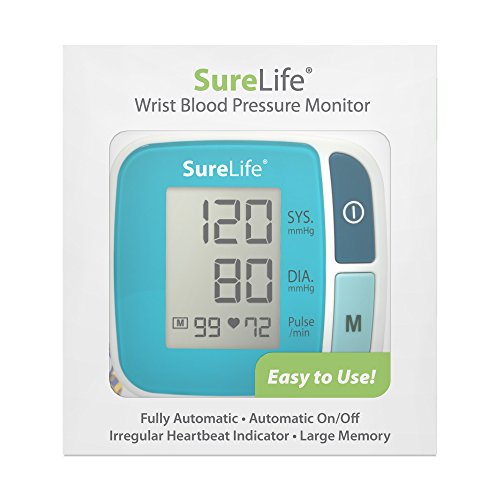
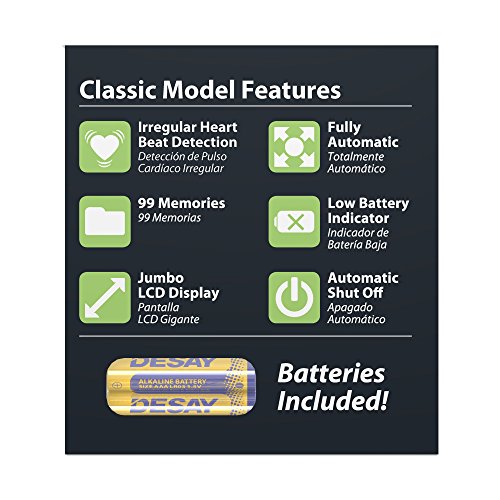
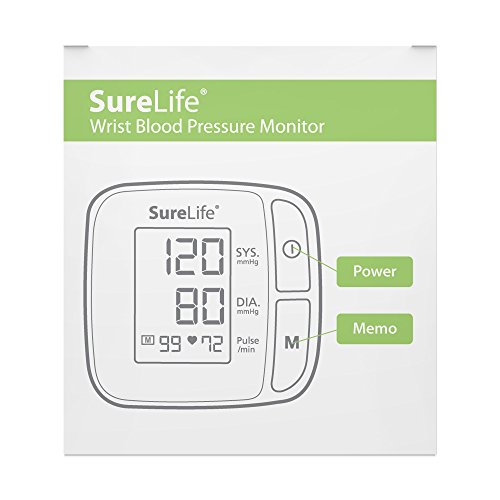
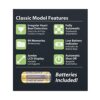
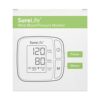
The SureLife Classic is a wrist monitor of the plainest kind: one user, 99 stored readings, a large LCD, an irregular heartbeat flag, and nothing else. It has been listed since November 2011, which makes it one of the oldest products in this catalog by some margin, and the listing states it is not discontinued. If you want a device that does one thing and has been doing it unchanged for well over a decade, that longevity is the argument.
Before any of the specifications, the format needs stating. A wrist device is not equivalent to an upper arm device. The wrist sits further from the heart, the arteries there are smaller, and results shift noticeably with how the hand is held. Upper arm monitors remain the usual recommendation for home monitoring, and a wrist unit is normally chosen when an arm cuff will not fit or cannot be used comfortably. If you have a free choice, read our HoMedics upper arm monitor review before settling on the wrist.
Whatever it shows, this device does not diagnose anything and does not replace professional medical care. A reading is something to take to the clinician who manages your health.
The specifications that matter
Band range
SureLife publishes a wrist range of 5.3 to 8.7 inches, given as 135 to 220 millimeters, and those two figures convert correctly to each other. That is a wide span for a wrist band, with an upper limit above most competitors. Note that the structured band size field lists only 8.7 inches, a single figure with no lower bound, so use the feature bullet’s full range rather than that field.
Measure your wrist just below the bone, where a watch strap would sit. Wrist bands offer much less adjustment than arm cuffs, so a measurement close to either boundary is a genuine risk rather than a rounding question.
Memory, and the limit that decides the purchase
The device stores 99 readings for one user. Not 99 each for two users. One. If two people in your household intend to monitor, this machine cannot keep their records apart, and a shared log is worse than useless when it is handed to a clinician. That single specification is the most likely reason to rule this device out, and it is easy to miss because the marketing does not draw attention to it.
Irregular heartbeat detection
The listing advertises an alert when an irregular heartbeat is detected during a measurement. Treat it as a flag rather than a finding. It reports that the device saw something irregular in one measurement, which is worth mentioning at an appointment. It does not diagnose an arrhythmia, and SureLife does not claim it does.
Display and size
A large LCD is the other selling point, described in the listing as jumbo. No screen size is published. Listed weight is 6.4 ounces and the listed dimensions of 4.1 by 4.1 by 4.6 inches describe the package rather than the device.
Contradictions and gaps
The battery specification disagrees with itself. One field states two AA batteries are required and included. The contents field states the box holds the monitor and two AAA batteries. AA and AAA are not interchangeable, and on a small wrist device the difference is not trivial, because AA cells are physically larger than most wrist housings. Ask the seller which the device takes before ordering, and do not buy a pack of the wrong ones in advance.
The model fields also disagree in the usual way. The item model number reads WRS-35H, while the model name field reads only Wrist Blood Pressure Monitor, which is a description rather than a model.
The manufacturer field names Shenzhen AOJ Medical Technology, the same manufacturer that appears behind other brands in this catalog, including the machines covered in our Yammoya review and our Abesee AOJ-30C review. A shared factory across unrelated brand names is ordinary in this category and it means the name on the box carries less information than most buyers assume.
No validation protocol is named, no clearance number is quoted, and no accuracy tolerance appears anywhere in the listing. The marketing describes high quality readings, which is an adjective rather than a measurement. We make no accuracy claim about this device in our own voice, and validation status is checkable independently through the lists that medical societies publish. Given how long this listing has been running, that check is worth more here than on a device released last year.
Using it correctly
Position is the whole game on a wrist monitor. Rest for five minutes first, sitting with your back supported and both feet flat. Put the band on the bare wrist with the display facing up, snug enough that it will not slide. Rest your elbow on a table and bring the wrist up so that it sits at the height of your heart, roughly level with the middle of your chest. Support the arm rather than holding it there under tension, because effort changes the result.
Keep the wrist flat rather than bent forward or back. Stay quiet and still. If you take a second reading, wait a minute or two and repeat the same posture exactly, because the value of a home log lies in it being comparable to itself.
With only 99 readings and a single user profile, write measurements down with dates and times from the start. That paper log is what you will actually bring to an appointment, and it is the only way to keep a second person’s readings separate on this machine.
Alternatives worth comparing
If two people need separate records, this is the wrong device and almost any dual profile monitor is a better answer. For a wrist unit from a brand with a longer retail presence, read our Care Touch wrist monitor review, and for a similarly plain alternative the Ever Ready LD-737 covers the same ground. Our home blood pressure monitor section lists the wrist devices alongside the arm ones so the formats can be compared directly.
Who should buy it, and who should not
Buy the WRS-35H if an arm cuff is impractical for you, if you are the only person who will use it, and if your wrist measures inside 5.3 to 8.7 inches. Skip it if a second person needs their own record, if you want a device whose battery specification agrees with itself, or if you have a free choice between wrist and arm, in which case the arm is the usual recommendation. Whichever you pick, the number on the screen is one input for a clinician rather than a conclusion you can draw at home.