Description
What this product is, and what it is not
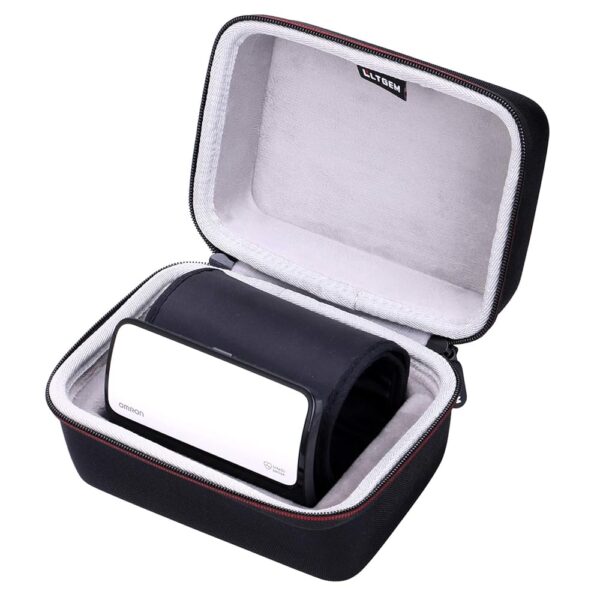
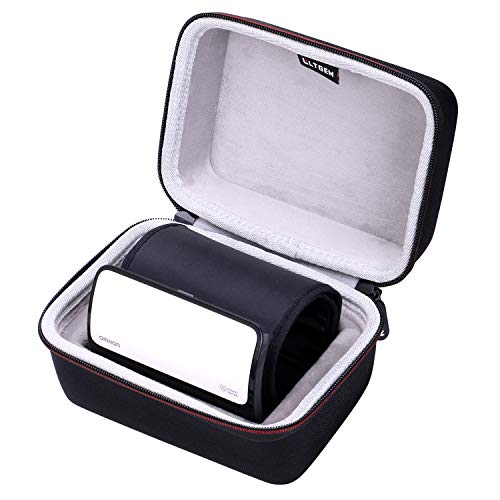
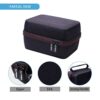
This is a hard shell travel case for the Omron Evolv, the tubeless upper arm monitor sold as the BP7000 in the United States and as the HEM-7600T-BK elsewhere. LTGEM puts the words case only in the product title itself, which is the clearest statement of that kind in this catalog. There is no monitor here and no cuff.
Because there is no cuff, there is no circumference range for us to publish. The band that determines whether your readings are worth anything is the one built into the Evolv, and if you have not checked it against your own arm, our Omron BP7000 review covers the machine this case is cut for. Neither the case nor the monitor inside it diagnoses anything or replaces professional medical care.
The dimensions, and why this listing stands out
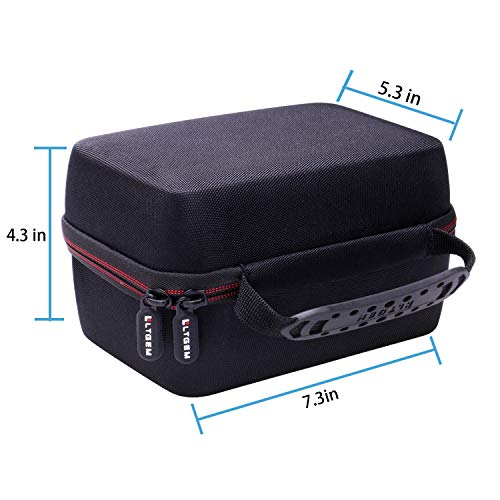
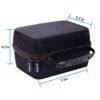
LTGEM publishes external dimensions of 7.3 inches long by 5.3 wide by 4.3 high, in a feature bullet, and the structured specification field gives exactly the same three numbers. That sounds like the least a listing could do. In this catalog it is unusual.
Most of the cases we have reviewed publish two different sets of dimensions without saying which is the case and which is the shipping carton, leaving a buyer to guess whether it will fit a drawer or a bag. This one gives a single set, labels them as outer dimensions, and repeats them consistently. If you are buying a case to fit inside something else, that is worth more than any adjective in the rest of the listing.
Listed weight is 9.11 ounces, which is normal for a molded EVA shell of this size.
Fit
LTGEM names the Omron BP7000 Evolv and the HEM-7600T-BK specifically, and describes the interior as shaped for the monitor. Check the code on your own unit rather than the marketing name, since Omron uses different codes in different markets and the Evolv branding has covered more than one revision. If your machine is not one of those two, this is not your case, and our Ginsco universal hard shell case review covers a general purpose alternative you can size by measurement.
Why the Evolv in particular is worth protecting
Most upper arm monitors are two objects joined by a hose: a base unit that sits on a table and a cuff that wraps the arm. The Evolv is one object, with the electronics built into the cuff itself. There is no tube to kink and no separate box to lose, which is the appeal, but it also means the cuff is the monitor.
That changes the calculation. On a conventional machine a worn out cuff is a modest replacement and the base unit carries on. Here, damage the fabric, the closure or the bladder and the whole device is finished. If the Evolv travels at all, a molded shell is protecting the entire purchase rather than just keeping the parts together, which is a stronger argument for a case than usually applies.
Construction, and one claim we will not repeat
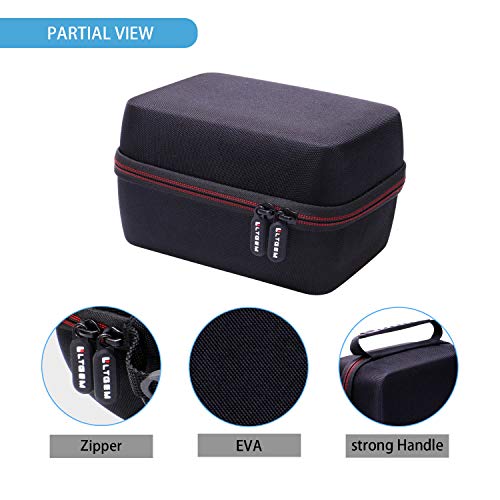
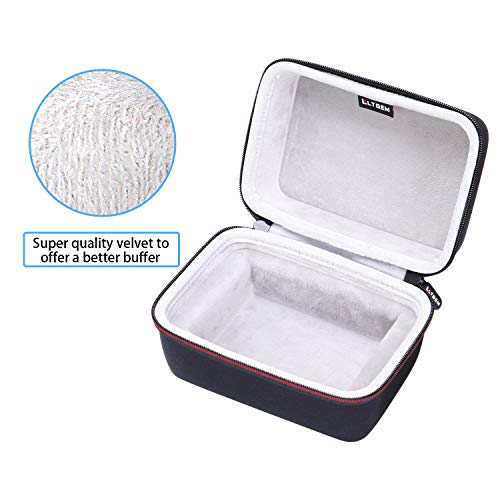
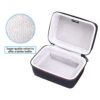
Hard EVA, described as semi waterproof, shockproof and durable, with a steady hand strap and a 360 degree zipper that runs right around the shell so it opens flat. A zipper of that kind is easier to get a curved cuff in and out of than a partial opening, which matters on a one piece device.
One bullet heading reads 100 percent safe. No case is 100 percent anything, and we are attributing that to LTGEM rather than repeating it. Read semi waterproof as resistant to a splash rather than sealed, and shockproof as marketing. The useful part of that bullet is the material, not the promise.
Our own previous description of this product claimed a soft interior lining, a rubberized grip on the handle, and space for additional small medical devices. None of those appears anywhere in the listing, so all three have been removed rather than carried forward. What the listing actually specifies is the shell material, the strap, the zipper and the outer dimensions.
One thing to check before you pack it
A tubeless monitor has no hose to kink, which removes the most common storage mistake, but it introduces a different one. The cuff on an Evolv holds a curved shape, and forcing it into a case that is slightly too tight puts a permanent crease across the bladder. The zipper should close without pressure. If it needs pushing, stop.
Keep any spare cells in a separate pocket rather than loose against the display. And if the case has spent a night somewhere cold or damp, let it return to room temperature before running a measurement, because condensation inside a closed shell is the one hazard a water resistant case introduces rather than prevents.
Whether a case is worth buying at all
If the monitor lives on a bedside table and never moves, probably not. What actually goes wrong with home monitoring is a cuff that does not fit the arm and a measurement routine that changes from day to day, and no case addresses either of those.
A case earns its place when the device travels, when it moves between households and the parts need to stay together, or when it lives somewhere it will get knocked. For a one piece machine like the Evolv, add a fourth situation: when the cuff cannot be replaced separately, protecting it is protecting the whole device.
Alternatives worth comparing
Our co2CREA hard case review covers the other shell in this catalog cut for the same Evolv, and it is the direct comparison, though its published weight and dimensions are less reliable than these. Our co2CREA CA-191111-2 review and our Aproca hard storage case review cover cases for other Omron models. The monitors themselves, with their cuff ranges, sit in our home blood pressure monitor section.
Who should buy it, and who should not
Buy this case if you own an Omron Evolv BP7000 or HEM-7600T-BK, confirmed by the code on the unit, and if the monitor travels or lives somewhere it will be knocked. It is the case in this catalog whose published measurements you can actually rely on, which is the practical reason to prefer it over its direct rival. Skip it if your machine stays on a shelf, if you own a different Omron, or if you were reading 100 percent safe as a warranty on the device inside. And if you are shopping because your readings look inconsistent, a case will not help. That is a fit question, a technique question, and ultimately a question for your clinician.