
Description
Who This Monitor Is For and What It Settles
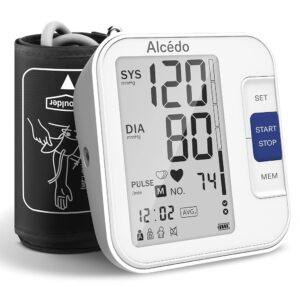
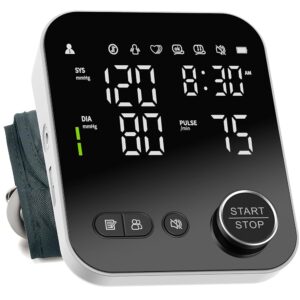
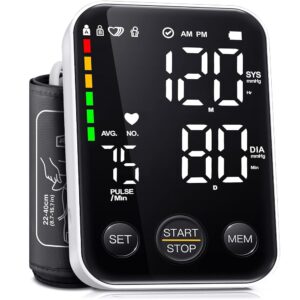
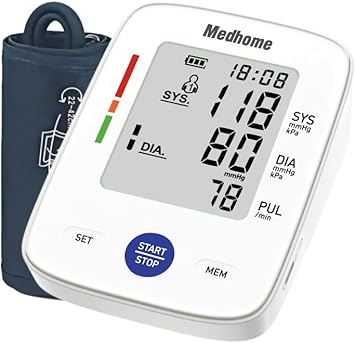
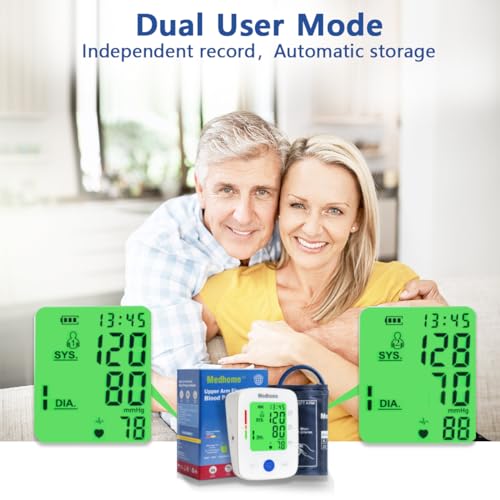
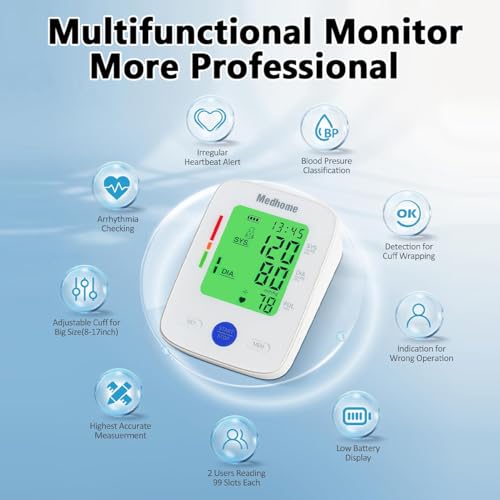
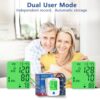
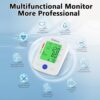
The Medhome upper arm monitor is a one button device with a large LCD, a wide range cuff, three color backlighting and 240 stored readings across two users. It is aimed at older users, with an ergonomically tilted body and bold digits, and it deliberately does not talk. The listing makes that a selling point rather than an omission, arguing that a clear screen keeps a reading private in a way a spoken announcement does not.
That is a genuinely sensible framing. A talking monitor in a shared room broadcasts your numbers to everyone in it. Before the specifications, the standing point: this review describes a device and its published data, it does not interpret readings, and a home blood pressure monitor does not replace professional medical care.
The Specifications That Matter
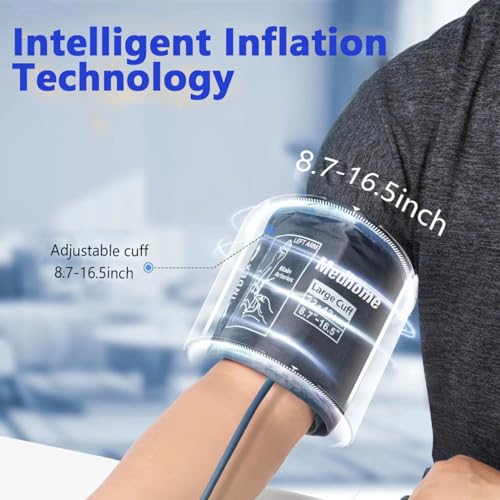
Cuff circumference decides whether the monitor works for a given arm, because a cuff that is too small or too large produces wrong readings on hardware that is functioning perfectly, and nothing on the display warns you. The range is published in the product title and in a bullet as 8.7 to 16.5 inches, which covers most adult arms. The structured band size field records only 16.5 inches, dropping the lower bound.
The size field then says standard while the title and the bullet both describe a large cuff. Those labels are marketing rather than measurement, so ignore both and work from the inch figures. Measure the bare upper arm at the midpoint between shoulder and elbow before ordering. If your measurement falls outside 8.7 to 16.5 inches, a sized replacement is the answer; the same brand sells a Medhome small arm cuff for the slim end.
Memory, display and power
Memory is 120 readings for each of two users, 240 in total, which is deep enough for months of twice daily logging. The display is described as a large digital LCD with bold fonts on a tilted body, which is a small design choice that matters more than it sounds: a screen angled toward a seated user is easier to read than one lying flat on a table.
No digit height is published, so the character size still has to be judged from photographs. A measurement takes about half a minute according to the listing, from a single start button.
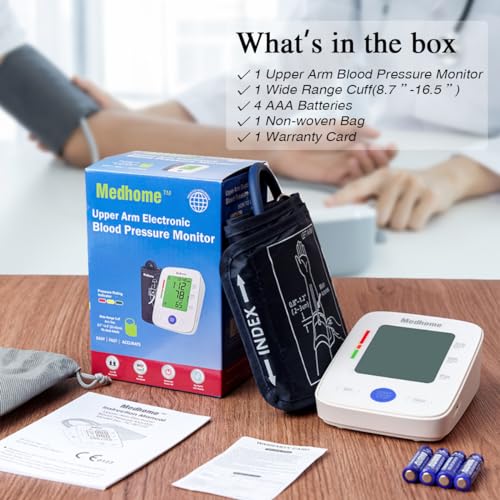
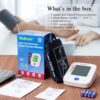
Power is the gap. The power source field says battery powered and nothing else. No battery type, no count, no life estimate, and no adapter appears anywhere, and the included components field lists only a cuff. Whether batteries arrive in the box is not established by this listing, so confirm it with the seller rather than assuming.
The 3 mmHg Claim
One bullet publishes actual numbers, which is more than most listings on this shelf attempt. It states blood pressure accuracy of plus or minus 3 mmHg and a pulse rate figure of 5 percent.
Those are the manufacturer’s claims and not ours. We do not test devices and we do not verify performance figures. What the listing does not supply is the context that would make the numbers meaningful: no test protocol is named, no standard or edition is cited, no test population is described, and no clearance or certificate reference appears anywhere. A tolerance figure without a protocol behind it is a number rather than a validation, and 3 mmHg in particular is a familiar figure that appears in published standards, so quoting it without naming the standard is a claim of compliance without the compliance.
The same bullet family also states that the device uses original accurate signal processing technology and high precision Dutch chips with state of the art algorithms. The signal processing phrase appears verbatim on several unrelated brands in this catalog, which points to shared marketing copy rather than shared engineering, and the chip provenance claim is not something a buyer can verify from a product page. Validation status can be checked independently through the registries medical bodies maintain, and that is the check that actually settles anything. A device with a fuller public record, such as the A&D Medical UA-651, is the honest comparison if documentation matters to you.
The Three Color Backlight
A bullet describes a three color backlight with different colors representing different stages of values. That needs the same handling as every color scale in this category. A color band on a home monitor compares a measured value against thresholds stored in firmware. It does not diagnose, it knows nothing about the person being measured, and no reference standard is cited for the thresholds it uses. This review does not tell anyone what any color means.
Record the numbers, disregard the color, and take the log to a clinician. The privacy argument the listing makes about avoiding voice announcements applies to the backlight too, incidentally: a color visible across a room communicates something to anyone watching, which is worth knowing before using it in company.
Using It Correctly
Fit the cuff to the bare upper arm rather than over a sleeve, with the tubing running down the inside of the arm toward the palm and the lower edge roughly an inch above the elbow crease, closed so one finger slides underneath with mild resistance. Sit with the back supported and both feet flat on the floor, rest the arm so the cuff sits level with the heart, and stay silent and still through inflation and release.
Rest for several quiet minutes before the first reading rather than measuring straight after activity, and use the same arm at the same times each day so the record compares with itself. Set the user slot before the first measurement so the two banks of 120 stay separate. The listing also includes a practical reminder worth heeding: peel the protective film off the screen before first use, which sounds trivial until someone spends a week squinting through it.
Limits and the Statement That Matters
The description field is empty, so six bullets and a specification table carry everything. Nothing is published about the pressure or pulse measurement range, averaging across readings, irregular heartbeat detection, digit height, or battery specification of any kind. The unit measures 4.52 by 3.54 by 6.29 inches at 15.84 ounces, and the manufacturer of record is simply the brand name, with country of origin given as China.
The point that outranks the rest: this device produces numbers, stores them and colors them. It does not diagnose, it does not replace professional medical care, and nothing in this review is guidance about anyone’s health.
Alternatives Worth Comparing
If a published tolerance figure is what attracted you here, the COOCEER X8 publishes the same 3 mmHg claim with the same absence of a protocol, so comparing the two on that basis alone will not separate them. For a plain two user monitor without the claims, the Greater Goods 0663 is the closer comparison. The full selection sits in our blood pressure monitor category.
Who Should Buy It, Who Should Not
Buy it if your arm falls inside 8.7 to 16.5 inches, you want a tilted large screen device that stays silent, and 120 readings per user across two banks suits your household. Skip it if you need to know what batteries it takes and whether they are included, if you want a protocol behind the 3 mmHg figure, or if you were relying on the color backlight to interpret a reading, because it cannot.